
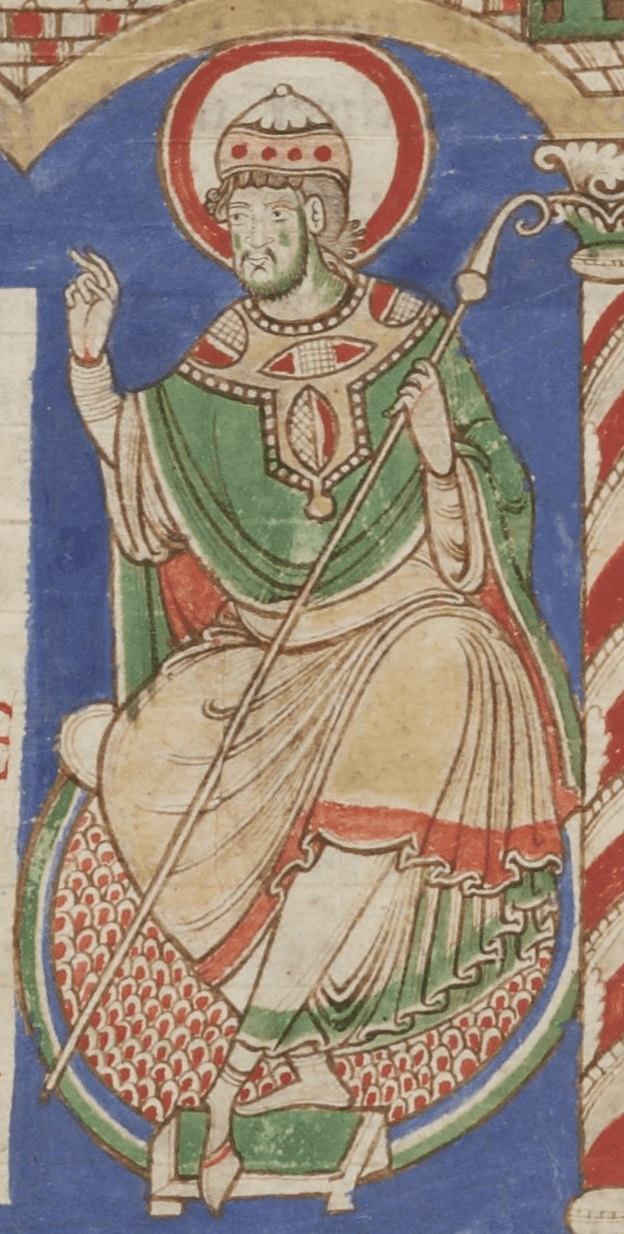
Damasus was the son of a Roman priest of Spanish descent, born in Rome. His election in 366 was disputed, contested by a rival named Ursinus, and ratified only after street violence in which over a hundred died — a beginning that haunted his reputation. Once in power, he proved a formidable administrator and a major patron of Christian Roman culture.
He commissioned St. Jerome — then his secretary — to undertake a revised Latin translation of the Bible from the Hebrew and Greek originals. The Vulgate that resulted has shaped Latin Christianity for sixteen centuries.
Damasus is perhaps best known for his systematic rediscovery and restoration of the tombs of the Roman martyrs in the catacombs. He composed Latin verse epigrams celebrating the martyrs — many still survive — and had the calligrapher Furius Dionysius Filocalus engrave them on marble plaques placed in the catacombs themselves. This early Christian archaeology, undertaken in his old age, made the underground cemeteries of Rome a place of organised devotion for the first time.