
Daniel was deported as a youth to Babylon in 605 BC with three companions, Hananiah, Mishael, and Azariah (renamed Shadrach, Meshach, and Abed-nego). They refused the king's food and grew stronger on water and pulses; they refused to worship the golden image and were cast into the fiery furnace; God preserved them.
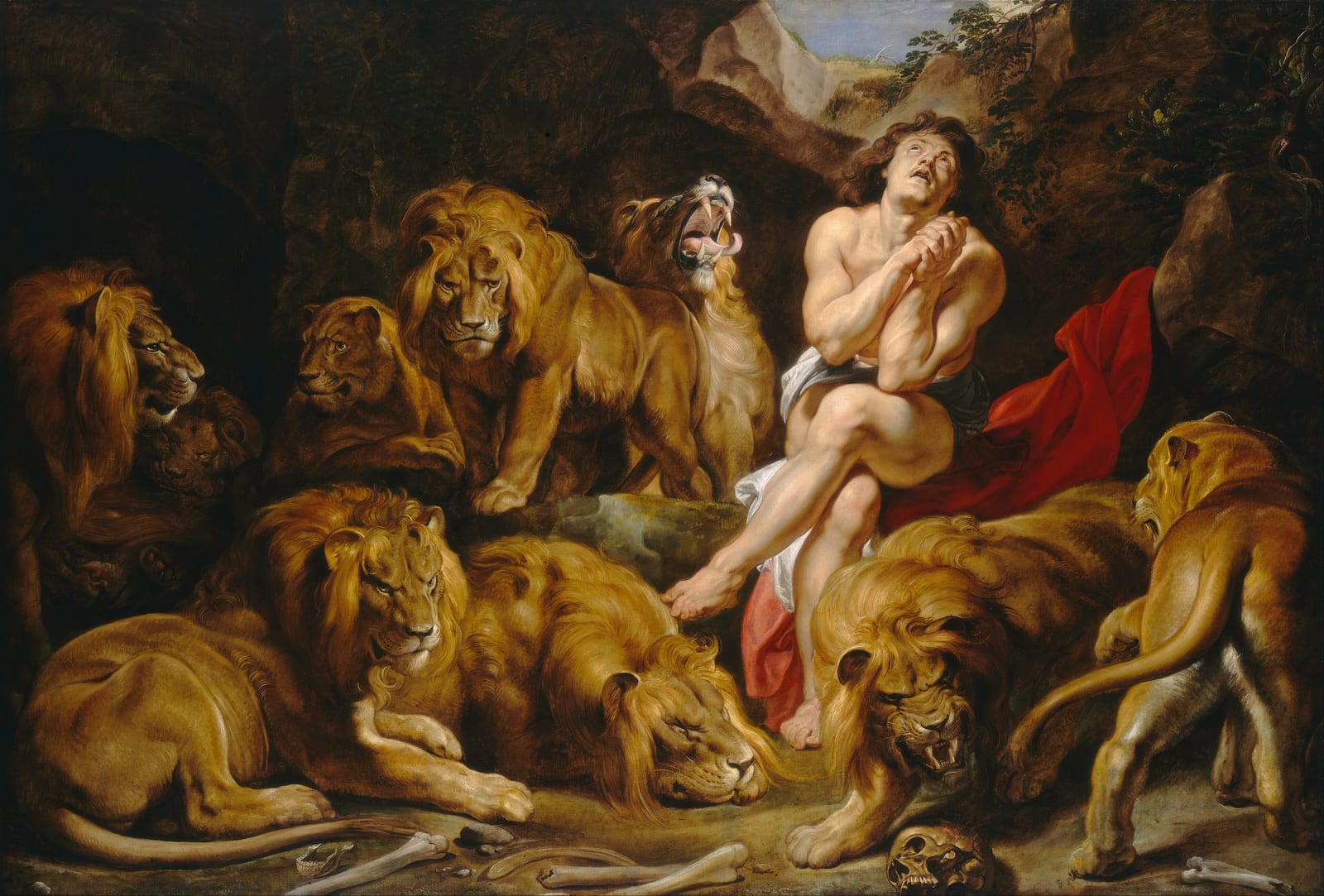
Daniel was elevated to high office by Nebuchadnezzar after interpreting the king's dream of the great statue. He served under Belshazzar, Darius the Mede, and Cyrus the Persian. He read the writing on the wall at Belshazzar's feast; he was cast into the lions' den under Darius and emerged untouched.
His later visions (Dan 7–12) recount the rise and fall of four empires, the Son of Man coming on the clouds, the abomination of desolation, and the resurrection of the just and the unjust. 'Son of Man' is the title Christ most often takes for Himself.
His tomb at Susa, venerated for two and a half millennia, remains a pilgrimage site for Christians, Jews, and Muslims.