
MIRACULOUS MIRACLES™

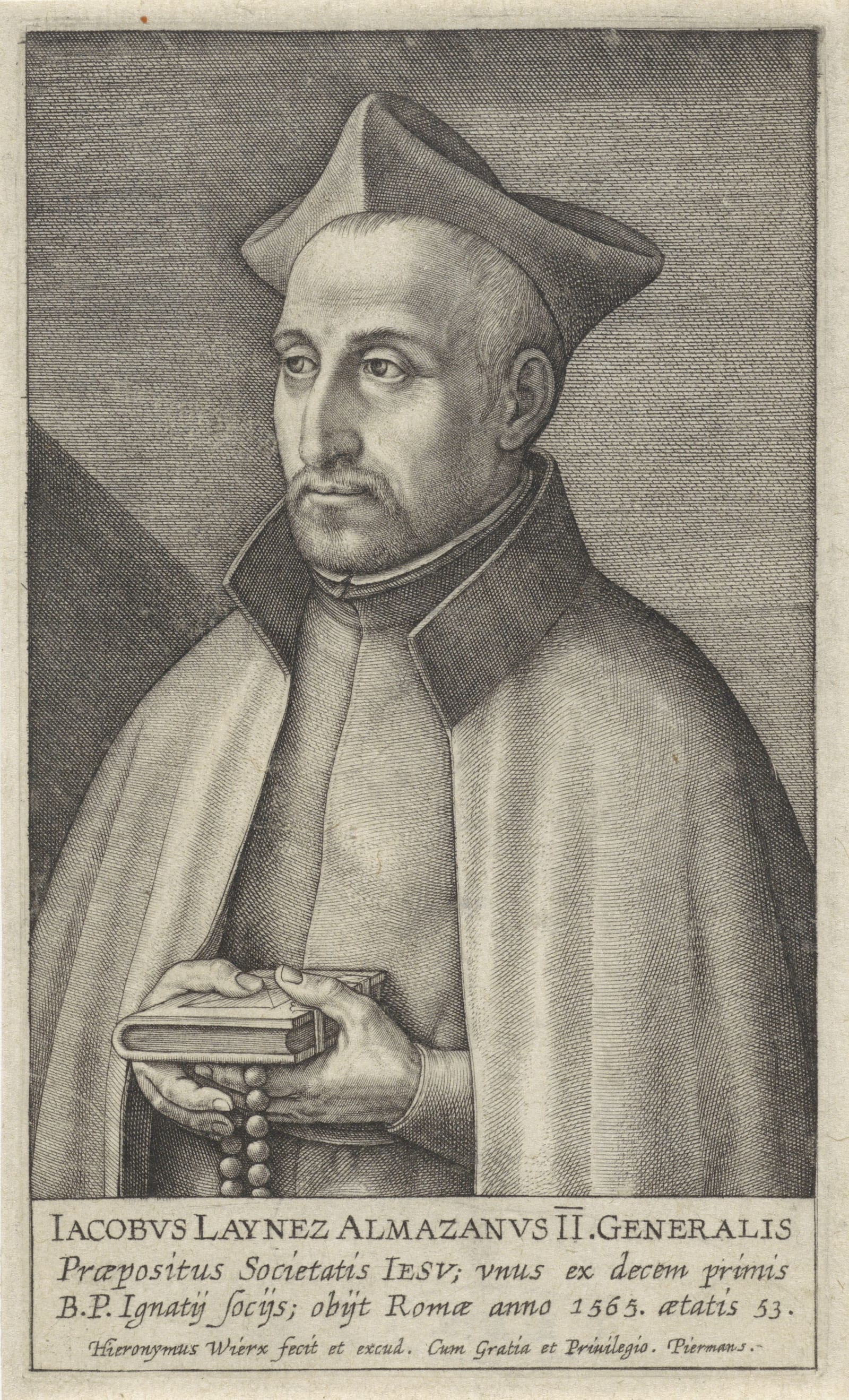
Saint — Bl. Diego Laynez (Laínez), SJ

Bl. Diego Laynez (Laínez), SJ
1512 AD, Almazán, Kingdom of Castile (converso Jewish family) — January 19, 1565 AD, Rome
Second Superior General of the Society of Jesus (1558–1565); Tridentine Jesuit theologian
Church of the Gesù, Rome — mother-church of the Society of Jesus, Italy
Feast
January 19
Canonized
Not formally canonized; recognized as the institutional successor to Ignatius Loyola
Life

Diego Laynez (also spelled Laínez, Latin Iacobus Laynez) was born in 1512 at Almazán in Castile to a converso Jewish family — descendant of Spanish Jews who had converted to Catholicism under the 1492 Alhambra Decree of King Ferdinand and Queen Isabella.

Educated at the University of Alcalá (Jesuit-friendly Spanish Catholic humanist university) and the University of Paris, Diego met Ignatius Loyola at Paris around 1533 and became one of the Seven Original Companions who took the Montmartre Vows on August 15, 1534 — an institutional co-founder of the Society of Jesus.

Diego served at the Council of Trent as papal theologian — one of the two Jesuit theologians (with Alfonso Salmerón) present at all three sessions of the Council (1545–1547, 1551–1552, 1562–1563). His theological contributions at Trent shaped key Tridentine doctrinal definitions — most famously the Decree on Justification of the Sixth Session (January 13, 1547).

Upon the death of Ignatius Loyola on July 31, 1556, Diego was elected second Superior General of the Society of Jesus at the General Congregation of 1558. His seven-year tenure (1558–1565) consolidated the Ignatian institutional structure and supervised the rapid Jesuit expansion.

He died at Rome on January 19, 1565 while the Council of Trent's third session was in its final phase.

Miracles & Phenomena
  • The Jesuit-Tridentine theological tradition

    Bl. Diego Laynez's theological contributions at all three sessions of the Council of Trent (1545–1563) — shaping key Tridentine doctrinal definitions, most famously the Decree on Justification of January 13, 1547 — established the Jesuit-Tridentine theological tradition. The Laínez-Tridentine tradition underpinned the Jesuit theological tradition of Sts. Robert Bellarmine and Peter Canisius (the two Doctors of the Church in the Jesuit tradition).

  • The converso-Jewish-Christian Catholic tradition

    Diego Laínez's status as a converso Jewish Christian — institutionally elevated to the highest office of the Society of Jesus (Superior General 1558–1565) — institutionally represents the converso-Jewish-Christian Catholic tradition of the Spanish 16th century. Ignatius Loyola personally famously proclaimed that he considered it 'the greatest honor of my life' to trace his own spiritual descent from Israel through Christ.

Relics
  • Body
    Tomb of Bl. Diego Laynez
    Church of the Gesù, Rome — mother-church of the Society of Jesus

    His relics rest at the Church of the Gesù in Rome — beside those of St. Ignatius Loyola and other Jesuit-founder saints.

Iconography
  • Diego Laynez at the Council of Trent

    The mid-16th-century Jesuit theologian in Jesuit black cassock at the Council of Trent arguing the Catholic Tridentine doctrine of Justification — the iconography of Catholic Jesuit-Tridentine tradition.

Patronages
Society of Jesus (Jesuits)Catholic Jesuit-Tridentine theological traditionCatholic converso-Jewish-Christian Catholic tradition