
MIRACULOUS MIRACLES™

Saint — Dominic of Silos

St. Dominic of Silos
c. 1000 AD, Cañas, Navarre (Spanish noble family) — December 20, 1073 AD, Abbey of Silos, Castile
Spanish Benedictine abbot of Silos 1041–1073; Castilian-Cluniac reformer; patron of pregnant women and the hostage-redeemer tradition
Abbey of Santo Domingo de Silos (Monasterio de Santo Domingo de Silos), Silos, Burgos, Spain — his governance; the Romanesque cloister (c. 1085) is one of the principal Romanesque sculptural monuments of medieval Europe; in continuous Catholic Benedictine use to the present day, Spain
Feast
December 20
Canonized
Canonized 1076 by Pope Gregory VII (within three years of his death)
Life

Dominic was born around 1000 at Cañas in Navarre to a noble Spanish family — a kinsman of St. Iñigo of Oña. Educated at the Benedictine Abbey of San Millán de la Cogolla (the principal medieval Navarrese-Riojan monastic centre), he became a monk there and rose to be prior under reform-discipline.

His opposition to the depredations of the Navarrese King García Sánchez III on the monastic lands produced his exile from Navarre around 1040 — he fled to Castile, where the reforming Castilian King Ferdinand I (1037–1065) welcomed him.

In 1041, Ferdinand I appointed Dominic as abbot of the decayed Abbey of San Sebastián de Silos (the principal medieval Castilian abbey, founded in the 7th century during the Visigothic period). For 32 years (1041–1073) Dominic governed Silos — rebuilding the decayed abbey-buildings, re-establishing the Benedictine discipline under Cluniac reform, and producing the characteristic late-11th-century Castilian-Cluniac monastic culture.

He became famous in the reconquest-era Spanish Catholic tradition for his ministry of negotiating the release of Christian captives held by the Moorish-Andalusian Muslim authorities — undertaking personal missions to the Moorish frontier, collecting ransom-money among the Spanish Catholic faithful, and personally redeeming hundreds of Christian captives over the decades of his ministry. The reputation as the hostage-redeemer of Catholic Spain established his cult as the principal Catholic patron of Christian prisoners and captives — the patronage that would underpin the late-12th-century foundation of the Mercedarian and Trinitarian orders of ransomers.

He died at the Abbey of Silos on December 20, 1073, and was canonized within three years by Pope Gregory VII in 1076 — among the earliest formal papal canonizations after the 993 Ulrich precedent.

The Abbey of Santo Domingo de Silos was rebuilt by his successors in the late 11th and early 12th centuries — producing the famous Romanesque cloister (c. 1085–1130), one of the principal Romanesque sculptural monuments of medieval Europe. The abbey survives in continuous Catholic Benedictine liturgical use today, famous as the community whose 1994 recording of Gregorian chant ('Chant') became a global commercial phenomenon (selling over 6 million copies, reaching No. 3 on the Billboard 200 album chart).

Miracles & Phenomena
  • The royal-childbirth and St. Dominic Guzmán naming-tradition

    Dominic of Silos's patronage of pregnant women and women in childbirth — and the Spanish royal tradition that the pastoral staff of St. Dominic of Silos was placed on the bed of Spanish queens during labour — produced the historical episode of the naming of St. Dominic Guzmán of Caleruega (1170–1221, the founder of the Order of Preachers / Dominican Order) for this 11th-century saint. The queen mother of St. Dominic Guzmán — Bl. Joan of Aza — had undertaken the pilgrimage to the Abbey of Silos to pray for the fertility-and-safe-childbirth intercession, giving birth to her son thereafter and naming the future Dominican-founder for the Silos-patron in gratitude. The Dominican Order would derive its name directly from this 11th-century Castilian saint.

  • The hostage-redemption ministry

    Dominic of Silos's ministry of negotiating the release of Christian captives held by Moorish-Andalusian Muslim authorities — and the documented redemption of hundreds of Christian captives over the decades of his late-11th-century reconquest-era ministry — established his cult as the principal Catholic patron of Christian prisoners and captives. The patronage would underpin the late-12th-century foundation of the Trinitarian Order (founded 1198 by St. John of Matha) and the Mercedarian Order (founded 1218 by St. Peter Nolasco) — the two great medieval Catholic orders of ransomers of Christian captives from Muslim slavery, inspired by the Dominic-of-Silos patronage tradition.

Relics
  • Body
    Tomb of St. Dominic of Silos
    Abbey of Santo Domingo de Silos, Burgos, Spain — in continuous Catholic Benedictine liturgical use 1073 to present

    His tomb at the Abbey of Santo Domingo de Silos has been the principal pilgrim destination of Castilian Catholic tradition for nearly a thousand years. The abbey survives in active Catholic Benedictine liturgical use; the famous Romanesque cloister (c. 1085) is one of the principal Romanesque sculptural monuments of medieval Europe.

Iconography
  • Dominic of Silos with his pastoral staff and ransom-money

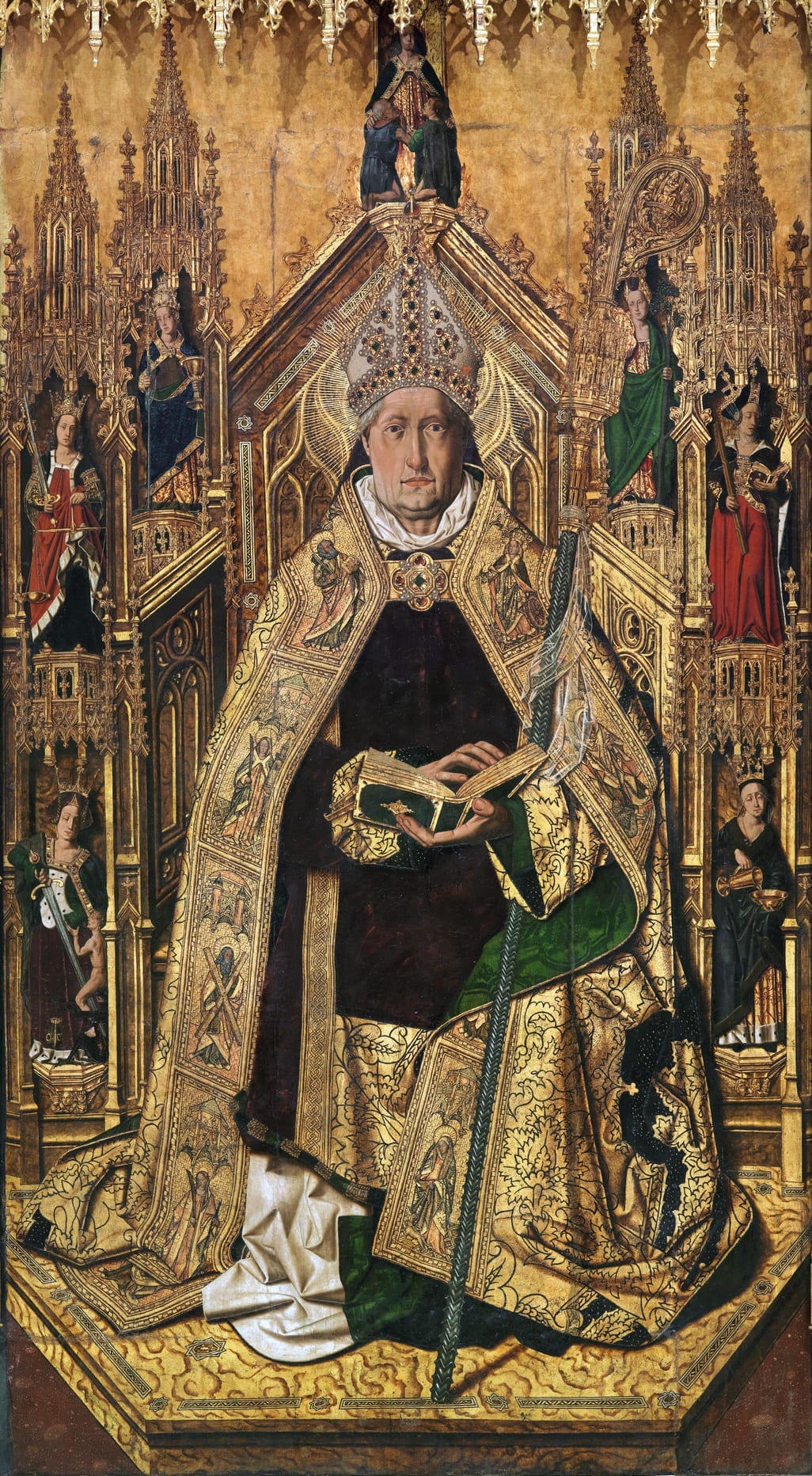
    The late-11th-century Spanish abbot in Benedictine-Cluniac habit holding the pastoral staff (the famous Silos-staff used in Spanish royal childbirth tradition) and a sack of ransom-coins, the redeemed Christian captives in foreign Moorish dress kneeling at his feet — the iconography of Catholic Spanish-reconquest hostage-redemption tradition.

Patronages
Catholic pregnant women and women in childbirth (the famous patronage — the Spanish royal tradition was that the pastoral staff of St. Dominic of Silos was placed on the bed of Spanish queens during labour; the queen mother of St. Dominic Guzmán of Caleruega — the founder of the Order of Preachers — was one of the beneficiaries, and the future Dominican-founder was named for the saint in gratitude)Catholic prisoners and hostages (his famous reputation for negotiating the release of Christian captives held by Moors)Diocese of BurgosThe Castilian-Cluniac monastic-reform tradition