
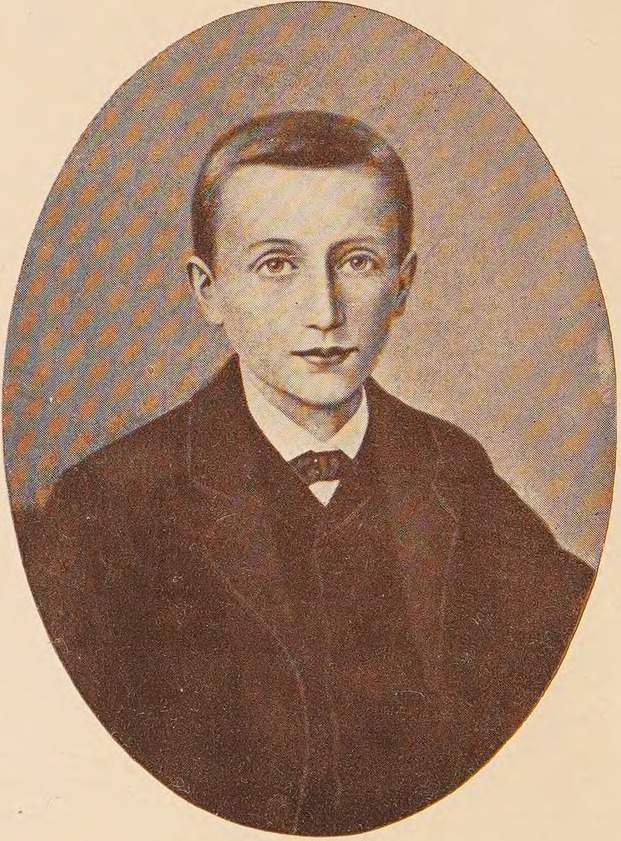
Domenico Savio was the second of ten children of a Piedmontese village blacksmith. At seven — earlier than the canonical age — he made his First Communion after passing the priest's particularly searching examination on the doctrine of the Eucharist, in November 1849. He took as his motto for that day the famous resolution he wrote in his catechism: 'Death rather than sin.'
In 1854, at twelve, he was accepted into Don Bosco's new Oratory of Valdocco in Turin — Bosco's revolutionary boys' school for the rejected urban poor and orphans of the rapidly-industrializing northern Italian capital. He spent the remaining three years of his life under Bosco's direct spiritual direction. Bosco's contemporary account — the Vita di Domenico Savio composed shortly after the boy's death — recorded a series of remarkable spiritual phenomena (prolonged ecstasies during Mass at the Oratory chapel, accurate predictions of the deaths of three boys including his own, a vision of the future restoration of the English Catholic hierarchy and submission of the Roman question, an apparent gift of reading souls). His health, never robust, declined rapidly through 1856 and the winter of 1856–57.
He died at his parents' house at Mondonio on March 9, 1857, at fourteen. Bosco's Vita was published in 1859 and became one of the most influential Catholic youth devotional books of the late 19th century. Canonized by Pius XII in 1954 — the first canonized child confessor (a non-martyr boy saint) in the modern Catholic Church.