
MIRACULOUS MIRACLES™

Saint — Edmund the Martyr

St. Edmund the Martyr
December 25, 841, Nuremberg (?) — November 20, 869, Hægelisdun
King of East Anglia — Patron of England's Original Patron
Bury St Edmunds, United Kingdom
Feast
November 20
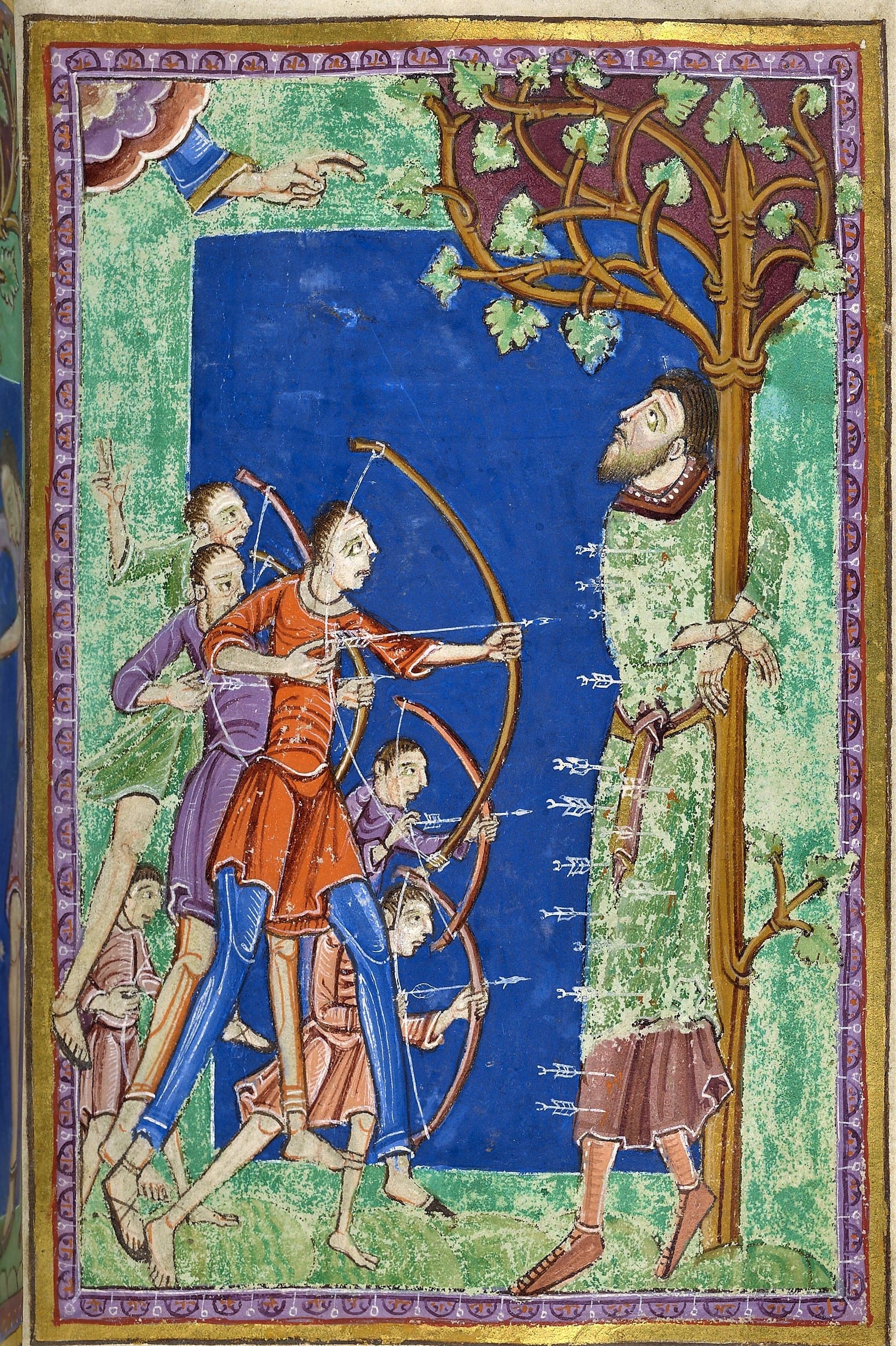
✠ MartyrScourged, shot full of arrows, and beheaded by the Vikings for refusing to renounce Christ, 869 → The Martyrs
Life

Edmund was crowned king of East Anglia at fifteen, in 855 or 856. For fourteen years he ruled in peace, fostering Christian education and church-building. In November 869 the Great Heathen Army of the Vikings under Ivar the Boneless and Ubba landed at Thetford in his kingdom.

Edmund met them in battle but was defeated and captured. The Vikings offered him his life if he would renounce Christ. He refused. Tradition records that he was tied to a tree, scourged, shot full of arrows, and finally beheaded on November 20, 869.

His head was thrown into the woods of Eglesden to deny him Christian burial. His followers, searching, were called to it by the cry of a wolf: 'Hic, hic, hic' — the wolf was found cradling the head between its paws and gave it to them. He is iconographically depicted ever since with arrows in his body and a wolf at his side.

His shrine at Bury St Edmunds became, after Westminster Abbey, the most important pilgrimage site in pre-Norman England. Edmund — not George — was the original patron saint of England, until Edward III in 1348 transferred the title to St. George. Calls have been made in recent decades to restore his patronage; he remains the patron of East Anglia.

Miracles & Phenomena
  • The Wolf and the Head

    Edmund's severed head, thrown into Eglesden Wood, was found by his followers guarded by a wolf who called them to it — and surrendered it without harm.

  • Incorruption

    His body, recovered and reunited with the head, was reportedly incorrupt and the wound about the neck perfectly closed when the shrine was inspected in the medieval period.

Relics
  • Body
    Tomb of Edmund (lost)
    Originally Bury St Edmunds Abbey (destroyed 1539); some relics may have been transferred to Toulouse and elsewhere

    The shrine was destroyed at the Dissolution; portions of relics claimed to survive at Saint-Sernin in Toulouse, at Arundel Castle, and elsewhere.

Iconography
  • Edmund with the Arrows and the Wolf

    The crowned king with arrows in his body and a wolf seated beside him — the unique English iconographic theme.

Patronages
Pandemics and plagueKingsTorture victimsWolvesBury St Edmunds (the town named for his shrine)