
MIRACULOUS MIRACLES™

Saint — Egwin of Worcester

St. Egwin of Worcester
c. 660 AD, Worcester (royal Mercian family, kinsman of King Æthelred of Mercia) — December 30, 717 AD, Evesham Abbey, Worcestershire
Anglo-Saxon Bishop of Worcester; founder of Evesham Abbey
Evesham Abbey, Worcestershire — founded by Egwin c. 701 on the site of the Marian apparition to the swineherd Eoves, United Kingdom
Feast
December 30
Canonized
Pre-congregation; cult established by the 11th-century Vita Sancti Egwini
Life

Egwin (Old English Ecgwine) was a Mercian nobleman of the royal kindred, consecrated third Bishop of Worcester around 693 — succeeding Oftfor and Bosel as one of the foundational bishops of the diocese carved out of the see of Lichfield by Theodore of Tarsus.

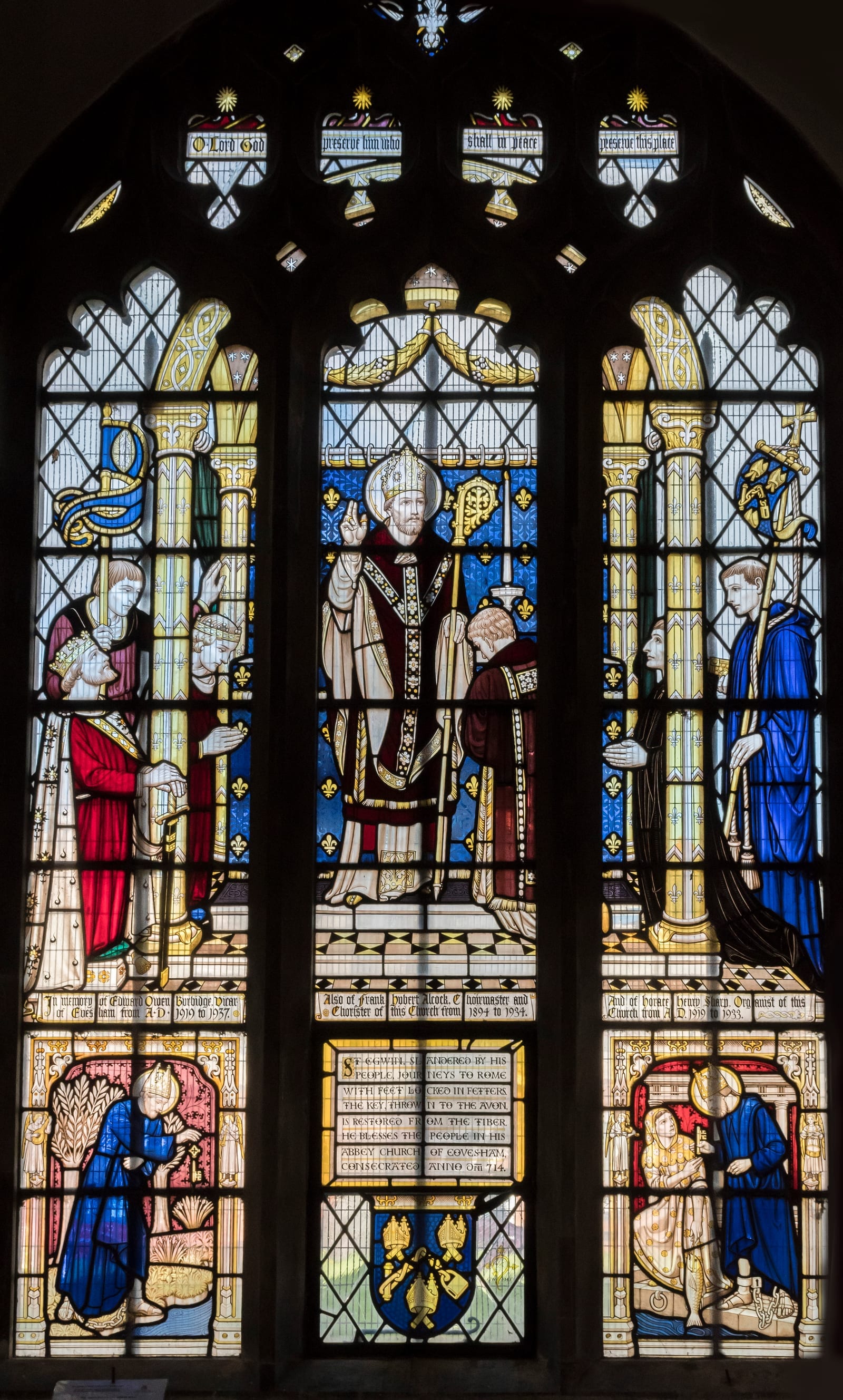
His austere discipline of the clergy provoked opposition; he was deposed by hostile clergy and made a penitential pilgrimage to Rome (according to later tradition, with his feet shackled, having thrown the key into the River Avon). At Rome, when a fish caught from the Tiber was opened in his presence and the lost key found inside, Pope Constantine restored him to his see — one of the most vivid pre-Conquest English hagiographical episodes.

Around 701, on returning to Mercia, he was led by a vision of the Virgin Mary appearing to his swineherd Eoves at a clearing in the great Worcestershire forest to found the abbey of Evesham (named for the swineherd Eoves). The abbey became one of the wealthiest and most influential Benedictine houses of medieval England, with its own great medieval pilgrimage shrine.

Egwin died at Evesham on December 30, 717, and was buried in the abbey he had founded — his tomb the principal medieval pilgrim site of Worcestershire until the dissolution of Evesham Abbey in 1540.

Miracles & Phenomena
  • The key in the fish at Rome

    Tradition records that Egwin, deposed and travelling penitentially to Rome in iron foot-shackles, threw the key into the River Avon at Evesham as he set out, declaring he would not be unshackled until restored by papal authority. At Rome, a fish drawn from the Tiber by his servant contained the missing key — interpreted as divine endorsement of his cause, restored to his see by Pope Constantine. The iconography of Egwin with the fish and key is the standard medieval English representation.

  • The Marian apparition to the swineherd Eoves

    The 11th-century Vita Sancti Egwini records that the Virgin Mary appeared to the Mercian swineherd Eoves at a forest clearing in 701, directing him to summon Bishop Egwin. When Egwin came, he saw the same vision: the Virgin standing with two attendant maidens. The foundation of Evesham Abbey at this site is among the earliest documented Marian apparitions in Anglo-Saxon England.

Relics
  • Body
    Shrine of St. Egwin
    Evesham Abbey, Worcestershire — the medieval shrine destroyed in the 1540 dissolution; the abbey bell-tower (1539, by Abbot Lichfield) survives as the only above-ground remnant

    His shrine at Evesham was one of the principal English pilgrim destinations of the 11th–15th centuries. The 1540 dissolution destroyed the entire abbey except for the Lichfield bell-tower, which still stands above the ruined precinct in Evesham town.

Iconography
  • Egwin with the fish and key

    The late-7th-century Anglo-Saxon Bishop of Worcester in episcopal vestments holding the open fish from the Tiber, the recovered iron key in his hand, his pastoral staff in the other — the standard medieval English iconography preserved in stained glass throughout Worcestershire and the West Midlands.

Patronages
Diocese of Worcester (Catholic and Anglican)Town of EveshamCatholic Marian-apparition foundations of England