
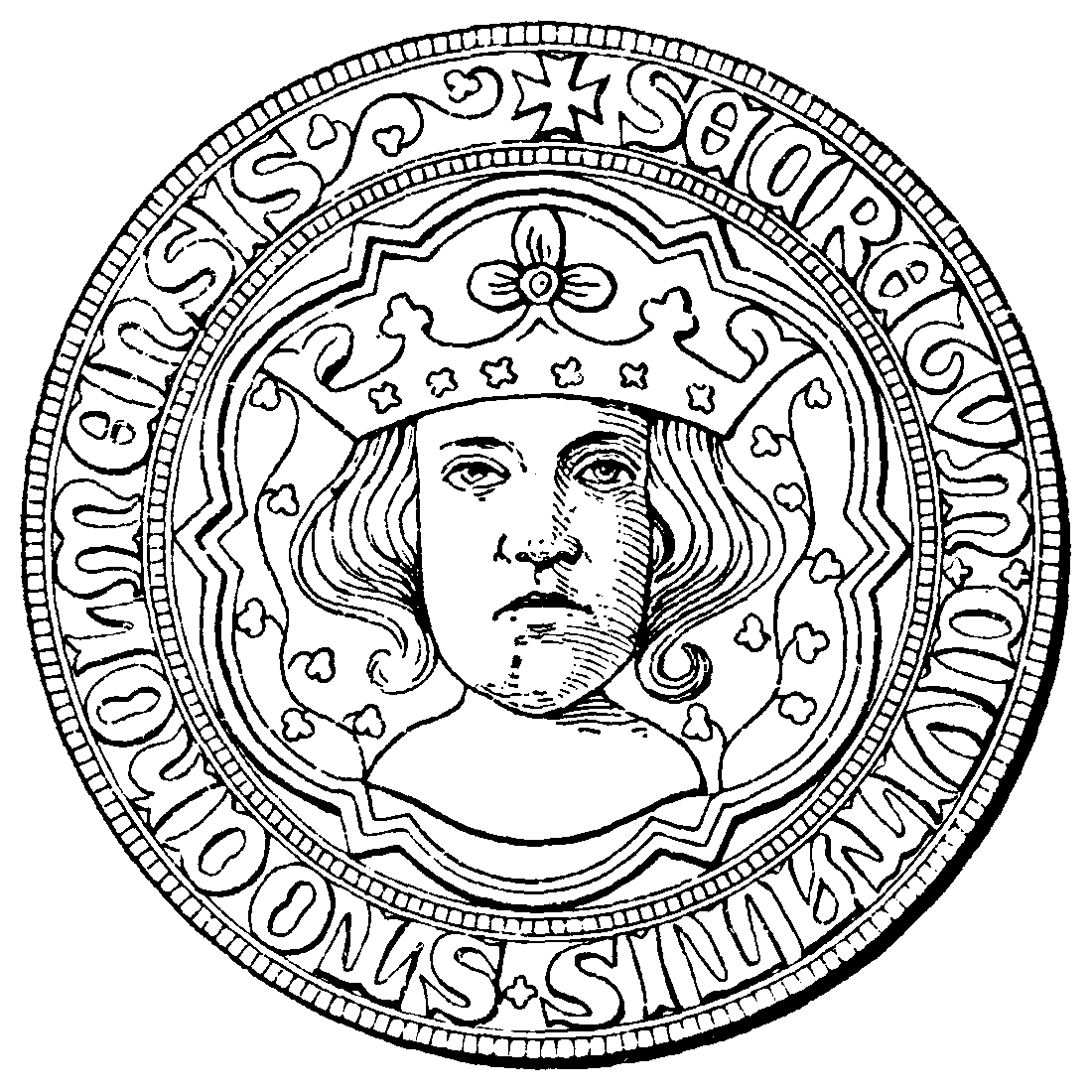
Eric Jedvardsson was elected king of Sweden around 1156 in the aftermath of the long competition between the Erikar and the Sverkriar dynasties. His brief reign was devoted to consolidating the Christianization of the Svealand uplands, codifying Swedish law (the 'Law of King Eric the Saint' became the kernel of medieval Swedish jurisprudence), and to the Crusade across the Gulf of Bothnia in 1155 that brought Christianity into Finland.
On May 18, 1160 — Ascension Day — a Danish-backed claimant, Prince Magnus Henriksson, attacked Uppsala. Eric, attending Mass at the church of Holy Trinity (the old Uppsala cathedral), was warned of the danger; he insisted on completing the Mass before leaving. As he emerged from the church he was unhorsed and killed by Magnus's followers, beheaded, and his blood was said to have sprung where his crown fell. A spring opened at the site that became a pilgrimage destination.
He was never formally canonized by Rome, but his cult was approved at the Council of Skänninge in 1248 and he is the principal heavenly patron of Sweden. His relics were translated to the new Uppsala Cathedral in 1273 and remain there in a fifteenth-century silver reliquary — the central object of Swedish royal devotion. The royal arms of Sweden quarter his three crowns to this day.