
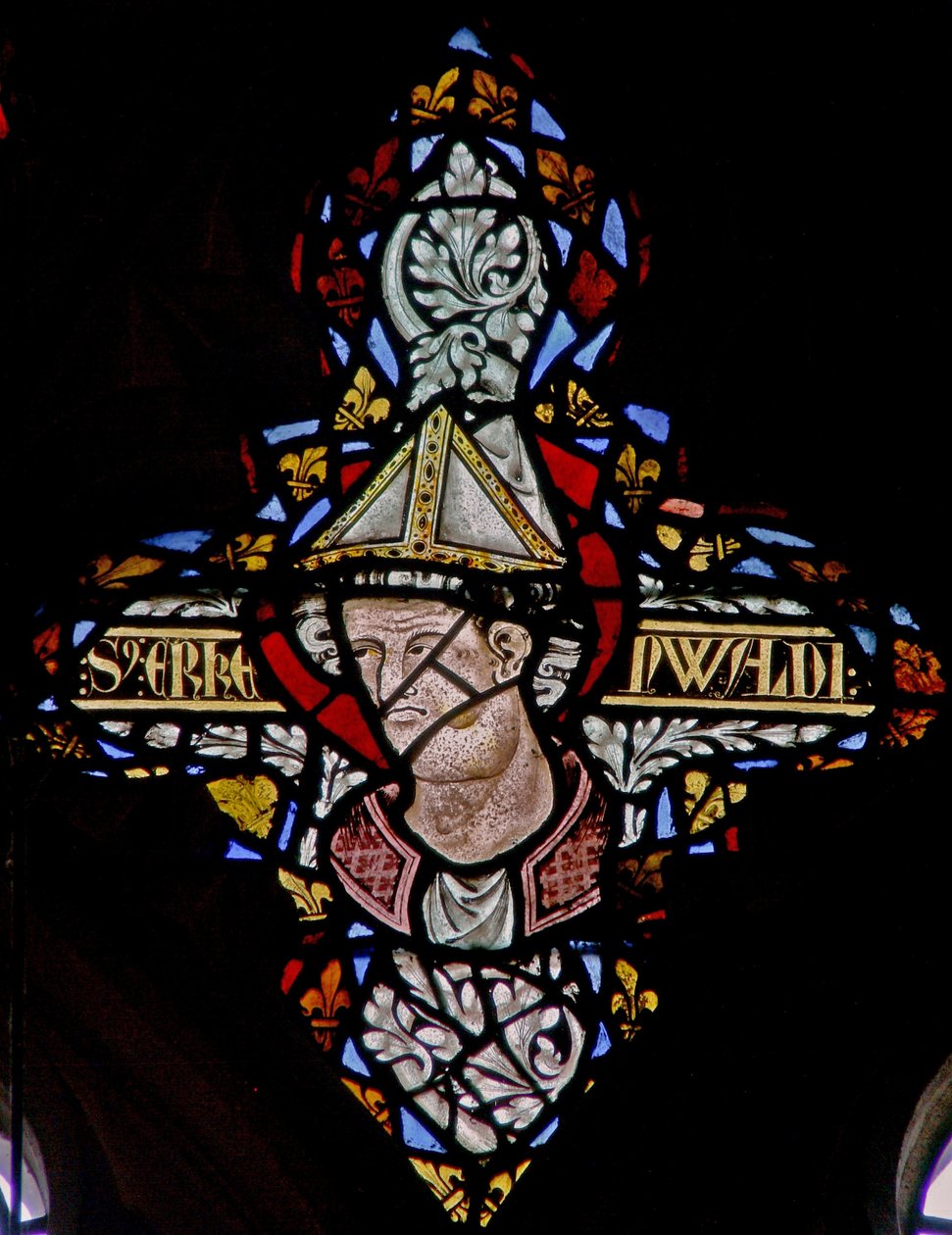
Erkenwald (Old English Eorcenwald; Latin Erconwaldus) was — per the substantial Bede's substantial Ecclesiastical History account and the substantial 11th-century Vita Sancti Erkenwaldi composed at Old St Paul's — born around 630 AD to a substantial Anglo-Saxon noble family of Lindsey (the substantial Northumbrian-Anglian territory now in modern Lincolnshire).
He entered substantial religious life around 660 AD and founded substantially around 666 AD two substantial Anglo-Saxon Catholic monastic foundations: a substantial men's monastery at substantial Chertsey in substantial Surrey (the substantial continuous substantial Surrey-Catholic centre) and a substantial women's monastery at substantial Barking in substantial Essex (the continuous substantial Essex-Catholic centre, governed substantially by Erkenwald's substantial sister Ethelburga as substantial founding abbess — see Ethelburga of Barking in a substantial future supplemental catalogue).
Around 675 AD, Erkenwald was consecrated substantial Bishop of London by Theodore of Tarsus (see Theodore of Tarsus's entry already in the catalogue) — substantially during the substantial Theodorean episcopal-reorganization period of the substantial Anglo-Saxon Catholic Church. Erkenwald governed the substantial London see for some eighteen years until his death on April 30, 693 AD.
His substantial episcopal governance of London was substantially significant for the substantial substantial Old St Paul's Cathedral (the substantial 7th-century Old St Paul's, substantially distinct from the substantial later substantial Norman-period medieval Old St Paul's that was substantially destroyed in the substantial Great Fire of London of 1666 — and substantially distinct again from the substantial current substantial Christopher Wren St Paul's Cathedral). Erkenwald substantially rebuilt and substantially expanded the substantial Old St Paul's that the substantial Augustine-period Anglo-Saxon Catholic mission had substantially established in the substantial 604 AD period.
He died at substantial Barking Abbey (his substantial sister's substantial community) on April 30, 693 AD — substantially in the presence of his substantial sister Ethelburga substantially at her substantial abbey. His substantial body was substantially translated immediately to Old St Paul's Cathedral, where it became the substantial continuous medieval substantial Old St Paul's tomb-shrine for the substantial 973 years until the substantial Great Fire of London of 1666 — substantially the continuous medieval substantial London Catholic pilgrim site.