
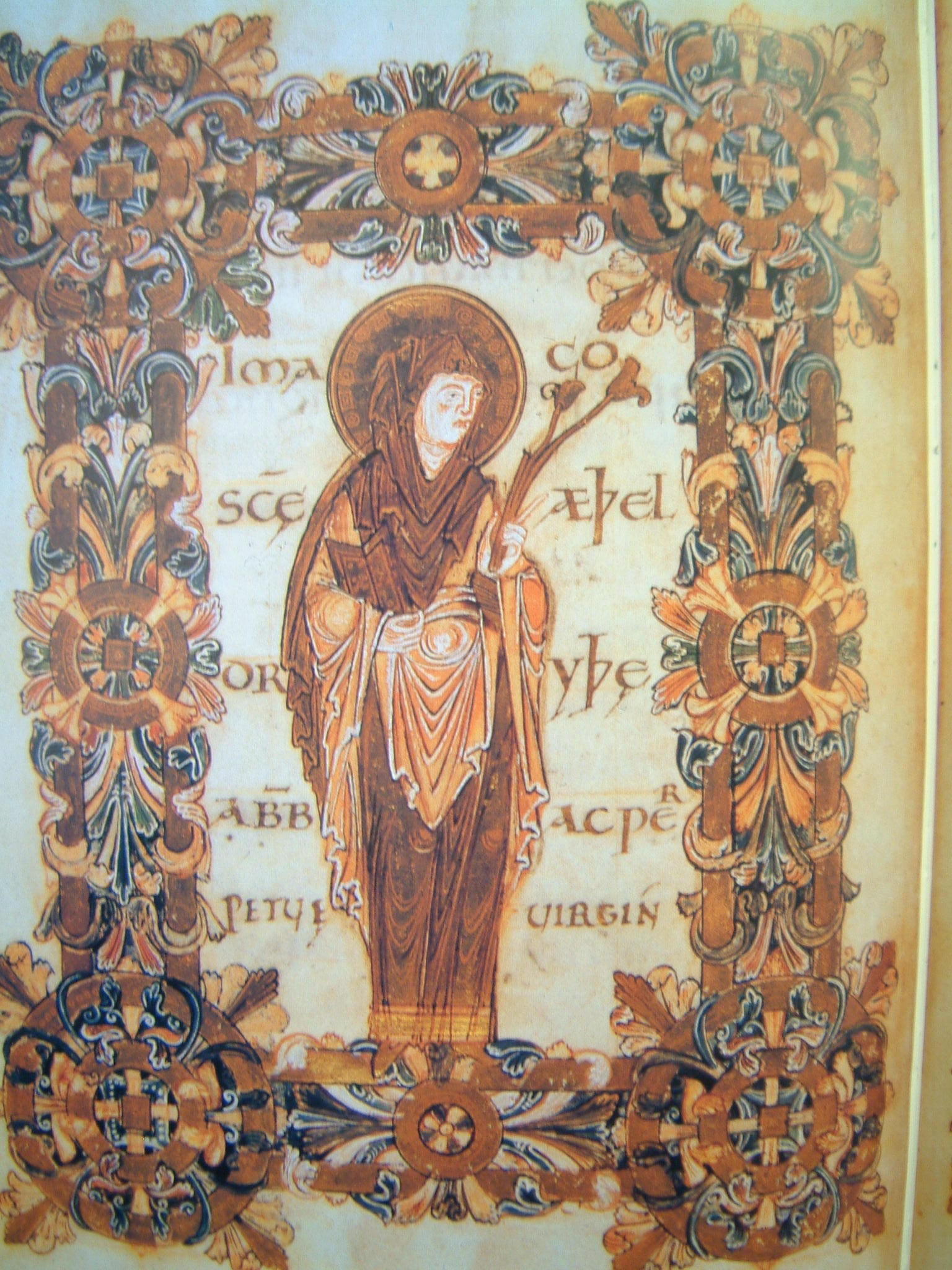
Etheldreda was the daughter of King Anna of East Anglia and one of four royal sisters all of whom became saints. Married twice for political reasons — first to Tondbert of the South Gyrwe, then to Egfrith of Northumbria — she remained, by her vow of virginity, a virgin in both marriages.
When Egfrith pressed her to consummate the marriage after twelve years, she fled with the help of Bishop Wilfrid to the family lands at Ely in the fens of East Anglia. There she founded a double monastery in 673 and became its abbess. She lived in great asceticism — eating one meal a day, wearing only wool — and ruled the community for six years until her death from a neck tumor (which she received with great joy, saying it was God's just punishment for her early love of necklaces).
When her sister-abbess Sexburga had the body translated sixteen years after her death, it was found entirely incorrupt; the wound made by her doctor before her death was perfectly healed. Her tomb at Ely became one of the great pilgrim destinations of medieval England. The fair held at her shrine each year on her feast day gave the English language the word 'tawdry' — from 'St. Audrey's' lace, sold there, eventually becoming cheap imitation.