
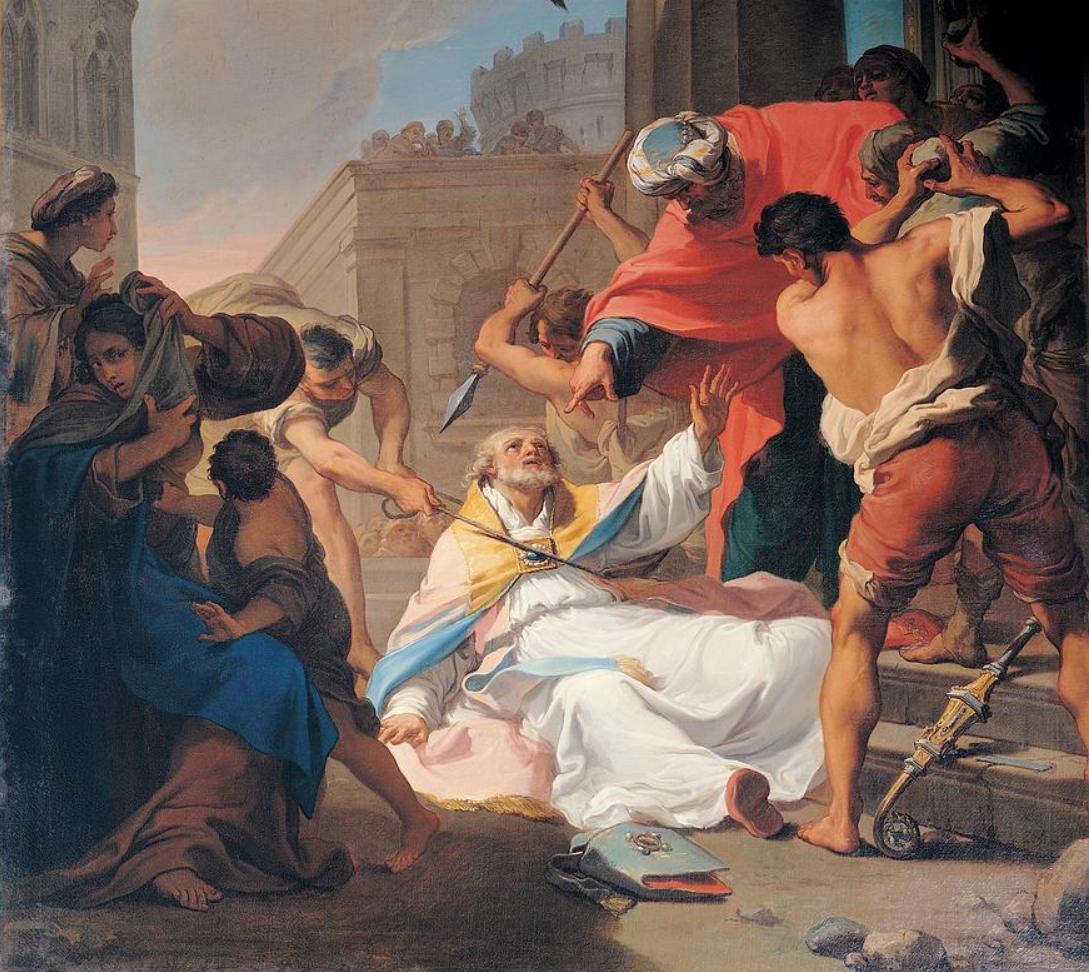
Eusebius was born in Sardinia and brought as a child to Rome, where he served the Church as a lector. In 345 he was made the first bishop of Vercelli in Piedmont, and did there something no bishop in the West had done: he gathered his clergy to live with him in common, under a rule, in the middle of the city. Ambrose, writing to the church of Vercelli a generation later, held it up as the pattern of a clergy, and Augustine's household at Hippo descends from it.
In 355 Pope Liberius sent him to the council at Milan, where the emperor Constantius demanded that the bishops sign a condemnation of Athanasius. Eusebius laid the Nicene creed on the table and said he would sign nothing until every bishop present had signed that. He was exiled for it, first to Scythopolis in Palestine under the Arian bishop Patrophilus, then to Cappadocia, then to the Thebaid in Upper Egypt. His letters home survive, one of them addressed to the beloved brothers and priests he missed so much, and to the holy people of firm faith. Julian's amnesty freed him in 362; he sat in Athanasius's synod at Alexandria that year, and came home to Vercelli in 363 to fight Arianism in the north with Hilary of Poitiers.
He died at Vercelli on 1 August 371, an old man, in his own bed. The Middle Ages, which could not think of such a confessor without a martyrdom, gave him one, and he is painted being stoned; the calendar knows better, and commemorates him on 2 August as a bishop. His cathedral keeps the Codex Vercellensis, the oldest manuscript of the Gospels in Latin, which a tradition as old as the church says he wrote out himself.