
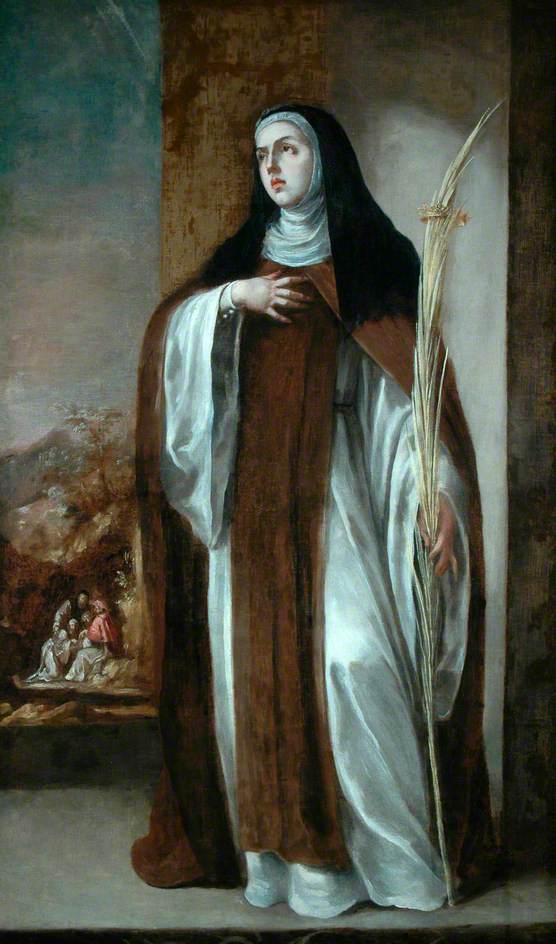
Eustochium (Greek Eustochion, 'good aim') was the third daughter of the great Roman patrician widow Paula (see Paula's entry already in the catalogue). She was raised on the Aventine in the Marcella circle (see Marcella above), educated in Latin and Greek from childhood, and at fourteen received from Jerome the celebrated Letter 22 of 384 (the Liber de Virginitate Servanda) — the longest and most theologically substantial of all of Jerome's letters, addressed to the young Eustochium on the meaning and demands of consecrated virginity.
The Letter 22 to Eustochium is the foundational Latin patristic text on Christian consecrated virginity and one of the most influential single letters of the entire Latin patristic period. It established Eustochium — who took the formal vow of consecrated virginity in her teens — as the personal patroness of the late-4th-century post-Aventine consecrated-virgin Catholic movement.
She accompanied her mother Paula in the great 385 Aventine-to-Bethlehem emigration: after the death of Pope Damasus had ended Jerome's Roman political-ecclesiastical patronage and a controversy had broken out around Jerome's relationship with the Roman patrician women's circle, Paula and Eustochium liquidated the family estates, left Rome forever, and settled at Bethlehem in 385 to establish — under Jerome's direction — the foundational Latin biblical-scholarly community of the patristic era.
At Bethlehem the two founded three monasteries: one for men (under Jerome), and two for women (under Paula, with Eustochium as Paula's deputy). After Paula's death in 404 (see Paula's entry), Eustochium succeeded her mother as superior of the women's communities and as Jerome's principal patroness and intellectual partner for the remaining 15 years of her own life. She is one of the dedicatees of major portions of Jerome's Vulgate translation work. She died at Bethlehem on September 28, 419, six months before Jerome's own death in 420. Her tomb is in the Bethlehem monastic complex, now incorporated into the Catholic Church of St. Catherine adjacent to the Basilica of the Nativity.