
MIRACULOUS MIRACLES™

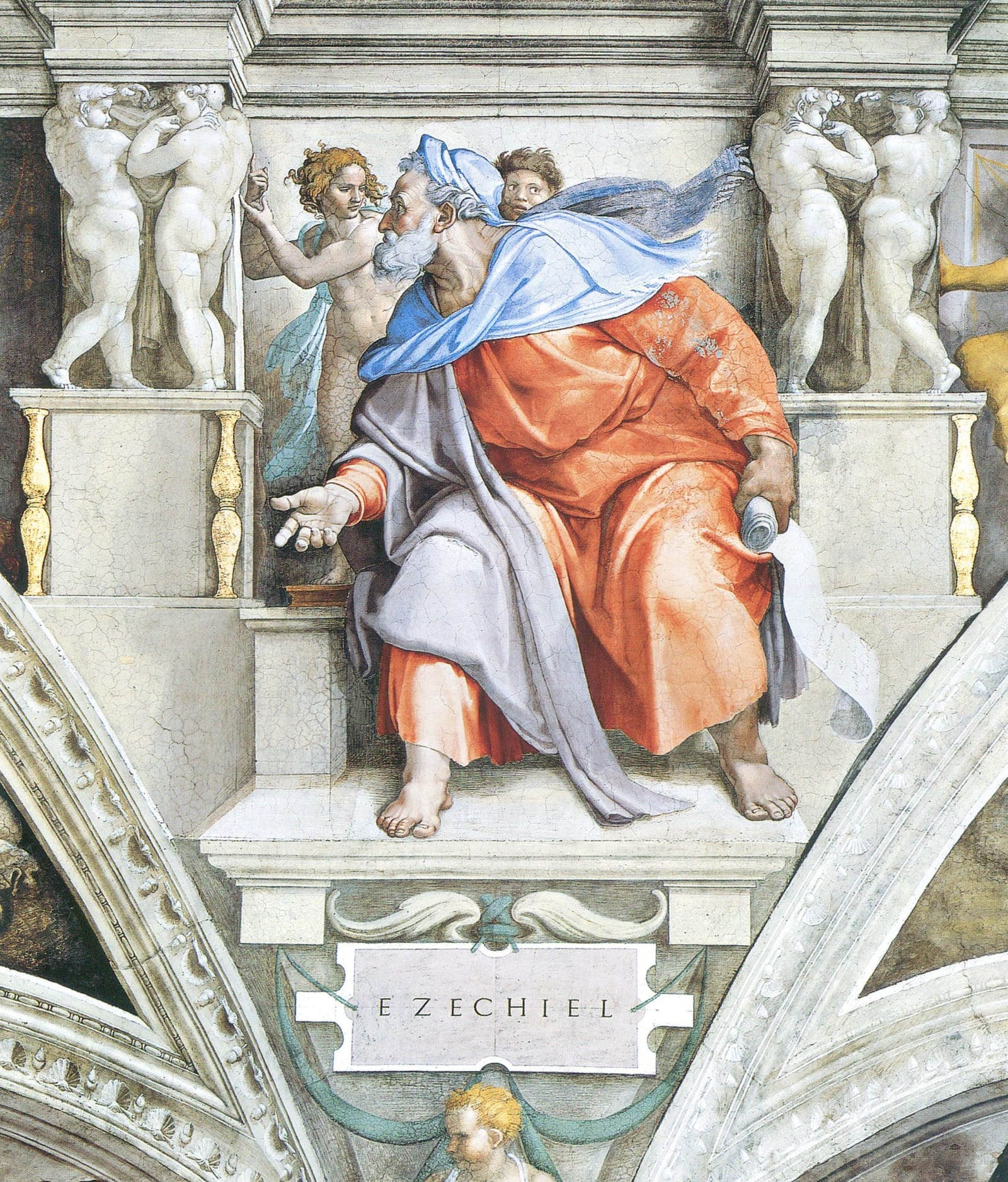
Saint — Ezekiel the Prophet

Ezekiel the Prophet
c. 622 BC, Judah — c. 570 BC, Babylon
Prophet of the Exile — Visionary of the Glory
Tomb of Ezekiel, Al-Kifl, Iraq
Feast
April 10
✠ MartyrKilled in Babylon by a prince of the exiles he had rebuked for idolatry, per tradition, c. 570 BC → The Martyrs
Life

Ezekiel son of Buzi, a priest, was taken with the first deportation to Babylon in 597 BC. By the river Chebar, in the fifth year of his exile, the heavens opened and he saw the visions of God — the chariot-throne borne by four living creatures with four faces, the wheels within wheels filled with eyes (Ezek 1).

His prophecies announce both judgment and restoration. He saw the glory of the Lord depart from the Temple before its destruction (Ezek 10), and saw it return in a new Temple in his final vision (Ezek 43). He proclaimed the coming of a good shepherd over God's flock (Ezek 34), prefiguring Christ. The vision of the valley of dry bones (Ezek 37) is the Church's principal Old Testament reading on resurrection.

Tradition holds he was martyred in Babylon by a prince of the exiled people whom he had rebuked for idolatry. His tomb at Al-Kifl in modern Iraq, venerated by Jews and Muslims, has been a pilgrimage site for two and a half thousand years.

Miracles & Phenomena
  • Vision of the Valley of Dry Bones

    The bones came together, sinews and flesh covered them, breath entered them — the type of the Resurrection.

    → Full miracle page
  • Vision of the Chariot-Throne

    Four living creatures with four faces — the iconographic source of the symbols of the Four Evangelists.

Relics
  • Body
    Tomb of Ezekiel (Al-Kifl)
    Al-Kifl, southern Iraq

    Major pilgrimage site venerated for over two millennia.

Iconography
  • Ezekiel and the Valley of Dry Bones

    The prophet standing in a valley where bones assemble, rise, and breathe — one of the most reproduced Old Testament scenes in Christian art.

Patronages
The deported and the exiled