
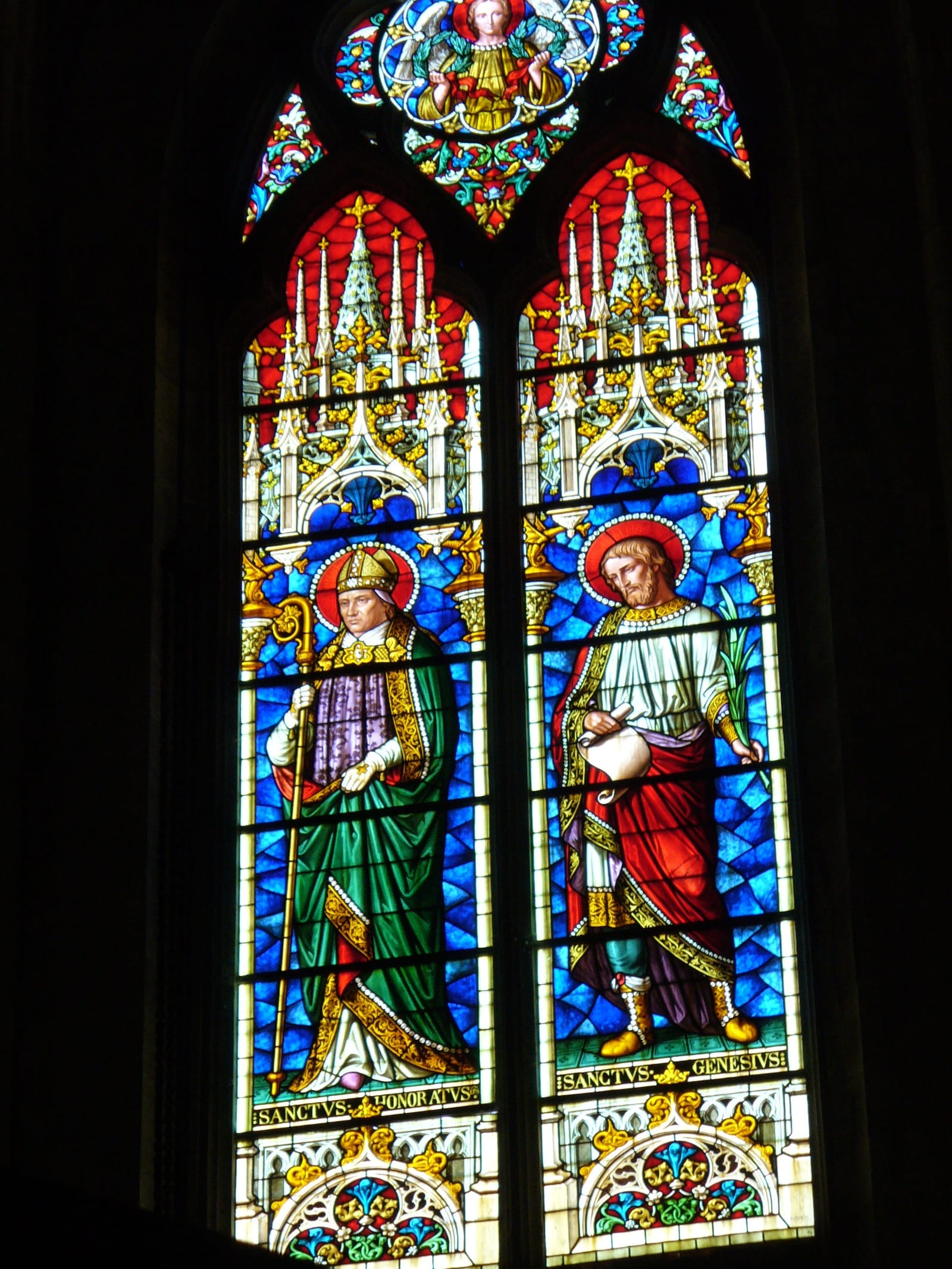
Genesius (Latin Genesius) was a young Roman notary (notarius — the legal official who recorded the verdicts of the imperial provincial tribunals) of the Roman provincial capital of Arles (Arelate) in the late 3rd century. He was a Christian catechumen — had not yet been baptized, but was preparing for baptism in the catechumenate.
In 303 AD the great Diocletianic edicts against Christianity were promulgated, and the proconsul of the Province of Viennensis (the Roman provincial unit that included Arles) summoned a public sentencing-session in Arles to enforce the edicts. Genesius — recording the proceedings in his official capacity — was ordered to write down the public reading of the imperial edict ordering the systematic persecution of Christians. He refused publicly, threw down his notary's stylus, and openly declared his Christian faith before the assembled tribunal.
He fled to the small Christian community of Trinquetaille across the Rhône from Arles, where the local bishop offered to baptize him; Genesius — fearing arrest before the baptism could be administered — chose to flee further and was caught and beheaded by the Roman soldiers at the bank of the Rhône. The medieval tradition holds that his martyrdom-by-Rhône waters constituted his baptism (the foundational early Catholic doctrine of baptism by blood). His tomb at Trinquetaille — preserved continuously since the 4th century — is one of the foundational pilgrimage sites of Provençal Catholicism.