
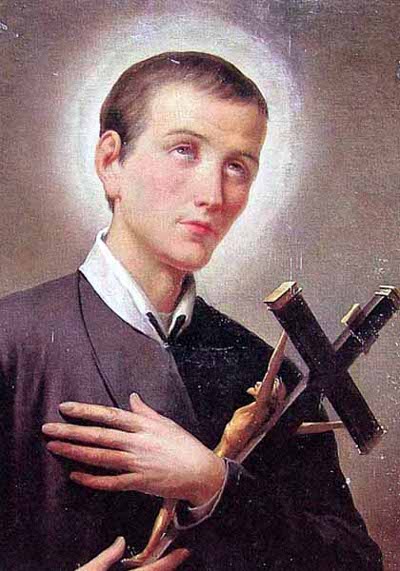
Gerardo Majella was the son of a poor tailor of Muro Lucano in the mountainous Basilicata region of southern Italy. Orphaned of his father at twelve, apprenticed to a brutal master tailor, working for the local bishop's household before his death, Gerard was three times rejected by the Capuchins (for poor health) before he encountered the new Redemptorist congregation of Alphonsus Liguori in 1749 at twenty-three. He entered the Redemptorists as a lay brother in 1752 and served them for the remaining three years of his life.
Despite his short Redemptorist career, the dossier of mystical and miraculous phenomena attached to him exceeds that of nearly any other 18th-century saint: bilocations witnessed by multiple independent observers, levitations at prayer, multiplications of food at the convent, prophecy of distant events with documented verification, and — most distinctively — a long sustained series of interventions in difficult and dangerous childbirths. He was the patron-saint-in-life for the women of the Basilicata; their requests for his prayer in pregnancy crises (often verified after his death) became the basis of his universal modern patronage of pregnant mothers.
In 1754 he was the object of a false accusation by a woman from the village of Lacedonia — that he had fathered her unborn child. He neither defended himself nor identified his accuser, refused to answer the formal charges from his superiors, and accepted the public disgrace in silence. When his accuser confessed her perjury weeks later on her own deathbed, Alphonsus Liguori asked Gerard why he had not defended himself. 'The Rule prescribes silence in such cases,' he replied. He died of tuberculosis at the convent of Materdomini on October 16, 1755 at twenty-nine. Canonized 1904.