
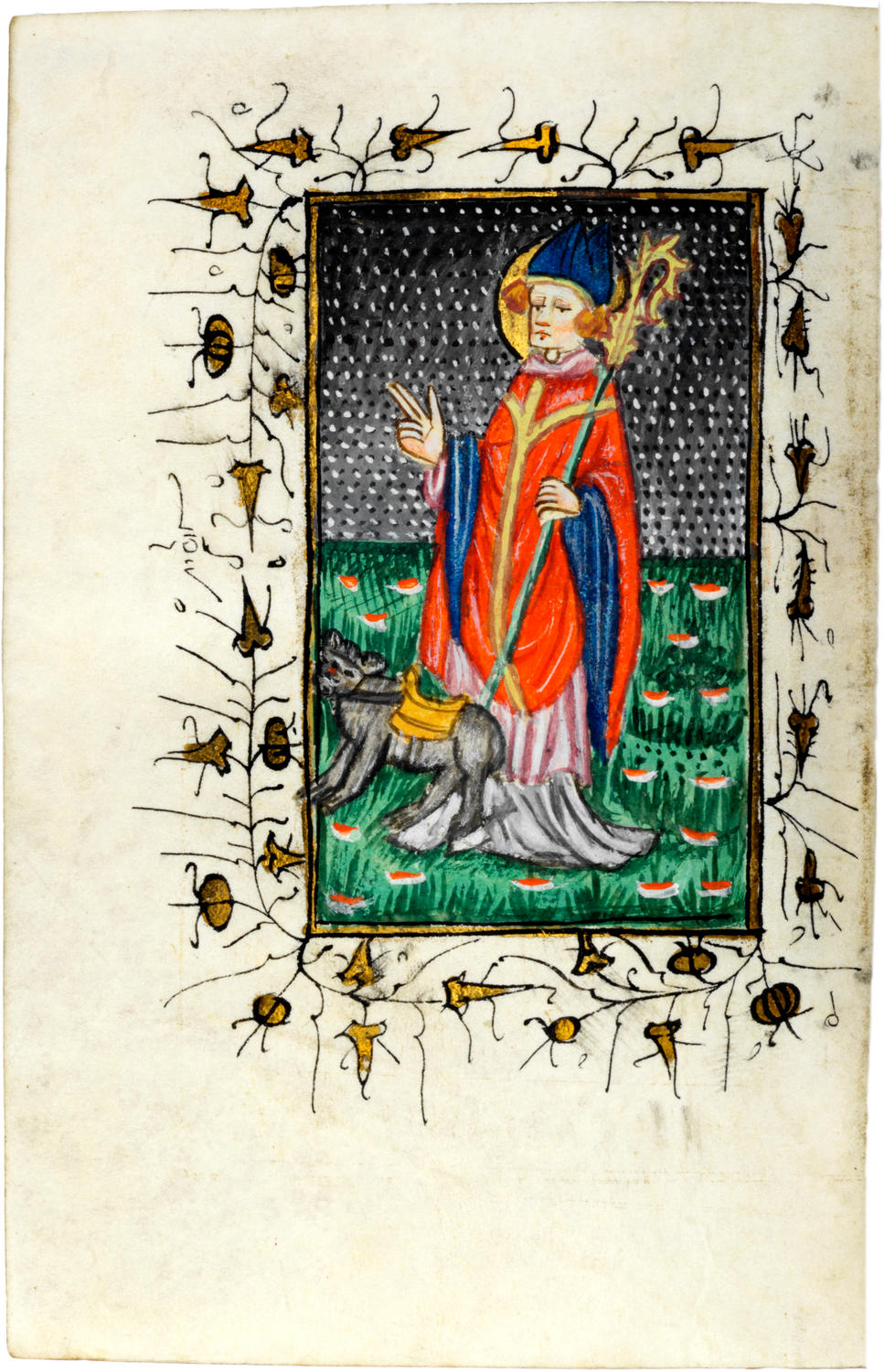
Géry (Latin Gaugericus, Walloon Gaury) was — per the 8th-century Vita Gaugerici — born around 550 AD at the small Belgic-Frankish village of Yvoir-sur-Meuse (in what is now southern Belgium). He was ordained priest in the diocese of Trier under Bishop Magnericus and was consecrated Bishop of Cambrai-Arras around 585.
He governed the substantial Belgic-Frankish episcopal see of Cambrai-Arras for some forty years through the difficult period of post-Merovingian Frankish political consolidation. His pastoral work was the substantial expansion of Catholic parish and monastic structure across the central Belgic-Frankish territory that is now Belgium and northern France — including the establishment of a small chapel-foundation on the small island in the Senne River that became the Catholic centre of what would eventually grow into the city of Brussels (the Île Saint-Géry, the location of the Belgian capital).
Géry died at Cambrai on August 11, 625. He is the continuous Catholic patron of the city of Brussels — the small Île Saint-Géry church he established in around 580 AD is the continuous Christian foundation on the site of the modern Belgian capital, and the Brussels Catholic civic-religious tradition has continuously venerated him as the patron since the early-medieval period.