
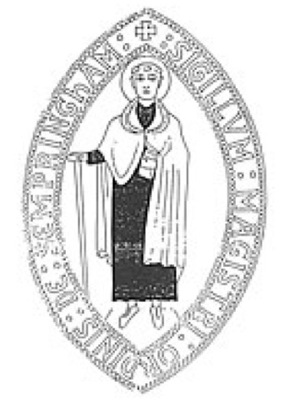
Gilbert was the son of an Anglo-Norman knight of Sempringham in the Lincolnshire fens, born with a physical deformity that disqualified him from knighthood. He was educated in France, ordained priest, and returned to be parish priest of Sempringham — his father's gift living. In 1131 seven young women of his parish came to him asking to live a strict religious life. He enclosed them in cells against the wall of his parish church, the first foundation of what became the Gilbertine Order.
Over the next decades the foundation grew into a unique English double order: nuns following the Rule of St. Benedict, canons following the Rule of St. Augustine, and lay brothers and sisters following Cistercian customs, all living on the same site in strictly separated quarters but sharing a single liturgy through a wall-and-grille arrangement of the church. Gilbert tried to give the order to the Cistercians; Bernard of Clairvaux refused, and so Gilbert remained Master of the order through his long life.
By his death in 1189 — aged about a hundred and six — there were thirteen Gilbertine houses with about 2,000 members. He is the only Englishman to have founded a major medieval religious order. The Gilbertines were entirely English; the order did not survive the Henrician dissolution of 1538.