
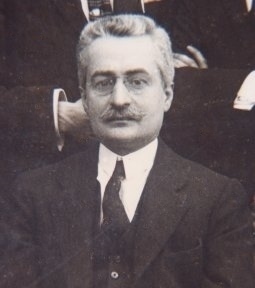
Giuseppe Moscati was the seventh of nine children of a magistrate of the southern Italian gentry, educated at Naples. He graduated MD from the University of Naples Federico II in 1903 at twenty-two, top of his class, and spent the next twenty-four years (1903–27) as physician at the Ospedale degli Incurabili in Naples — the great Neapolitan hospital that traced its origins to the Catholic charitable institutions of the 16th century.
He combined his hospital practice with a substantial private clinic and academic research at the University of Naples (he was on the faculty of medicine from 1908). In all three settings he applied a deliberate integration of state-of-the-art medical practice (he was one of the first Italian physicians to use insulin clinically — within months of its 1922 discovery by Banting and Best) with explicit Catholic spiritual care: he routinely insisted on bedside confession before major surgery, attended his Catholic patients personally before consultation with a hospital chaplain to confirm sacramental disposition, and supported financially out of his own income hundreds of indigent patients across the city.
During the eruption of Mount Vesuvius on April 8, 1906 he personally evacuated the hospital of San Sebastiano in Torre del Greco on the slopes of the volcano, carrying immobile patients out one at a time on a stretcher. During the catastrophic Naples cholera epidemic of 1911 he served as hospital chief of his ward without contracting the disease, and during the long Spanish influenza pandemic of 1918–19 he served continuously. He died of a sudden cardiac attack at his desk at his Naples clinic on April 12, 1927 at forty-six. Canonized 1987 — the first formally canonized modern Catholic medical doctor.