
MIRACULOUS MIRACLES™

Saint — Gregory of Narek

St. Gregory of Narek
c. AD 951, Andzevatsik (Armenia) — c. AD 1003 or 1011, Monastery of Narek
Mystical Doctor of the Armenian Church
Monastery of Narek (former site, near Lake Van), Turkey
Feast
February 27 (Roman); Saturday before Transfiguration (Armenian)
Canonized
Declared Doctor of the Church 2015 (by Pope Francis) — the first declared from the Armenian Apostolic tradition
Doctor of the Church
Yes
Life

Gregory was born in the kingdom of Vaspurakan, in the southern Armenian highlands near Lake Van. His father was a bishop, his mother died when Gregory was young; he and his elder brother were given to their great-uncle Anania, abbot of the monastery of Narek, to be raised. There Gregory spent the rest of his life as a monk and theologian.

His masterwork is the Book of Lamentations (also called Narek or Speaking with God from the Depths of the Heart) — a collection of ninety-five long meditative prayers, composed near the end of his life. Each prayer is addressed personally to God, and each is at once a confession of sin in the strongest patristic language and an act of confident hope in mercy. The work has been the spiritual companion of the Armenian people for a thousand years — read at sickbeds, copied on the inside of houses, placed under the pillows of the dying.

Pope Francis declared him a Doctor of the Universal Church on April 12, 2015 — the centennial of the Armenian Genocide. The declaration was a major ecumenical gesture: Gregory belonged to the Armenian Apostolic Church, not formally in communion with Rome, but his sanctity and orthodoxy were recognised by the universal Catholic Church.

Miracles & Phenomena
  • The Book of Lamentations (c. 1002)

    Ninety-five long prayers, each beginning 'Speaking with God from the depths of the heart' — by tradition the most-read book of the Armenian people after the Bible. The book has been associated with healings, conversions, and consolations for over a thousand years.

  • The Survival of the Armenian Spirit

    Narek's prayers, copied and recopied, have been credited by Armenian historians with sustaining the spiritual identity of a people repeatedly subject to invasion, massacre, and dispersion — most especially in the years following the Armenian Genocide of 1915.

Relics
  • Object
    Manuscripts of the Book of Lamentations
    Mesrop Mashtots Institute of Ancient Manuscripts (Matenadaran), Yerevan, Armenia

    His original tomb and the monastery of Narek were destroyed in the Armenian Genocide of 1915. The earliest manuscripts of his Book of Lamentations are preserved in the great Armenian library at Yerevan.

Iconography
  • Gregory at the Lectern

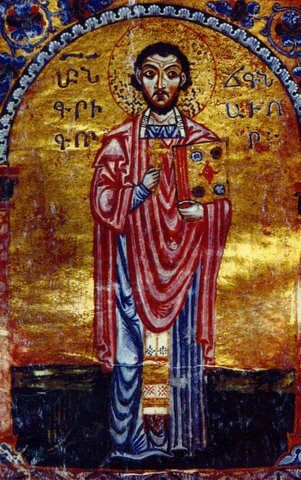
    Armenian icons depict him as a tonsured monk in the Armenian eastern habit, writing at a desk or holding the open Book of Lamentations.

Patronages
The Armenian peoplePoets and contemplativesThose near despair
Sources & Further Reading