
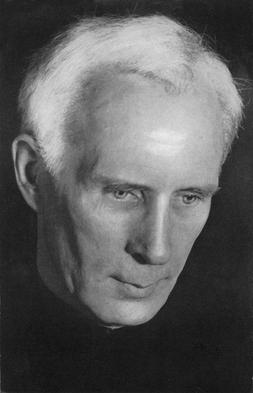
Henri-Marie-Joseph Sonier de Lubac was born on February 20, 1896 at Cambrai to a noble de Lubac family. In 1913, at the age of 17, Henri entered the Society of Jesus.
Wounded at the Battle of Verdun (1917) during World War I — producing the permanent chronic pain that would shape his scholarly life.
Ordained priest in 1927, Henri became professor of fundamental theology at the Catholic Faculty of Lyon in 1929 — beginning the 30-year Lyon academic career.
In 1946, Henri published 'Surnaturel' (Supernatural) — the systematic recovery of the Patristic-Thomist theology of grace and nature. The book provoked the controversy that would produce the 1950 encyclical *Humani Generis* — Pope Pius XII's systematic response to the 'nouvelle théologie' movement.
In 1950, Henri was forbidden by the Jesuit superiors to teach and publish — the 'exile' period (1950–1958).
In 1958, following the election of Pope St. John XXIII, the restrictions were lifted. Henri was appointed peritus (theological expert) at the Second Vatican Council (1962–1965) — becoming one of the principal architects of the Council's Ressourcement theological orientation.
In 1983, Pope St. John Paul II created Henri Cardinal — the papal recognition of Henri's theological witness.
Henri composed multiple theological monographs: 'Catholicism' (1938), 'Corpus Mysticum' (1944), 'The Drama of Atheist Humanism' (1944), 'The Splendor of the Church' (1953), the four-volume 'Medieval Exegesis' (1959–1964), and the 'Theology of History in St. Bonaventure' (1971).
He died at Paris on September 4, 1991 at the age of 95.