
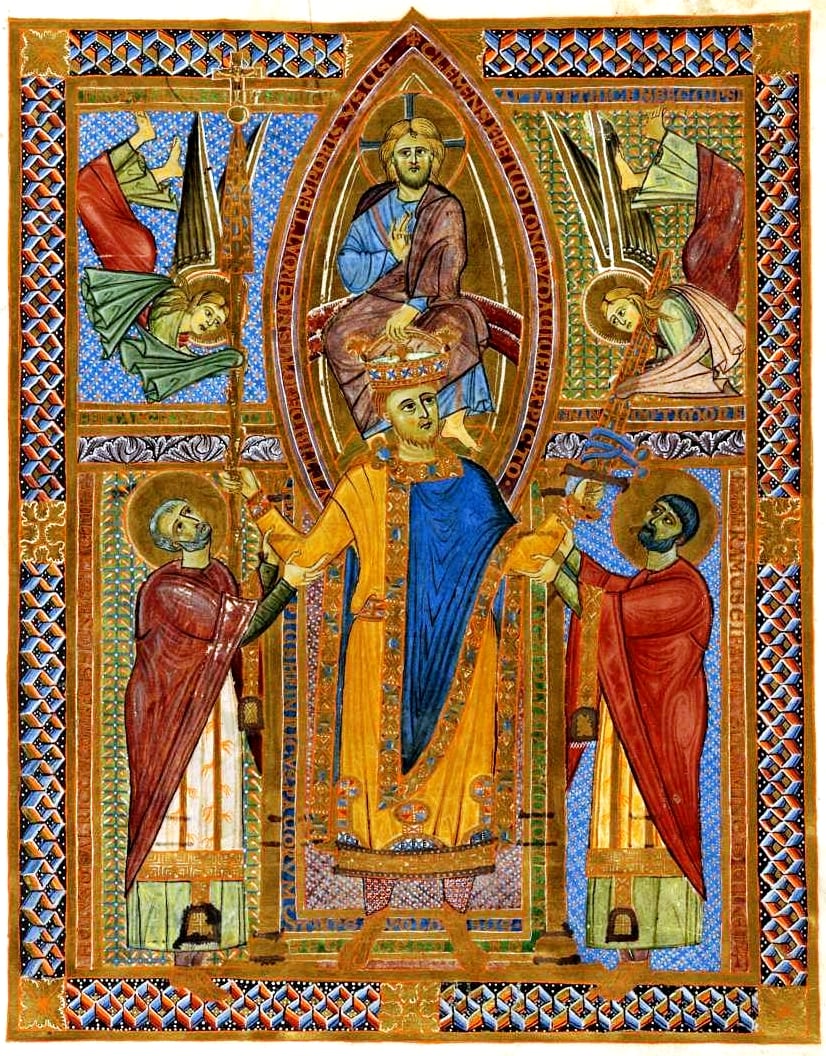
Henry, Duke of Bavaria, was crowned King of the Germans at Mainz in 1002 and Holy Roman Emperor in Rome in 1014. Educated by Bishop Wolfgang of Regensburg in Benedictine spirituality, he ruled as a layman steeped in monastic discipline — supporting the Cluniac reform across the empire, founding the bishopric of Bamberg in 1007, and laying the cornerstone of Bamberg Cathedral with his wife Cunigunde.
His political achievements were considerable — he subdued the Polish Boleslaus, recovered Italy, and was the chief patron of reform synods at Pavia (1022) — but it is his personal sanctity that endured. Tradition holds that he and Cunigunde lived a virginal marriage (the so-called 'Josephite marriage'), a claim already current in his lifetime. He died at Grone and was buried at Bamberg.
He is the only canonized Holy Roman Emperor of medieval Germany, and his sainthood — together with his wife Cunigunde's — became the patronal cornerstone of the Bamberg diocese.