
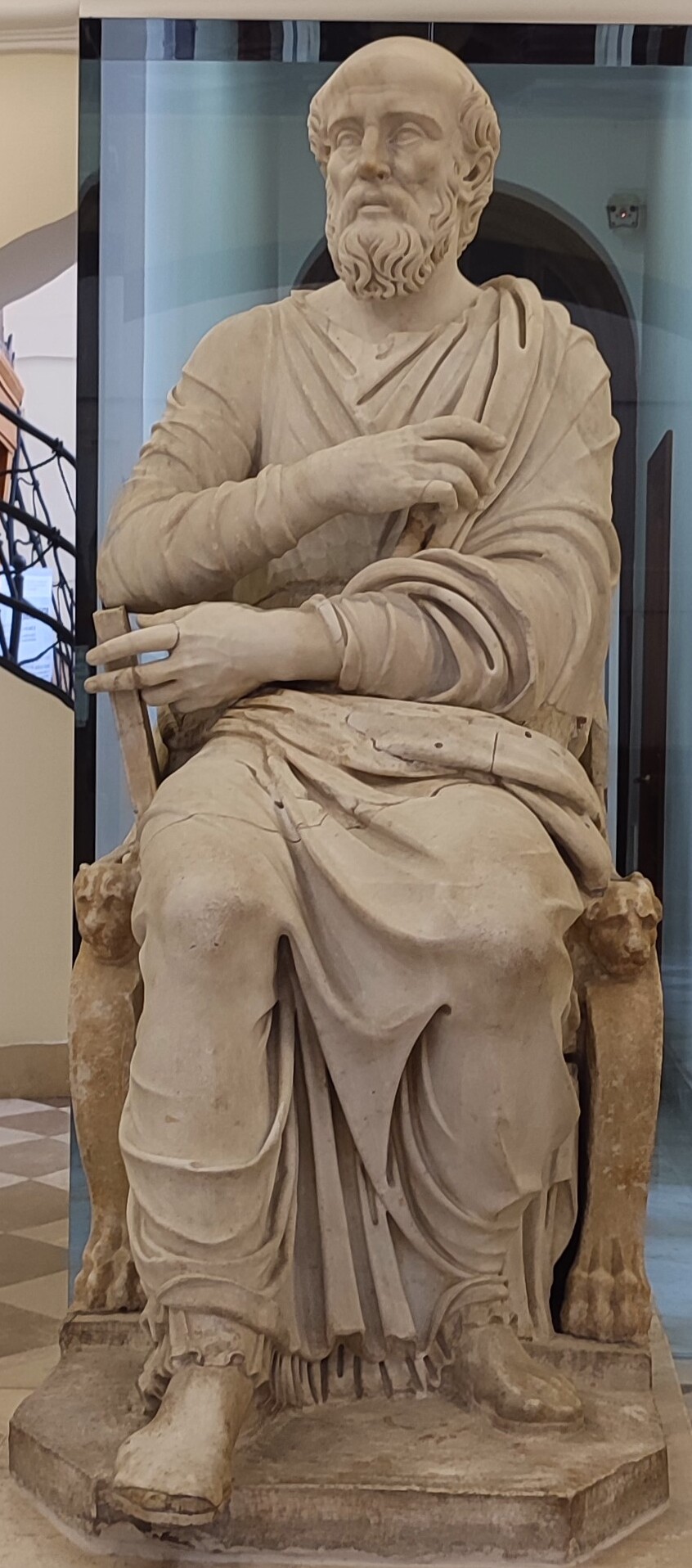
Hippolytus was a presbyter of the Roman Church, a learned theologian who broke with Pope Callixtus I (217) over questions of doctrine and discipline, especially the Church's leniency in admitting penitents back to communion. He set himself up as a rival bishop — the first antipope of recorded history.
He continued in schism through the pontificates of Callixtus, Urban I, and Pontian (until 235). When the Emperor Maximinus Thrax exiled both Pontian and Hippolytus together to the mines of Sardinia, they reconciled in their sufferings. Pope Pontian resigned the papacy (the first papal abdication on record) so that the Roman Church could elect a successor; Hippolytus renounced his schism. They died as fellow martyrs in the mines.
His Apostolic Tradition — a Greek text of c. 215 — is among the earliest detailed liturgical documents in Christian history. The Eucharistic Prayer it preserves is the source of Eucharistic Prayer II of the modern Roman Missal, the most commonly used Eucharistic Prayer at weekday Masses today. His Refutation of All Heresies remains a fundamental source for second- and third-century gnostic teaching.