
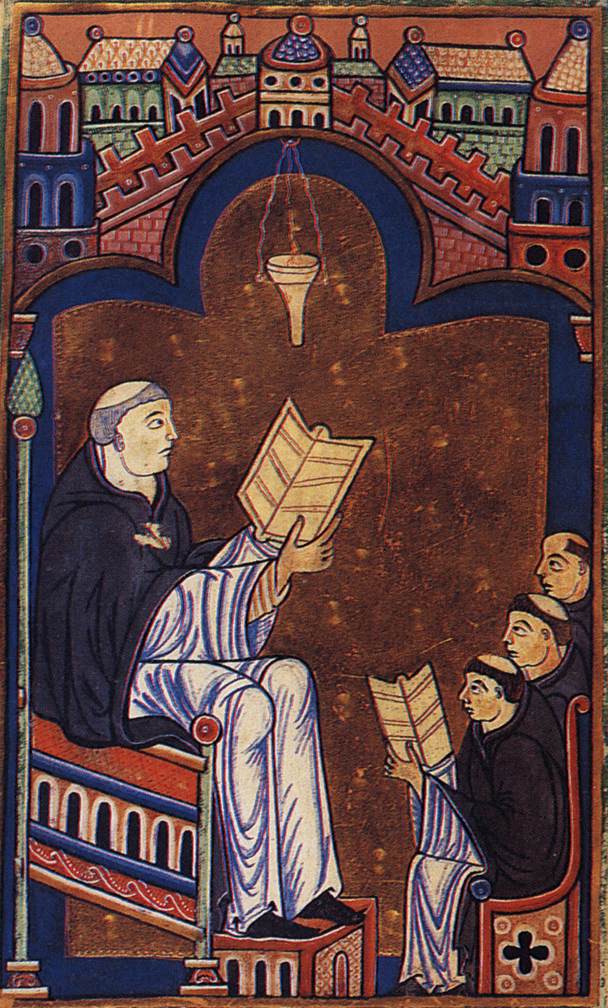
Hugh entered the Abbey of Saint-Victor in Paris — the great house of regular canons founded by William of Champeaux in 1108 — around 1115 and rose to become its master of studies. Under him the Victorine school became, alongside the cathedral school of Notre-Dame and the abbey of Saint-Germain-des-Prés, one of the three foundations of the future University of Paris.
His writings — the Didascalicon (a programmatic survey of all human learning ordered to Scripture), the De Sacramentis (the first systematic theology of the Latin West before Peter Lombard's Sentences, on which it deeply influenced), and the great mystical works on the Ark of Noah and on contemplation — established a distinctive Victorine theology that united literal-historical scriptural exegesis, systematic doctrine, and contemplative mysticism in a single integrated discipline. Bonaventure later called him the 'Second Augustine.'
His humanist breadth was unusual for the twelfth century: he insisted that the seven liberal arts and the mechanical arts alike were stepping-stones to wisdom, and he wrote on geometry and grammar as well as on the Trinity. He died at the abbey in 1141 and is venerated as Blessed by the Augustinian Canons; he is included in the Roman Martyrology under February 11.