
MIRACULOUS MIRACLES™

Saint — Bl. Ida of Louvain (Ida of Léau)

Bl. Ida of Louvain (Ida of Léau)
c. 1211 AD, Louvain, Duchy of Brabant (bourgeois family — the unlikely bourgeois background for medieval sanctity) — October 28, 1290 AD, Cistercian Monastery of Roosendaal, Brabant
Cistercian nun; 13th-century Brabantine Beguine-Cistercian mystic; recipient of the stigmata
Cistercian Monastery of Roosendaal, Brabant (Belgium) — her monastic home; the monastery destroyed in the French Revolutionary dissolution; memorial preserved at the modern Louvain Catholic tradition, Belgium
Feast
April 13
Canonized
Beatified locally; venerated in the Cistercian calendar and the Belgian Catholic tradition
Life

Ida (Dutch Ida) was born around 1211 at Louvain to a wealthy Brabantine merchant family — the unlikely bourgeois background for medieval sanctity. Her father was a Louvain merchant who suffered financial misfortune during Ida's youth, producing the family's financial ruin.

Ida undertook the active mystical-devotional life in her youth — in the Brabantine Beguine tradition of the early 13th century (the Brabantine Beguine movement was the principal women's-lay-religious movement of the 13th-century Low Countries, producing dozens of Brabantine women mystics).

Around 1234, at the age of 23, Ida entered the Cistercian Monastery of Roosendaal in Brabant — following the Brabantine Beguine-Cistercian pattern of women moving from the lay-Beguine to the monastic-Cistercian vocation.

Ida spent the 56 years (1234–1290) at Roosendaal, undergoing extensive mystical-ecstatic experiences that were documented in her Vita (composed shortly after her death). The Vita records: stigmata (receiving the marks of the Passion of Christ on her body — one of the earliest documented Catholic stigmatics, in institutional parallel with contemporary Franciscan stigmatics), Eucharistic-mystical experiences (receiving the sacred host without bodily eating), visions of Christ and the Blessed Virgin, levitations during prayer, and bilocations.

The Ida-of-Louvain Vita establishes the distinctive Brabantine Beguine-Cistercian mystical tradition of the 13th century — in institutional parallel with the contemporary lives of Sts. Marie of Oignies (1213), Christina the Astonishing (1224), Lutgardis of Aywières (1246), Beatrice of Nazareth (1268), Ida of Nivelles (1231), and Ida of Lewis (1300).

She died at Roosendaal on October 28, 1290.

Miracles & Phenomena
  • The stigmata of the Brabantine Cistercian tradition

    Bl. Ida of Louvain's reception of the stigmata — the marks of the Passion of Christ on her body — is one of the earliest documented Catholic stigmatic experiences, in institutional parallel with the contemporary Franciscan stigmatic tradition (most famously the stigmata of St. Francis of Assisi at La Verna on September 14, 1224). The Ida-of-Louvain stigmata establishes the Brabantine Cistercian-mystical stigmatic tradition of the 13th century — in institutional distinction from the Franciscan stigmatic tradition.

  • The Brabantine Beguine-Cistercian mystical corpus

    Bl. Ida of Louvain's Vita — composed shortly after her death and documenting the extensive mystical-ecstatic experiences — participates in the distinctive Brabantine Beguine-Cistercian mystical corpus of the 13th century. The Brabantine corpus produces the largest body of medieval women's-mystical hagiographical writing anywhere in Catholic Europe — institutionally producing the late-medieval Rhineland-Brabantine women's-mystical tradition that would extend through the High and Late Medieval Catholic women's-mystical tradition to the present day.

Relics
  • Body
    Tomb of Bl. Ida of Louvain
    Cistercian Monastery of Roosendaal, Brabant (destroyed in the French Revolutionary dissolution 1794); fragmentary relics survive at the Cistercian houses of Belgium and at the Catholic parish churches of the Louvain region

    Her principal tomb at the Cistercian Monastery of Roosendaal was destroyed in the French Revolutionary dissolution of 1794; fragmentary relics survive at the Cistercian houses of Belgium and at the Catholic parish churches of Louvain.

Iconography
  • Ida of Louvain in the Cistercian mystical ecstasy

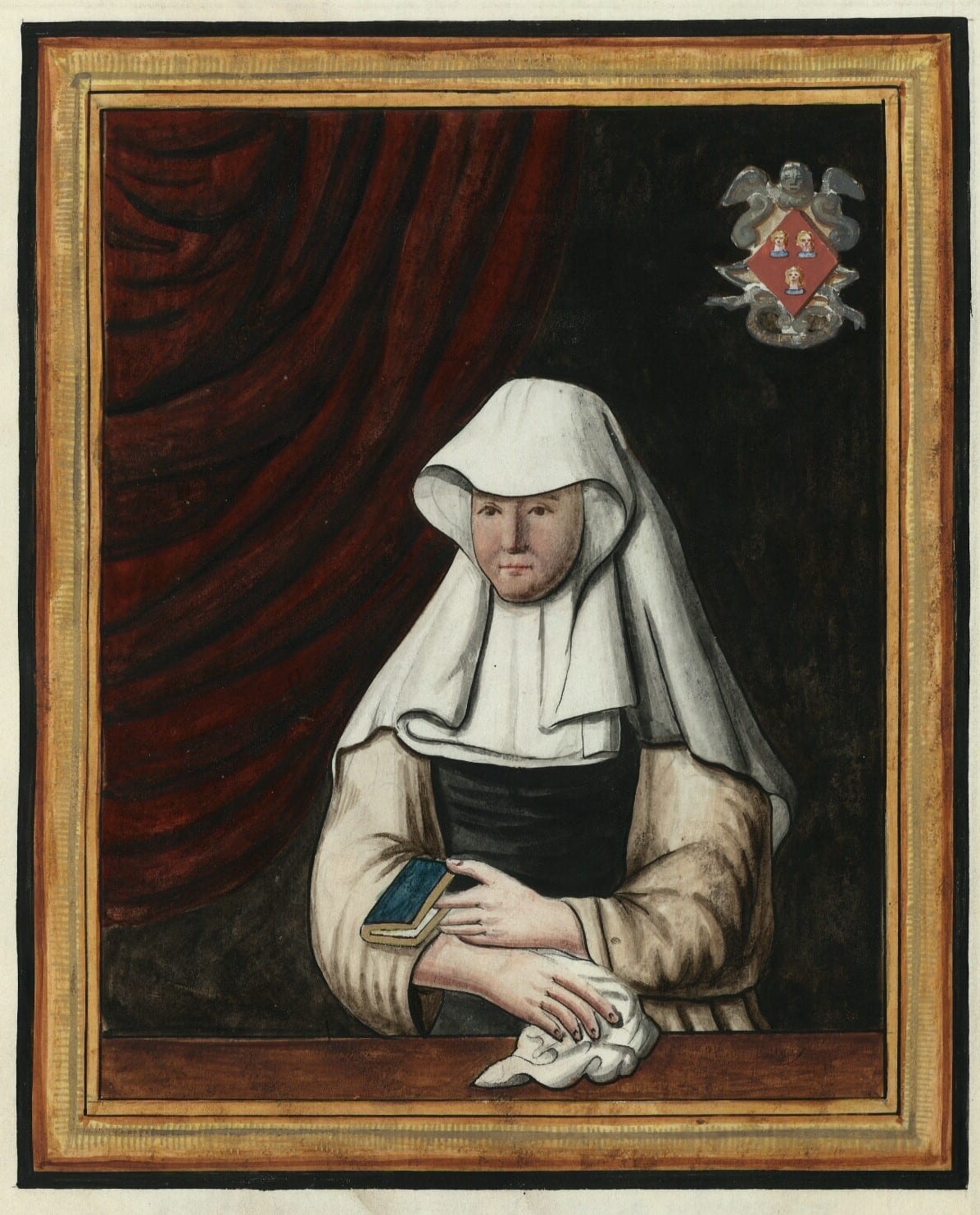
    The mid-13th-century Brabantine Cistercian nun in white Cistercian habit at the Monastery of Roosendaal in mystical-ecstatic prayer, the stigmata visible on her hands and feet, the Eucharistic host hovering above her mouth (the Eucharistic-mystical reception of the sacred host without bodily eating) — the iconography of Catholic Brabantine Beguine-Cistercian mystical tradition.

Patronages
Catholic Brabantine Beguine-Cistercian mystical tradition (with Sts. Marie of Oignies, Christina the Astonishing, Lutgardis of Aywières, Beatrice of Nazareth, Ida of Nivelles, Ida of Lewis)Louvain (Leuven) and the Brabantine Catholic traditionCatholic stigmatic mystics of the Cistercian tradition