
MIRACULOUS MIRACLES™

Saint — Imre (Emeric) of Hungary

St. Imre (Emeric) of Hungary
c. 1000–1007, Hungary — September 2, 1031, Hungary (hunting accident)
Royal prince — perpetual virgin in marriage
Basilica of Székesfehérvár (medieval Coronation Basilica), Hungary
Feast
November 5
Canonized
1083 (by Pope Gregory VII, jointly with his father St. Stephen)
Life

Imre was the only surviving son of St. Stephen of Hungary and Blessed Gisela of Bavaria, and was raised by his father's tutor St. Gerard of Csanád — a Venetian Benedictine — for both kingship and sanctity. Stephen wrote for his son the Admonitions (Libellus de institutione morum) — one of the earliest medieval royal handbooks of Christian governance.

Married to a Byzantine princess (whose name is uncertain), Imre is reported by the early Vita to have agreed with his wife on a vow of perpetual continence within marriage — the early Hungarian church saw in the agreement a sign of his sanctity. He was destined to succeed his father.

On September 2, 1031, riding to hunt boar in the Bihar region, Imre was killed by a wild boar — leaving his father heirless. Stephen's grief was profound and shaped the spiritual texture of the last seven years of his reign. Canonised jointly with his father by Gregory VII in 1083 (and with his old tutor St. Gerard of Csanád in the same ceremony).

Miracles & Phenomena
  • The Joint Canonisation of 1083

    August 20, 1083

    Stephen, Imre, and Gerard of Csanád were canonised together by Gregory VII in 1083 — a rare joint canonisation of a family and its teacher, marking the first generation of Hungarian Christian kingship as saintly.

Relics
  • Body
    Tomb of St. Imre
    Originally Székesfehérvár; relics largely destroyed in the Ottoman conquest of 1543

    Buried at the royal basilica of Székesfehérvár alongside his father. The basilica was destroyed by the Ottoman occupation of Hungary in 1543 and most of the relics were lost. Small fragments are preserved at various Hungarian shrines.

Iconography
  • Imre with the Lily

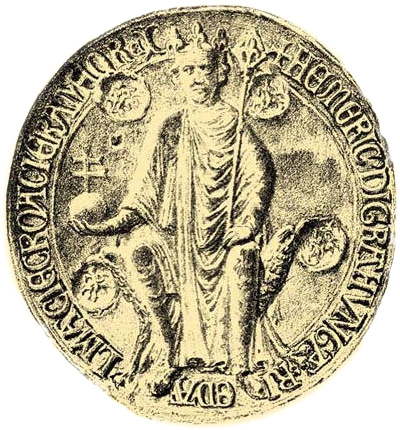
    The standard image — a young royal prince in medieval armour or court dress, holding a lily (perpetual virginity) and his own crown or sceptre.

Patronages
Young peopleSingle laymenHungarian youthHungarian Boy Scouts
Sources & Further Reading