
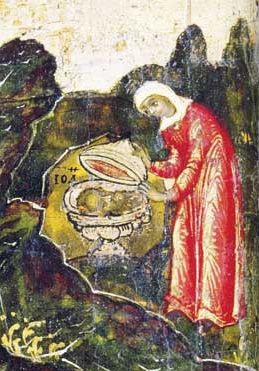
Joanna (Greek Iōanna, feminine of Iōannēs) was the wife of Chuza — described by Luke as 'Herod's steward' (Luke 8:3), that is, the household administrator of the Galilean court of Herod Antipas (the tetrarch who beheaded John the Baptist and to whom Pilate sent Christ in his Passion). Luke notes that Joanna was one of three named women (with Mary Magdalene and Susanna) and 'many others' who 'ministered unto him of their substance' (Luke 8:3) — that is, who financially supported Jesus and the Twelve from their own private resources during the Galilean ministry.
Her position in Herod's court — as wife of the chief steward — gave her substantial financial means and unusual social access. Some scholars have suggested that the famously detailed Lucan accounts of Herod's household (the Herod–John the Baptist episode, the Herod–Jesus meeting at the Passion) may derive from Joanna's first-hand testimony as a member of the court who later became a Christian.
She is named also in Luke 24:10 as one of the Myrrh-Bearing Women who came to the empty tomb on Easter morning and brought the resurrection-announcement to the apostles. She is venerated in the Byzantine tradition as one of the principal Myrrh-Bearers and as a major early Galilean Christian patroness.