
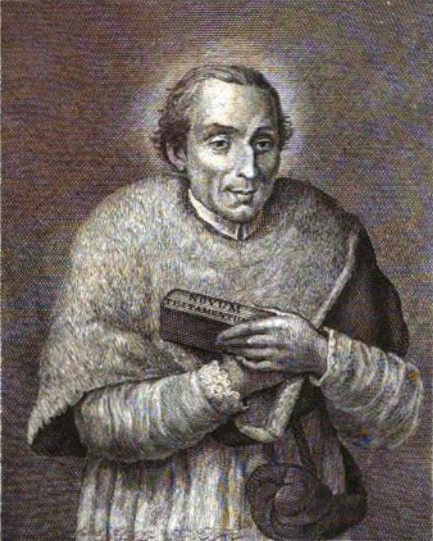
Giovanni Battista de Rossi was born in the small Ligurian Apennine town of Voltaggio and sent at thirteen to Rome to live with a cousin who was attached to the Roman Curia. He was educated at the Roman Collegio Romano, ordained priest in 1721 at twenty-three, and assigned a small canonry at the church of Santa Maria in Cosmedin. He served as parish priest first there, then from 1737 at the Hospice of the Holy Trinity of Pilgrims (Trinità dei Pellegrini) in the Regola district — the great Roman institution that hosted thousands of pilgrims each Jubilee year and that maintained year-round services for the city's homeless.
He was the model of the early-modern Roman parish priest. For thirty years he heard confessions at the Trinità dei Pellegrini and at Santa Galla — primarily of the most rejected categories of the city: the homeless, the prostitutes of the Trastevere docks, the drovers and farm-labourers who came into the city seasonally, and especially the mentally ill, whom he visited at the city's mental hospitals and rehabilitated through a remarkably gentle pastoral practice that anticipated modern psychiatric ministry by two centuries. He is widely regarded as the principal Roman diocesan-clergy saint of the 18th century.
He died at the Trinità dei Pellegrini Hospice on May 23, 1764. Canonized 1881.