
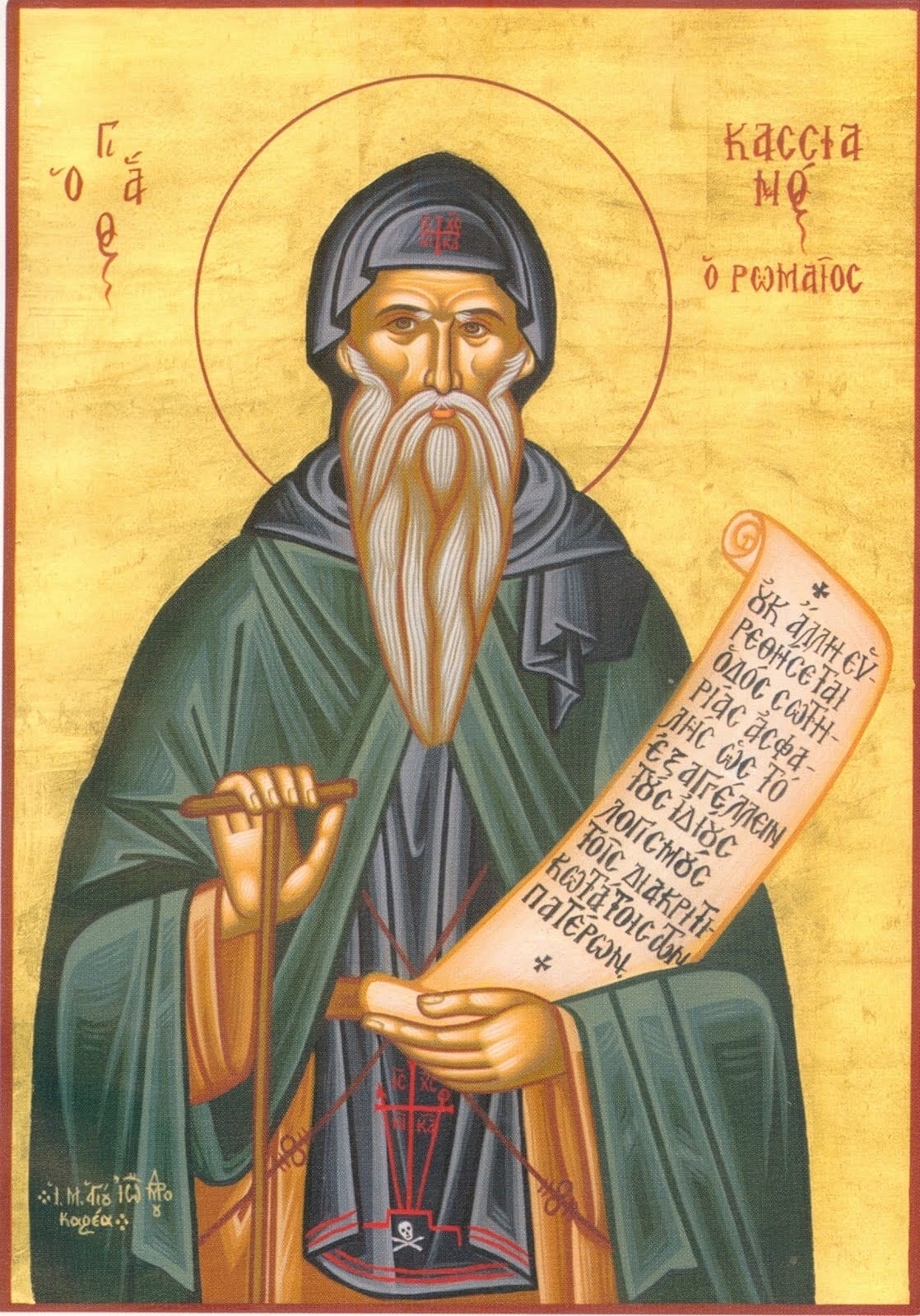
John Cassian was born in a Latin-speaking community on the western shore of the Black Sea. As a young man he traveled to Egypt with his companion Germanus to study the desert monastic tradition under the spiritual heirs of St. Anthony. After many years he came to Constantinople, where John Chrysostom ordained him deacon, and to Rome, before settling at Marseille around 415.
There he founded two monasteries (one for men, one for women) and wrote the two great works that transmitted Egyptian desert spirituality to the Latin West: the Institutes (the structure of monastic life and the eight 'principal vices' — the source of the medieval seven deadly sins) and the Conferences (twenty-four extended dialogues with the great Egyptian Abbas on prayer, virtue, and the contemplative life).
St. Benedict, writing his Rule a century later, prescribes the daily reading of Cassian's Conferences in his monastic communities (RB 42, 73). Through Cassian and Benedict, the spirituality of the Egyptian desert became the substance of every Western monastery for fifteen hundred years.