
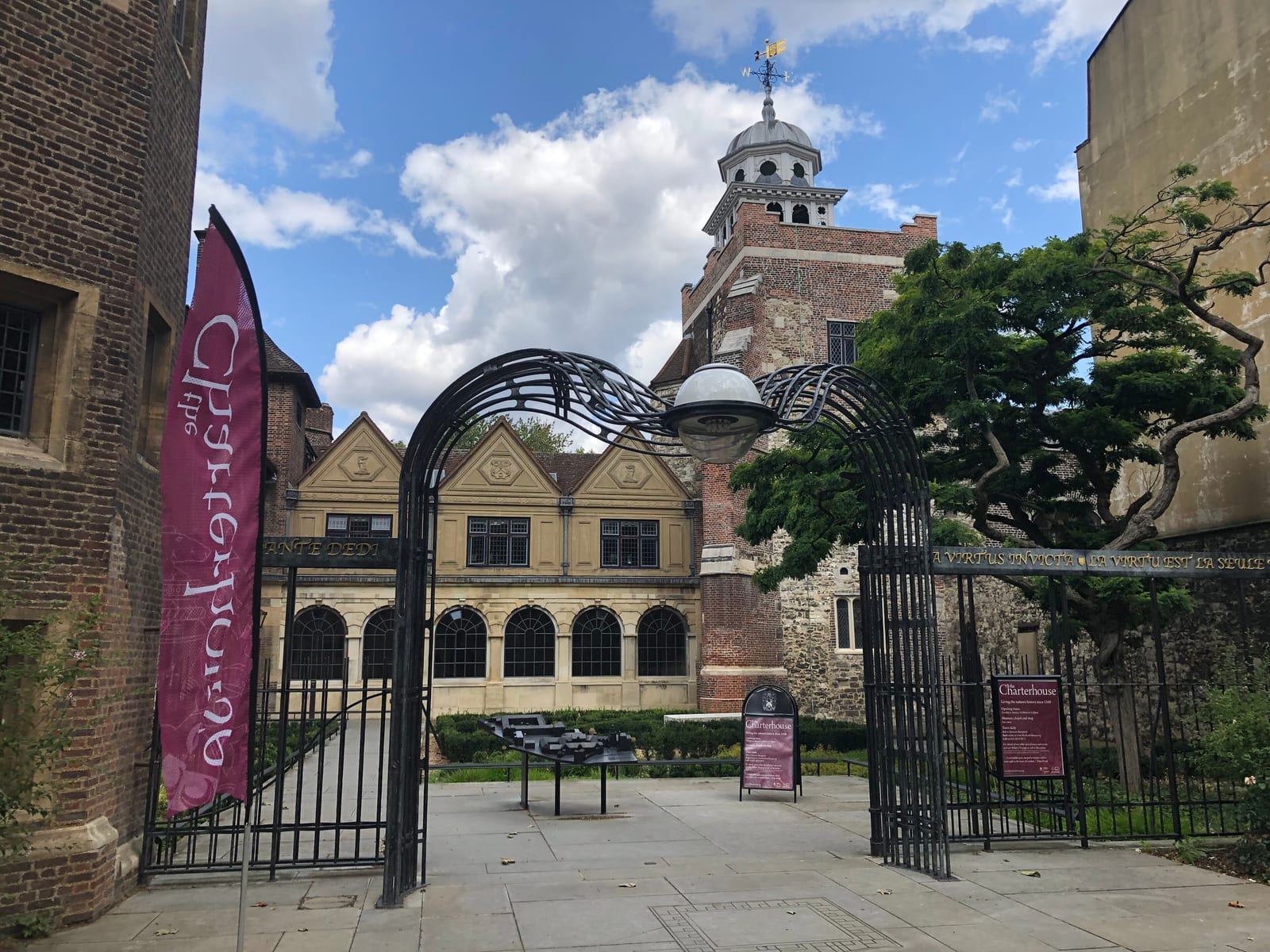
John Houghton studied at Christ's College, Cambridge, was ordained priest, served briefly as parish priest, and entered the London Charterhouse — the great Carthusian monastery on the edge of the medieval city of London — around 1515. He served as procurator, then as prior of Beauvale (Nottinghamshire), and in 1531 was elected prior of the London Charterhouse itself.
In April 1534 the Carthusians of London — alone among the religious orders of England — formally refused to swear the Oath of Succession recognizing the children of Henry VIII and Anne Boleyn as legitimate heirs to the throne and (by implication) acknowledging the validity of Henry's divorce from Catherine of Aragon and his break with Rome. Houghton was sent with the priors of Beauvale (Robert Lawrence) and Axholme (Augustine Webster) to ask the Lord Chancellor for guarantees of conscience. Thomas Cromwell instead had them arrested and arraigned.
After two trials they were convicted of treason and on May 4, 1535 were dragged on hurdles from the Tower of London to Tyburn, hanged, cut down alive, disembowelled, and quartered — the standard butchery for high treason. Houghton's right arm was nailed to the gatehouse of the Charterhouse as a warning to his community. Sixteen further London Carthusians would follow him to martyrdom in 1535–37. He was the first man executed in the English Reformation specifically for refusing to deny the spiritual authority of the pope. Canonized 1970 with the Forty Martyrs.