
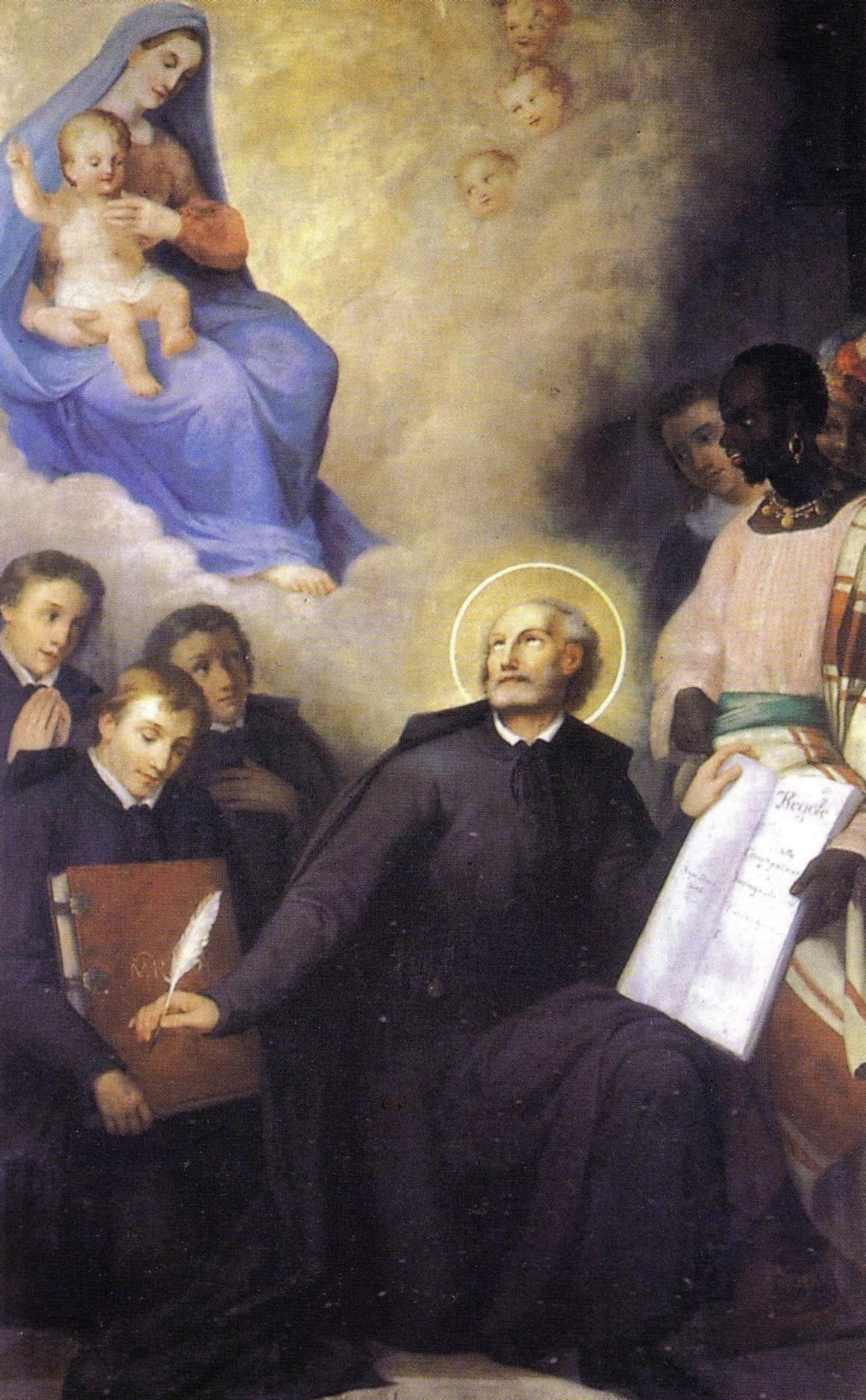
Giovanni Leonardi was apprenticed as a pharmacist at Lucca, served the trade for ten years, and was ordained priest in 1572 at thirty-one. From 1574 he gathered a circle of young Lucca laymen for systematic catechesis of the city's poor and children — a movement that, refined over the next decade, became (in 1583) the Congregation of Reformed Priests of the Blessed Virgin Mary, formally confirmed by Clement VIII in 1595 as the Clerks Regular of the Mother of God.
The order, small but influential, focused on systematic catechesis using the new Tridentine Roman Catechism (which Leonardi had been one of the principal Italian promoters of), seminary formation, and the reform of women's religious houses. Leonardi himself was the principal apostolic visitor for the reform of several Italian dioceses under three popes (Clement VIII, Leo XI, Paul V), and is widely credited as one of the founders of the systematic Catholic catechetical movement.
Together with the future St. Joseph Calasanz of the Piarists and the future Cardinal Juan Bautista Vives — both of whom he advised — he composed in 1603 the foundational memorandum that led directly to Gregory XV's 1622 establishment of the Congregation for the Propagation of the Faith (Propaganda Fide), the central Roman office that henceforth coordinated all Catholic missions worldwide. He died at Rome in 1609 of plague contracted while ministering to plague victims of the city. Canonized 1938.