
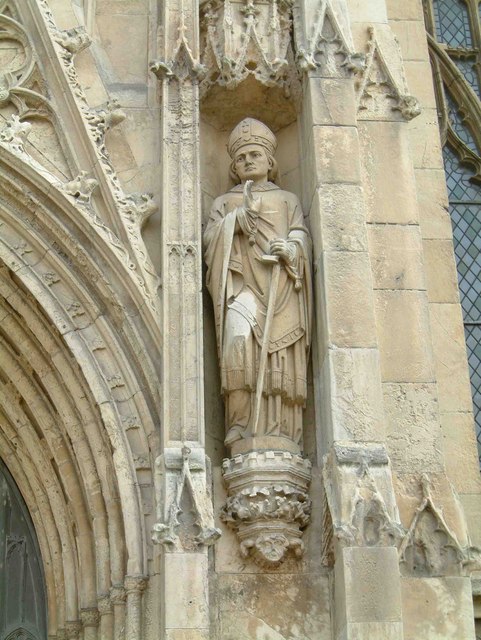
John was born around 640 at Harpham in the East Riding of Yorkshire, of noble Northumbrian Anglian family. He studied at Canterbury under Theodore of Tarsus, then became a monk of Whitby under St. Hilda.
He was consecrated Bishop of Hexham in 687, succeeding St. Eata, and translated to the see of York in 705 on the death of Bosa. As Bishop of Hexham and York he ordained the young Bede priest around 703 (Bede being then about thirty years old) and remained one of his foundational teachers — Bede preserves in his Ecclesiastical History (5.2–5.6) the most affectionate and personal portraits of any bishop he knew.
Around 717 he founded the monastery at Inderawood ('among the beavers'), the modern Beverley, in the forest of the East Riding — withdrawing there in 718 to spend his last years in monastic retreat, having resigned York to his disciple Wilfrid the Younger.
He died at Beverley on May 7, 721. Beverley became one of the principal pilgrim shrines of medieval England — drawing royal patronage from Athelstan (who attributed his 937 victory at Brunanburh to St. John's intercession), Edward the Confessor, the Norman kings, and especially Henry V, who attributed his victory at Agincourt (October 25, 1415 — Beverley's translation feast) to the saint's intercession and established his feast in the English calendar.