
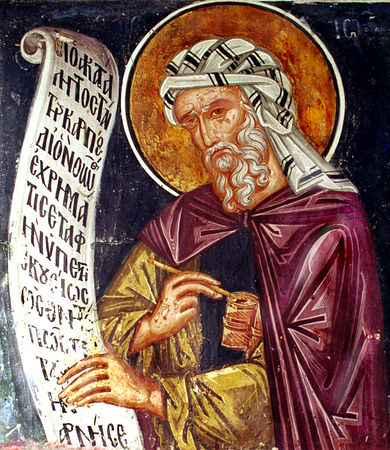
John was born to a wealthy Christian family in Damascus that had served the Umayyad caliphate as treasurers across the new Muslim conquest. As a young man he held the same office under the Caliph Abd al-Malik. Around 706 he renounced his post, distributed his fortune, and entered the monastery of Mar Saba in the Judaean Desert — the great Greek-speaking laura founded in the 5th century by St. Sabas.
From this monastery, beyond the reach of the Byzantine emperor, he wrote the great theological works of his life. The Fount of Knowledge — including the Exposition of the Orthodox Faith — is the first comprehensive systematic theology in the Christian tradition, gathering the patristic Trinitarian, Christological, and sacramental teaching of the previous seven centuries.
He is the great defender of the holy icons against the Byzantine Iconoclast emperors Leo III and Constantine V. His Three Apologetic Treatises Against Those Who Decry the Holy Images (726–730) articulated the doctrine that, because the invisible God has become visible flesh in Christ, He can be depicted — and that the honour paid to the icon passes to its prototype. This argument was vindicated at the Second Council of Nicaea (787), thirty-eight years after his death.