
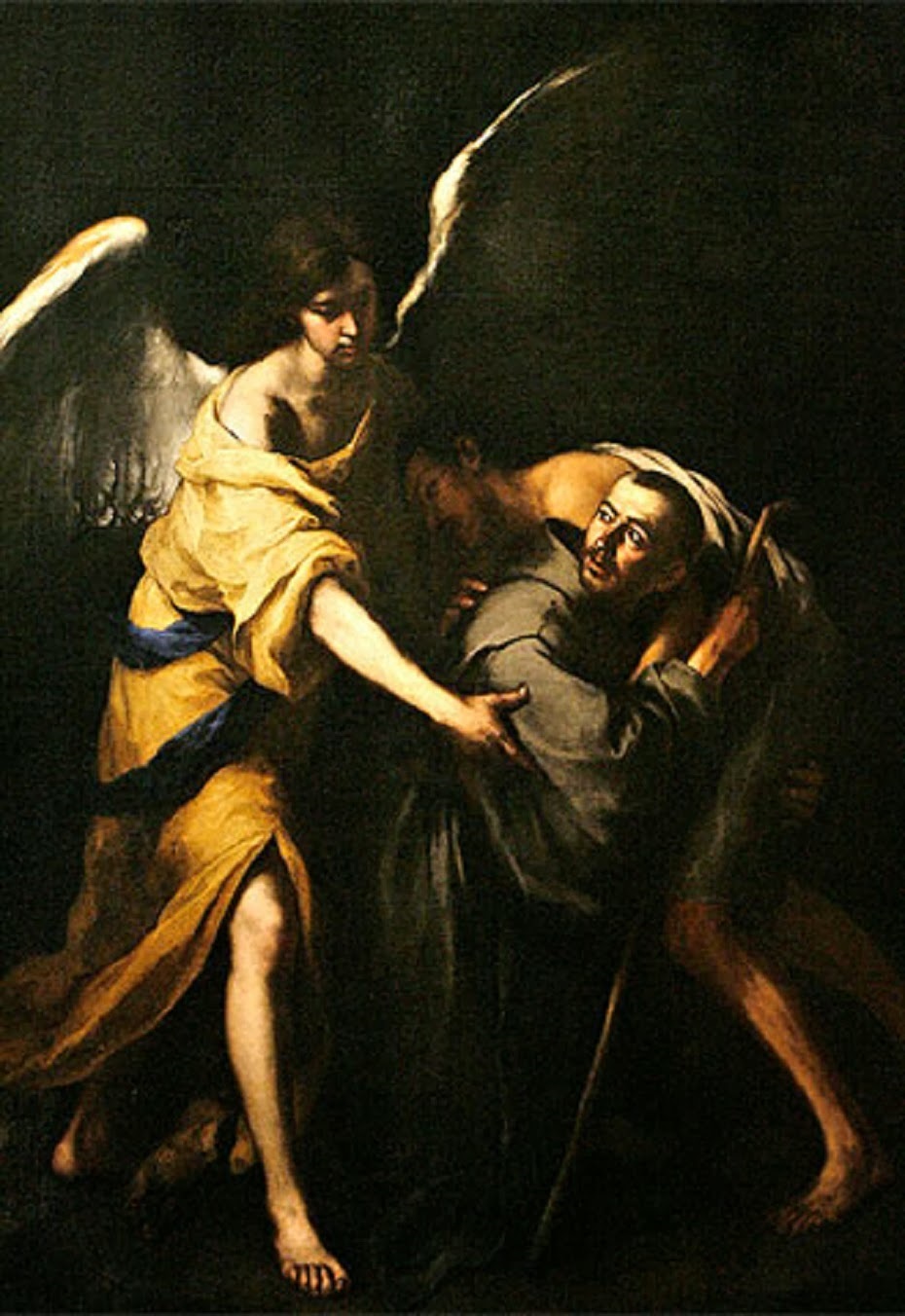
João Cidade Duarte was born to a poor Portuguese family at Montemor-o-Novo and was taken (in unclear circumstances, possibly kidnapped) to Castile as a child. After years as a shepherd, then as a soldier in the imperial army of Charles V (campaigns in Hungary and France), then as a bookseller in Granada, he experienced at forty-two — January 20, 1539, at a sermon preached by John of Ávila — a sudden and total conversion. His public behaviour was so extreme (he gave away his entire shop, ran through the streets weeping, scourged himself in public) that he was confined for some weeks in the Royal Hospital of Granada as a madman.
When he emerged, his vocation was clear. He rented a small house in Granada — paid for by donations from the same John of Ávila who had preached his conversion sermon — and began to take in the sick poor of the city: those rejected by the city hospital, the dying, the syphilitic, the mad, the abandoned. The work expanded rapidly; the small house became a hospital, then a second hospital, then a third; companions began joining him to help. He invented a new model of hospital care: ward by category of illness, beds individually arranged rather than the medieval practice of two or three patients per bed, careful charting of each patient, daily washing of all patients (the staff and the saint included), and a continuous spiritual ministry.
He died at Granada on his fifty-fifth birthday, March 8, 1550 — rescuing flood victims from the Genil river in winter, contracted pneumonia, died at the home of a benefactress. After his death his companions formally organized as the Brothers Hospitallers of St. John of God, confirmed as a religious order by Sixtus V in 1586. The Brothers Hospitallers became the principal Catholic hospital-religious order of the early modern world; they still operate over 300 hospitals on five continents. Canonized 1690.