
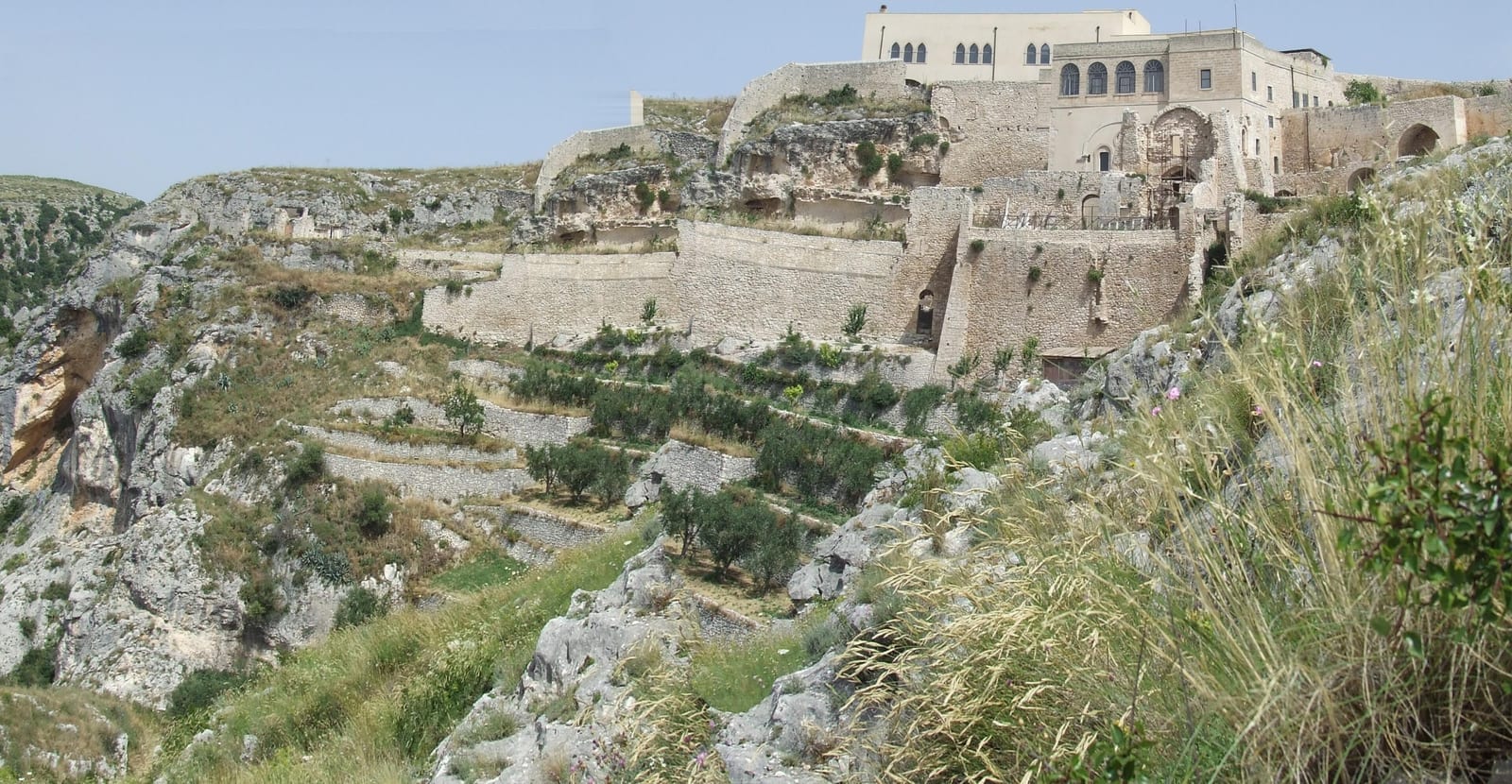
John (Italian Giovanni) was born in 1070 in Matera, in the distinctive cave-dwelling culture of the Sassi di Matera (the ancient Catholic peasant-religious-cultural settlement carved into the limestone cliffs of the southern Italian Basilicata, a UNESCO World Heritage Site since 1993 and one of the longest continuously-inhabited human settlements in the world).
After the early death of his parents, John undertook the hermit life around 1090 — inspired by the rich tradition of rock-cut hermit-cells of the Basilicatan limestone cliffs. He subsequently undertook long pilgrim-itinerant ministry across southern Italy and Sicily — including a period of hermit-life on the island of Ginosa.
Around 1119 he joined the community of St. William of Vercelli at the Abbey of Monte Vergine in Campania (William of Vercelli being the principal Italian monastic-reform founder of the early 12th century), but subsequently departed from Monte Vergine to establish his own monastic foundation.
In 1129 he founded the Abbey of Santa Maria di Pulsano on the rocky highlands of the Gargano peninsula near Monte Sant'Angelo (the principal medieval Catholic pilgrim destination for the ancient Sanctuary of St. Michael the Archangel) — one of the principal new monastic foundations of early-12th-century southern Italy.
The Pulsano Abbey, under John's governance from 1129 to 1139, became the mother-house of the Pulsanian Congregation — a Benedictine reform congregation extending across southern Italy with dozens of daughter houses. The Pulsanian Order combined the strict Benedictine Rule with the specifically hermit-influenced ascetic discipline of the Gargano-Apulian rock-cut monastic tradition.
John died at the Abbey of Pulsano on June 20, 1139, and was buried at the mountain abbey. The Pulsano Abbey survives in restored monastic use today — abandoned in the 19th century, restored in the late 20th and 21st centuries — as a principal pilgrim destination of the Apulian-Gargano Catholic tradition.