
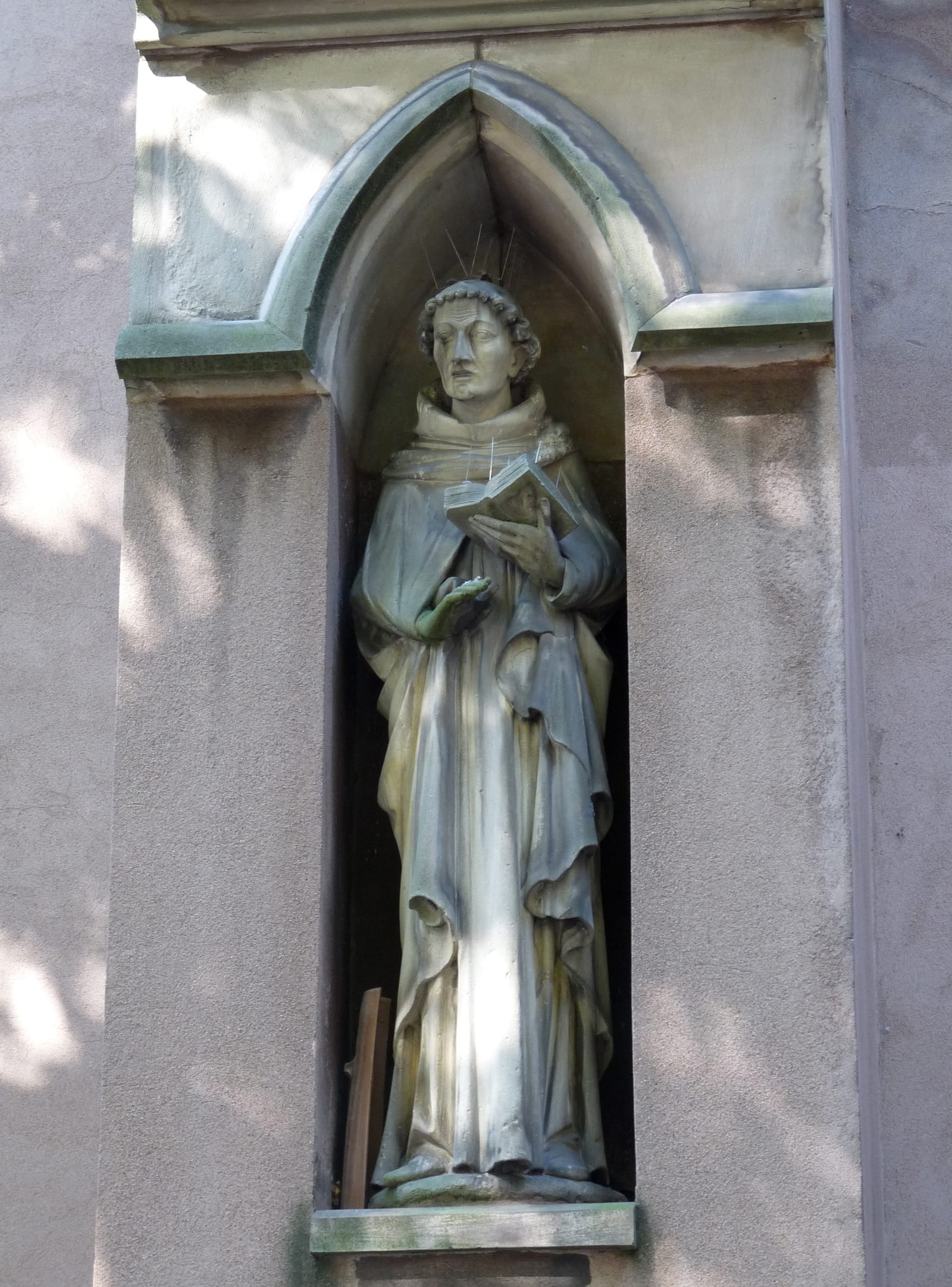
John Tauler entered the Dominican convent of Strasbourg in his teens and was educated in the local studium and probably at Cologne — possibly under Meister Eckhart, certainly steeped in Eckhart's broader school. He was lector and preacher at Strasbourg from his ordination onward.
His preaching — about eighty surviving Middle High German sermons, the largest single surviving body of medieval German vernacular preaching — is the great pastoral application of Rhineland speculative mysticism. He carefully reformulates Eckhart's most contested propositions to make them safe for ordinary lay people (Tauler himself was not condemned), and presents the call to the 'birth of God in the soul' as something offered to every baptized Christian, not only to monks and scholars.
He was the central figure of the 'Friends of God' (Gottesfreunde) — the lay-religious network of Strasbourg, Basel, Cologne, and the Bodensee that produced the Theologia Germanica around 1380 (a work later translated and championed by Luther). Tauler died at Strasbourg on June 16, 1361, during the long pestilence years following the Black Death of 1348–50, having served the city's poor and sick throughout. His cult has been observed in the Dominican Order ever since, though he has not been formally canonized.