
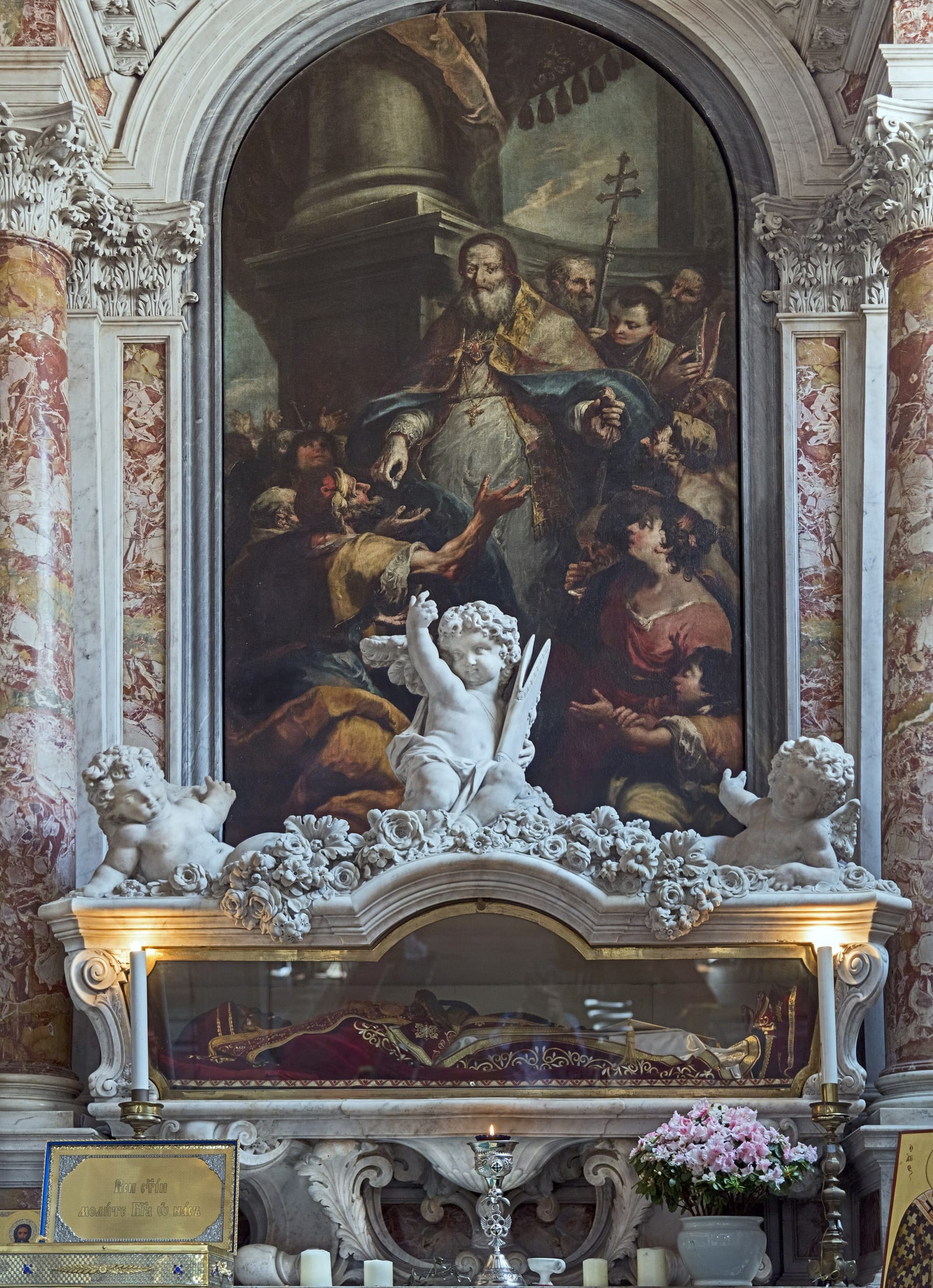
John was a wealthy Cypriot widower of senatorial rank when, after the death of his wife and children, he gave himself to a life of asceticism and charity. Elected Patriarch of Alexandria in 610, he governed one of the great Sees of the Christian East for some six years.
His charity was prodigious. Finding seventy-thousand cash in the patriarchal treasury at his elevation, he distributed it to the city's poor within months. He kept lists of 'his masters' — the poor of Alexandria, whom he called by that name — numbering 7,500, all supported daily from the patriarchal revenues. He founded hospitals, hostels for refugees, and grain warehouses against famine.
When the Persian shah Khosrow II captured Jerusalem in 614 and tens of thousands of Christian refugees flooded Alexandria, John mortgaged the patriarchate's properties to feed them. Forced to flee his own city when the Persians threatened Egypt in 616, he died in his native Cyprus.
His Life was written shortly after his death by Leontius of Neapolis — one of the great Byzantine hagiographies. The Knights Hospitaller (Order of Malta), founded c. 1080, took him as their patron, transmitting his name and his example of medical charity for the poor across the medieval Mediterranean.