
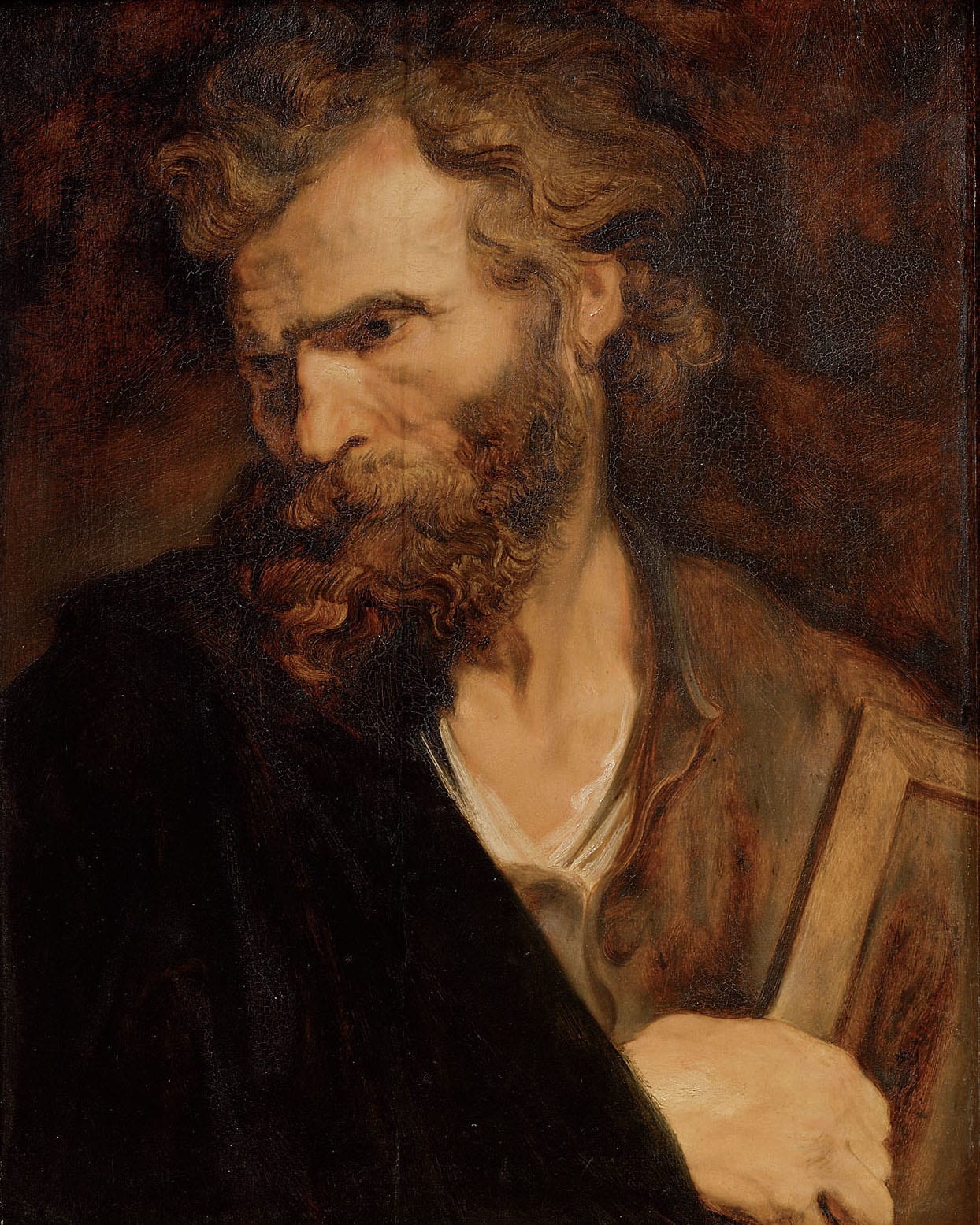
Jude, also called Thaddeus or Lebbaeus, was one of the Twelve. He is best identified by the question he asks Christ at the Last Supper, in John 14:22: 'Lord, how is it that you will manifest yourself to us, and not to the world?' — to which Christ answers with the great promise of the indwelling of the Trinity: 'If anyone loves me, he will keep my word, and my Father will love him, and we will come to him and make our home with him.'
He is widely identified as the author of the New Testament Letter of Jude — a brief warning against false teachers and a call to 'contend for the faith that was once for all delivered to the saints.' Tradition holds that he preached the Gospel in Mesopotamia, Persia, and Armenia, in partnership with Simon the Zealot.
Both apostles were martyred together in Persia — Jude beaten to death with a club, Simon sawed in two — and their relics were eventually translated to Rome. The popular devotion to Jude as 'patron of impossible causes' arose because, his name being so close to Judas Iscariot's, the faithful for centuries avoided invoking him — leaving him 'free' to attend especially to the cases no other saint was hearing.