
MIRACULOUS MIRACLES™

Saint — Kinga of Poland

St. Kinga of Poland
March 5, 1234 AD, Esztergom, Kingdom of Hungary (royal Árpád family — daughter of King Béla IV of Hungary and Queen Maria Laskarina) — July 24, 1292 AD, Poor Clare Monastery of Stary Sącz, Kingdom of Poland
Queen of Poland (1279); Poor Clare abbess; patron of the Wieliczka Salt Mine; Polish-Hungarian royal Catholic saint
Poor Clare Monastery of Stary Sącz (Klaryski w Starym Sączu), Lesser Poland — her personal foundation; in continuous Poor Clare use to the present day; the Poor Clare monastery preserves the Kinga shrine, Poland
Feast
July 24
Canonized
Canonized June 16, 1999 by Pope St. John Paul II at Stary Sącz — during his apostolic visit to Poland
Life

Kinga (Hungarian Kinga, Polish Kunegunda, royal Hungarian variant of St. Cunigunde) was born on March 5, 1234 at Esztergom to King Béla IV of Hungary (1235–1270) and Queen Maria Laskarina (Byzantine Laskarid princess, daughter of Byzantine Emperor Theodore I Laskaris of Nicaea).

Kinga's royal family was one of the principal medieval European royal-Catholic dynasties — the Árpád dynasty producing St. Elizabeth of Hungary (1207–1231, Kinga's paternal aunt), St. Margaret of Hungary (1242–1270, Kinga's sister), Bl. Yolanda of Poland (1235–1298, Kinga's sister), and the Árpád saints.

At the age of 5 (1239), Kinga was betrothed to Bolesław V the Chaste of Kraków (1226–1279, Piast prince of Kraków-Sandomierz) — the younger brother of Bl. Salomea of Poland (Kinga's future sister-in-law). The marriage was a dynastic settlement of the Polish-Hungarian royal alliance.

The marriage was consummated in 1247 but remained virginal — by mutual agreement of Kinga and Bolesław (in the medieval Catholic tradition of virginity-in-marriage; Bolesław received the royal surname 'the Chaste' from this specifically Catholic vocation-choice).

Kinga served as Queen of Poland from Bolesław's accession in 1243 to his death in 1279. During the period she undertook extensive charitable ministry — personally caring for the poor, establishing hospitals, and providing support for the Mongol-invasion refugees during the 1259 second Mongol invasion of Poland (the invasion in which the Sandomierz Dominicans of Bl. Sadoc were martyred).

Kinga is most famous in the Polish Catholic tradition for the legendary origin of the Wieliczka Salt Mine — one of the principal Polish national monuments and an UNESCO World Heritage Site since 1978.

Per the legend, in 1249 Kinga received from her father King Béla IV of Hungary the gift of a salt mine at Máramaros in Hungary as her royal dowry. throwing her engagement ring into the Máramaros salt-mine as she left Hungary for Poland, Kinga instructed her Polish subjects (upon arrival at Wieliczka in Lesser Poland) to dig at the location — producing the discovery of the massive salt deposits of Wieliczka, with the Kinga engagement-ring found in the first rock-salt block extracted.

The Wieliczka Salt Mine — in continuous operation from the 13th century to 2007 (the longest continuously-operating industrial site in Poland, an UNESCO World Heritage Site since 1978) — contains the famous Chapel of St. Kinga (Kaplica św. Kingi) carved entirely out of the salt (including the altar, chandeliers, and statuary), one of the principal Polish Catholic pilgrim destinations.

After Bolesław's death in 1279, Kinga undertook the Poor Clare vocation, taking the habit at the Poor Clare monastery of Stary Sącz that she had founded in 1280. Her sister-in-law Bl. Salomea had preceded her into the Poor Clare life (Salomea tonsured 1245); her sister Bl. Yolanda would follow (tonsured 1279).

Kinga served as abbess of Stary Sącz until her death on July 24, 1292. Her canonization by Pope St. John Paul II on June 16, 1999 at Stary Sącz — during his apostolic visit to Poland — institutionally recognized the continuing 707-year Polish Catholic devotion to Kinga.

Miracles & Phenomena
  • The Wieliczka Salt Mine and the Kinga engagement-ring legend

    The legendary origin of the Wieliczka Salt Mine — one of the principal Polish national monuments and an UNESCO World Heritage Site since 1978 — is institutionally associated with St. Kinga. Per the legend, in 1249 Kinga threw her engagement ring into the Máramaros salt-mine in Hungary and instructed her Polish subjects to dig at Wieliczka in Lesser Poland — producing the discovery of the massive salt deposits. The Wieliczka Salt Mine, in continuous operation from the 13th century to 2007, contains the famous Chapel of St. Kinga (Kaplica św. Kingi) carved entirely out of the salt — one of the principal Polish Catholic pilgrim destinations.

  • The 1999 canonization by St. John Paul II at Stary Sącz

    St. Kinga's canonization by Pope St. John Paul II on June 16, 1999 at Stary Sącz — during his apostolic visit to Poland — institutionally recognized the continuing 707-year Polish Catholic devotion to Kinga. The canonization ceremony at Stary Sącz — the site of Kinga's Poor Clare monastery and her personal foundation — drew an estimated 700,000 pilgrims and institutionally re-affirmed the Polish Catholic royal-Piast-Árpád-Poor-Clare tradition.

Relics
  • Body
    Tomb of St. Kinga of Poland
    Poor Clare Monastery of Stary Sącz, Lesser Poland — her personal foundation; in continuous Poor Clare liturgical use to the present day; shrine and tomb-chapel

    Her tomb at the Poor Clare Monastery of Stary Sącz — in continuous Poor Clare liturgical use since 1280 — survives as the principal Polish Catholic pilgrim destination associated with St. Kinga. The Chapel of St. Kinga in the Wieliczka Salt Mine provides the alternative pilgrim-shrine.

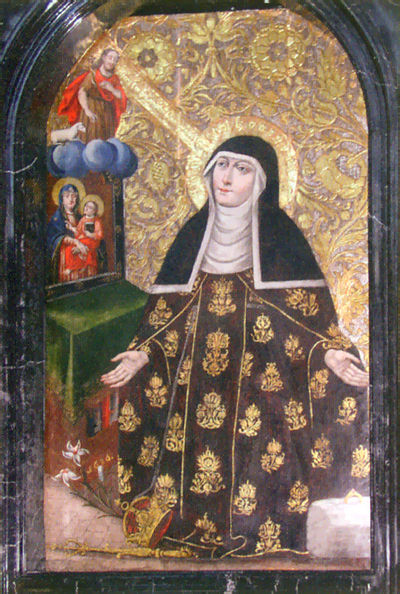
Iconography
  • Kinga throwing the engagement ring into the salt mine

    The mid-13th-century Hungarian-Polish royal princess in medieval royal dress at the Máramaros salt-mine on the Hungarian-Polish border in 1249, throwing her royal engagement-ring into the salt-mine, the Polish subjects behind her awaiting the instructions for the Wieliczka digging — the classic Polish Catholic iconography of the Kinga-Wieliczka legend.

Patronages
Poland (principal Polish royal-Piast-Árpád saint alongside St. Hedwig, Bl. Salomea, and Bl. Yolanda)Miners and salt-miners (patron of the Wieliczka Salt Mine — the UNESCO World Heritage Site since 1978 — by the famous legend of the Kinga engagement-ring salt-discovery)Catholic Polish Poor Clare tradition (with Bl. Salomea and Bl. Yolanda)The Diocese of Tarnów (Poland)