
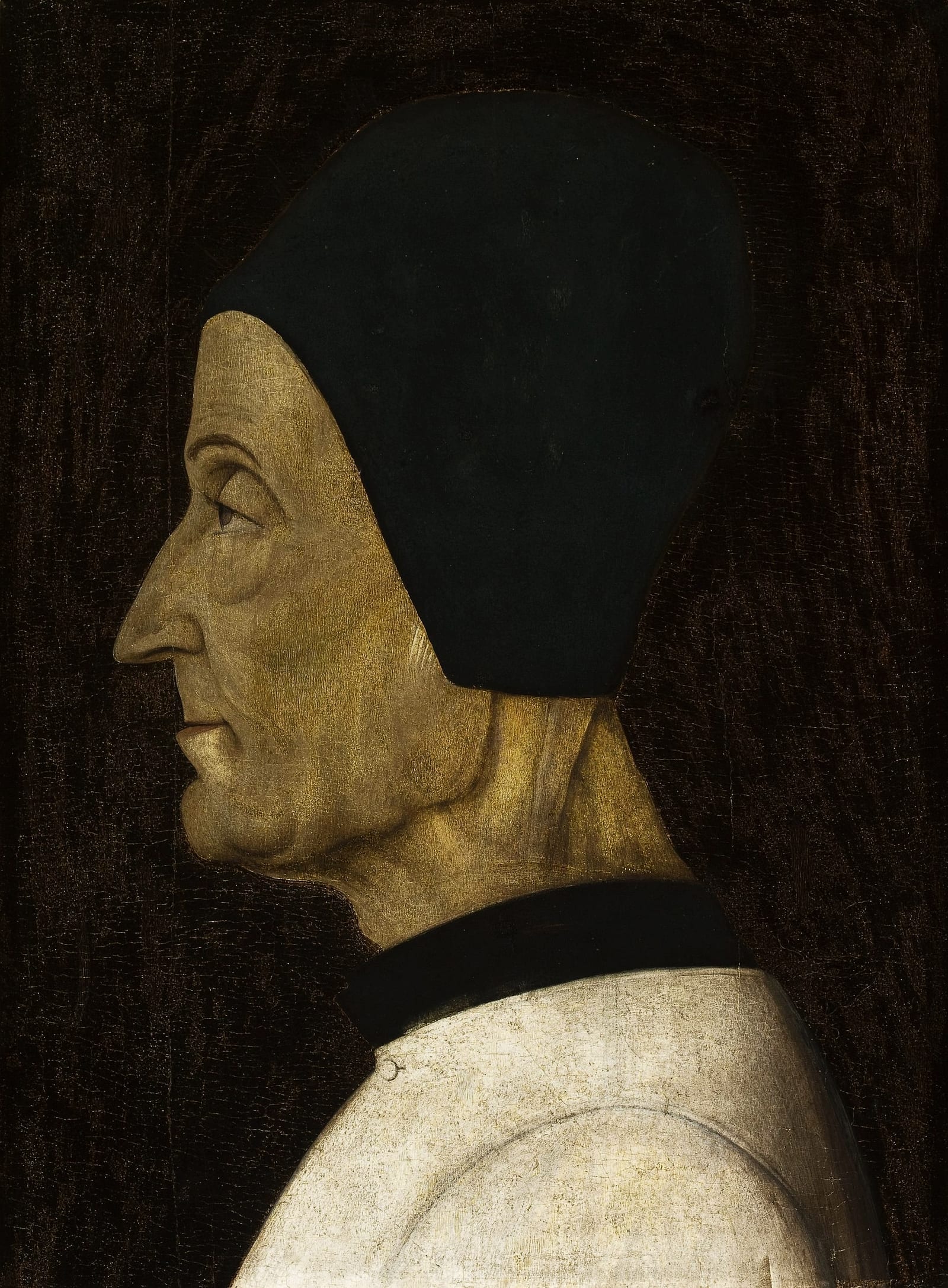
Lorenzo Giustiniani was born to the great patrician Giustiniani family of Venice, refused a brilliant marriage at nineteen, and entered the small reformed canons regular of San Giorgio in Alga in 1400. He served thirty-three years there in great obscurity, rising slowly to become superior general of the congregation, then bishop of Castello (1433) — the ancient suburban diocese that until 1451 was the cathedral see of Venice.
In 1451 Pope Nicholas V suppressed both the ancient patriarchate of Grado (long dormant) and the bishopric of Castello, and erected the new Patriarchate of Venice with all of Venice's possessions under its jurisdiction. Lawrence was named the first Patriarch of Venice — a see he held for the last five years of his life until his death in 1456. The patriarchate of Venice survived as one of the world's principal Latin patriarchates until the title was consolidated in modern church administration.
His extensive devotional writings — De Disciplina et Perfectione Monasticae Conversationis, the De Lignis Vitae, the De Interno Conflictu, and the De Compunctione — are among the most graceful Latin spiritual prose of the Quattrocento, ranging from systematic ascetical theology to deeply personal mystical reflection. He died at Venice in January 1456, was canonized by Alexander VIII in 1690 (a Venetian himself, a member of the Giustiniani extended family), and his relics rest at San Pietro di Castello.