
MIRACULOUS MIRACLES™

Saint — Lebuin (Liafwin) of Deventer

St. Lebuin (Liafwin) of Deventer
c. 720 AD, Anglo-Saxon England (probably Northumbria) — November 12, 775 AD, Deventer, IJssel valley (modern Netherlands)
Anglo-Saxon Apostle of the Saxons; martyr-confessor
St. Lebuinus Church (Sint-Lebuïnuskerk), Deventer, Netherlands — his foundational mission site; medieval cathedral and modern Protestant church, Netherlands
Feast
November 12
Canonized
Pre-congregation
Life

Lebuin (Old English Liafwin, 'beloved friend') was an Anglo-Saxon priest, probably Northumbrian, who joined the Anglo-Saxon mission to the Frisians under St. Gregory of Utrecht (Boniface's successor) around 754.

Sent to evangelize the still-pagan continental Saxons of the IJssel valley (modern eastern Netherlands), he founded around 770 the foundational mission station at Deventer — building the first Catholic chapel on the IJssel river, the foundational origin of the modern Dutch city of Deventer and its Catholic cathedral.

He is most famous in continental hagiography for his prophetic appearance, alone and unarmed, at the great Saxon pan-tribal assembly at Marklo (Marklohe on the Weser, in modern Lower Saxony) around 772 — where he confronted the assembled Saxon dukes and free men, prophesying that if they did not accept the Catholic faith they would be conquered by a foreign king and forced to it.

The prophecy was fulfilled twelve years after his death by Charlemagne's brutal Saxon Wars (772–804) — the foundational forced-conversion of the Saxons, which is among the morally most fraught chapters of medieval Catholic missionary history. Lebuin himself died peacefully at Deventer on November 12, 775, having returned to find his chapel destroyed by the Saxons and rebuilt it; his body was buried at the foundational Deventer site, where his shrine remained the principal pilgrim destination of the IJssel valley throughout the medieval centuries.

Miracles & Phenomena
  • The prophecy at Marklo

    The 9th-century Vita Sancti Lebuini Antiqua records that Lebuin, appearing alone in priestly vestments at the great Saxon assembly at Marklo, was protected from immediate murder by a sudden miraculous mist that concealed him until he could deliver his prophetic warning. The prophecy — that the Saxons would either accept the faith voluntarily or be forced to it by a foreign king — was understood by 9th-century Catholic chroniclers as foundationally fulfilled in Charlemagne's Saxon conquests, though it raises uncomfortable retrospective questions about the relationship between prophetic mission and imperial conquest.

  • The rebuilt chapel at Deventer

    When the pagan Saxons destroyed his first Deventer chapel, Lebuin rebuilt it without retaliation — the foundational pattern of Anglo-Saxon missionary persistence in the face of pagan resistance. The chapel he rebuilt grew into the medieval Deventer Catholic cathedral and is preserved in the foundational dedication of the modern Sint-Lebuïnuskerk.

Relics
  • Body
    Tomb of St. Lebuin
    St. Lebuinus Church (Sint-Lebuïnuskerk), Deventer, Netherlands — his shrine destroyed in the 1578 Protestant Reformation conquest of Deventer; the medieval church now Protestant Reformed

    His medieval shrine at Deventer was the principal pilgrim destination of the IJssel valley throughout the Middle Ages. The shrine was destroyed in 1578 when Deventer became Protestant; the medieval cathedral church survives in active Reformed Protestant use, retaining the saint's name as its dedication.

Iconography
  • Lebuin at the Marklo assembly

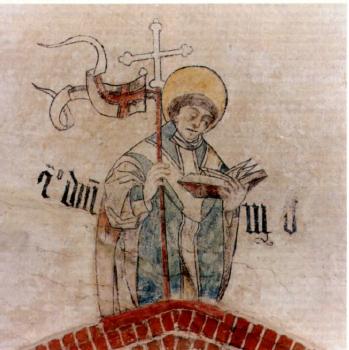
    The mid-8th-century Anglo-Saxon priest in priestly vestments alone before the assembled Saxon dukes and free men at Marklo on the Weser, the Gospel-book in his hand, the protective miraculous mist surrounding him — the iconography of foundational Catholic prophetic confrontation with pagan tribal authority.

Patronages
Diocese of Utrecht (Catholic)City of DeventerCatholic Anglo-Saxon mission to the Frisians and Saxons (with Willibrord, Boniface, Liudger)Catholic confessor-prophets among hostile pagan assemblies