
MIRACULOUS MIRACLES™

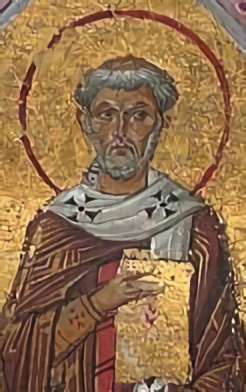
Saint — Leo the Great

St. Leo the Great
c. AD 400, Tuscany — November 10, 461, Rome
Doctor of the Church — Pope who turned back Attila
St. Peter's Basilica, Vatican, Vatican City
♕ The 45th Bishop of RomeReign: September 29, 440 — November 10, 461
Feast
November 10
Doctor of the Church
Yes
Life

Leo was a Roman deacon and a diplomat of the Western imperial court before his election as Bishop of Rome in 440. From the start of his twenty-one-year pontificate he saw the papacy as the universal pastoral office Christ had given to Peter — and articulated that conviction with a clarity and authority no predecessor had matched.

His Tome to Flavian (449) — sent to the Council of Chalcedon in 451 — gave the universal Church the precise formula by which the divinity and humanity of Christ are united: 'one and the same Christ, Son, Lord, only-begotten, acknowledged in two natures, without confusion, change, division, or separation.' When the Tome was read at Chalcedon, the assembled bishops are reported to have acclaimed: 'Peter has spoken through Leo!' The Council adopted the Tome substantially as its Christological definition.

In 452 Leo went out from Rome to meet Attila the Hun at the Mincio River near Mantua, persuading the conqueror to turn back from a planned sack of Rome — a meeting commemorated in Raphael's great fresco in the Stanze of the Vatican. Three years later, when the Vandals under Gaiseric did reach Rome (455), Leo went out again — this time obtaining at least the agreement that the city would not be burned and the population not massacred.

He left behind 96 sermons and 143 letters of the highest theological and literary quality. He was named Doctor of the Church by Benedict XIV in 1754 — only the second pope (after Gregory the Great) so honoured.

Miracles & Phenomena
  • Turning Back Attila (452)

    AD 452

    Leo met Attila the Hun at the Mincio River in northern Italy in the summer of 452. After the meeting, Attila withdrew his army and never invaded Italy again. Later tradition — depicted by Raphael — adds that Sts. Peter and Paul appeared in the sky with drawn swords behind Leo during the parley.

  • Negotiation with Gaiseric the Vandal (455)

    AD 455

    When the Vandals reached Rome in 455, Leo again went out unarmed to meet the conqueror. The city was sacked over fourteen days, but at his intervention the basilicas were spared, the population was not massacred, and no buildings were burned.

  • The Tome of Leo at Chalcedon

    AD 449–451

    His doctrinal letter to Flavian, read at the Council of Chalcedon on October 10, 451, defined for the universal Church the union of the two natures of Christ. The bishops' acclamation — 'Peter has spoken through Leo' — has shaped Catholic understanding of papal teaching ever since.

Relics
  • Body
    Tomb of St. Leo the Great
    Altar of St. Leo, transept of St. Peter's Basilica, Vatican

    First buried in the vestibule of Old St. Peter's, his relics were translated in 1607–1715 to the present altar in the left transept of the new basilica, marked by the colossal relief of Algardi (1646–53) showing Leo confronting Attila.

Iconography
  • The Meeting of Leo and Attila
    Raphael (Raffaello Sanzio) · 1513–1514 · Stanza di Eliodoro, Vatican Palace

    Raphael's fresco in the Stanza di Eliodoro (Vatican Palace, 1513–14) — Leo on a white horse meeting the mounted Attila, with Sts. Peter and Paul appearing in the air with drawn swords above the pope. The single most famous image of papal authority in Western art.

  • Algardi's Relief at St. Peter's
    Alessandro Algardi · St. Peter's Basilica, Vatican

    Alessandro Algardi's gigantic marble relief over the altar of St. Leo (1646–1653) is the largest high relief in Italy — Leo in pontifical robes confronting Attila and his cavalry in motion through the marble surface.

Patronages
ChoristersConfessorsTheologians
Sources & Further Reading