
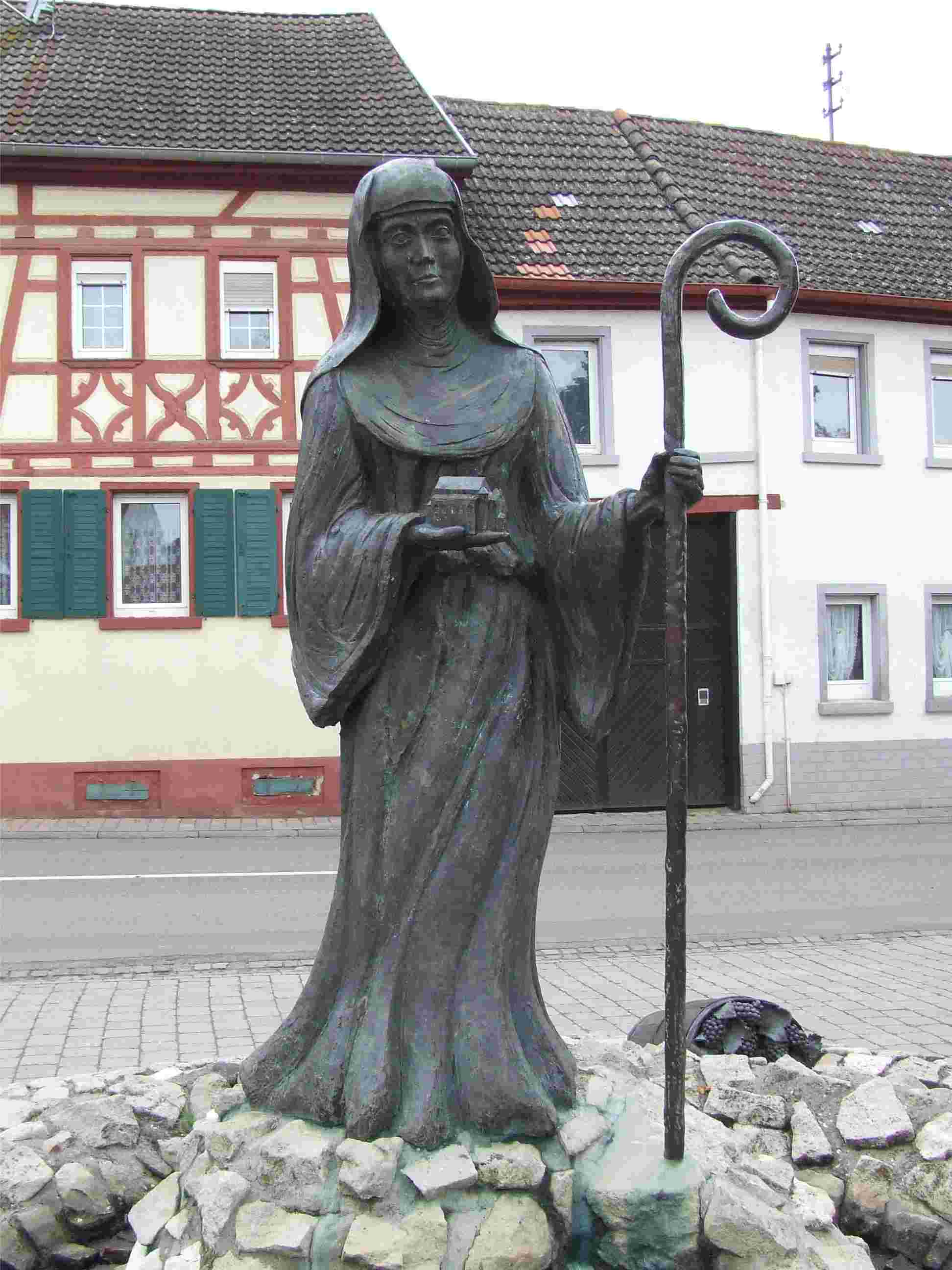
Lioba was the daughter of a noble Anglo-Saxon family of Wessex, distantly related to Boniface, and was educated at the great women's monastery of Wimborne under the formidable Abbess Tetta. She had been corresponding with Boniface for years — her surviving Latin letters to him are among the earliest extant by an Anglo-Saxon woman — when he summoned her to Germany around 748 to lead the women's mission.
She founded the great women's abbey of Tauberbischofsheim in Franconia and was appointed by Boniface as superior of all the women's monasteries he had established. She corresponded with kings and abbots and was held in immense respect throughout the Frankish Church; the Empress Hiltrudis would consult her, and Charlemagne summoned her several times to his court. Boniface, before leaving on his final mission to Frisia in 754, asked specifically that her body be buried beside his at Fulda.
She survived him by twenty-eight years, ruling Tauberbischofsheim with great wisdom until shortly before her death. She died at Schornsheim near Mainz on September 28, 782. Honoring Boniface's request she was buried at the church of Petersberg near Fulda — close to but not directly beside his tomb, since the monks insisted on preserving Boniface's grave intact.