
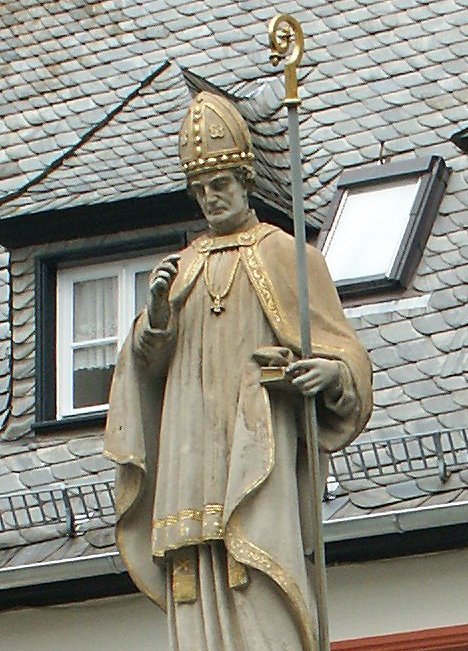
Lull was an Anglo-Saxon monk of Malmesbury who came to Germany around 738 to join Boniface's mission. He was Boniface's closest collaborator in the last fifteen years of the older man's life, ordained priest in 745 and consecrated coadjutor bishop in 752. Boniface designated him his successor before leaving on his final mission to Frisia in 754.
Boniface's martyrdom made Lull Archbishop of Mainz at forty-four. He governed the see for thirty-three years, organizing the German Church into a structured province, founding the Abbey of Hersfeld around 769 (in defiance of the abbot of Fulda Sturm, with whom he had a long jurisdictional dispute), and presiding at Charlemagne's coronation as king of the Franks in 768.
His Latin letters — written to his old Wessex correspondents and to other Anglo-Saxon nuns and monks now in Germany — are an extensive corpus that survives intact as one of the principal sources for Anglo-Saxon women's literature in 8th-century Germany. He died at Hersfeld in 786 and is buried there.