
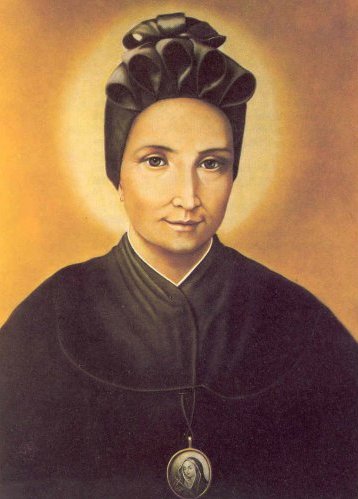
Maddalena Gabriella di Canossa was born to the great Veronese ducal family of Canossa — granddaughter of the German Empress and a relation of two Catholic dukes — and inherited at five the family palace and estates after her father's death in a hunting accident. At eighteen, against intense family opposition, she renounced her share of the family inheritance and dedicated herself to the relief of the poor of Verona — a city devastated through the late 18th and early 19th centuries by the Napoleonic wars, the suppression of religious houses, and the catastrophic economic dislocation of northern Italy.
In 1808 she opened the first house of what became the Canossian Daughters of Charity (Figlie della Carità Canossiane) in the disused convent of San Giuseppe at Verona — a new women's religious congregation specifically dedicated to the integrated work of catechesis, parish-level education, the visiting of hospitals, the care of the sick poor, and (a 19th-century innovation) the formal training of lay-women catechists. In 1831 she founded a parallel congregation for men, the Canossian Sons of Charity (Figli della Carità Canossiani). Together the two congregations spread across northern Italy and eventually globally.
She died at Verona on April 10, 1835. Canonized 1988. The Canossians remain a significant Catholic congregation today with houses on five continents.