
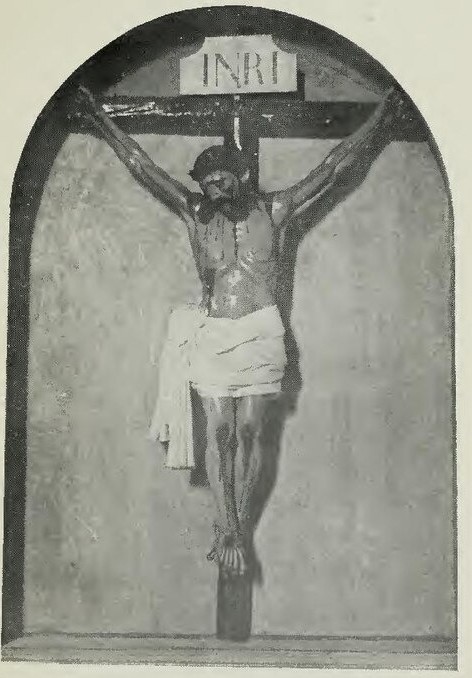
Magín Catalá was born at Montblanc in Catalonia on the 29th or 30th of January 1761 and received the Franciscan habit at Barcelona on 4 April 1777. In October 1786 he sailed from Cádiz for the missionary college of San Fernando in Mexico City, served as chaplain on a Spanish ship to Nootka Sound, and in 1794 was sent to Mission Santa Clara de Asís, at the south end of San Francisco Bay. He never left it. For thirty-six years, with Fr. José Viader, he baptised, taught and nursed the native people of the mission and the settlers of the nearby pueblo of San José, leaving it only for missionary journeys inland.
Inflammatory rheumatism crippled him for most of those years. He lived, says his biographer, on a gruel of corn and milk, and in the end preached in Spanish and in the native language seated in a chair. He died at Santa Clara on 22 November 1830, and the crowd at his body took his clothes for relics.
Fifty years later the stories had not stopped. In 1882 Archbishop Alemany began to collect them, and in 1884–85 a canonical process at Santa Clara took the oral testimony of those who remembered him, native Californians and Spanish settlers, many of them very old — one was ninety-eight; with a second process in 1908–09, sixty-two witnesses were heard. Rome found the evidence promising but asked for corroboration that never came, and the cause has not moved since. He remains a Servant of God, not Venerable, whatever devotional writing says.
His body was moved twice: in 1907 to the foot of the altar of the crucifix, and after the fire of 1926 to a sealed container behind a marble plaque in the rebuilt church. The university's archaeologist has since looked for it and not found it. 'No one knows what happened to Father Catala,' he told the university archives. In recent years a Mass has been offered at the mission each November near the anniversary of his death.