
Marcellina (Latin Marcellina) was the eldest of the three children of Aurelius Ambrosius the Elder (the late-4th-century Roman Praetorian Prefect of Gaul, who governed Roman Gaul from the imperial capital of Trier) and his Christian wife. The three children were Marcellina, her younger brother Uranius (Satyrus, who died young around 375 AD), and the youngest, Ambrose (the future St. Ambrose of Milan — see his entry already in the catalogue).
After their father's death in 354, the family moved back to Rome under the care of their mother. Marcellina — who was the eldest and the principal female influence on the young Ambrose's formation — made the formal vow of consecrated virginity in 353 AD at St. Peter's Basilica at Rome, receiving the veil from the hands of Pope Liberius himself. Her solemn vow ceremony was one of the earliest formally-documented Roman public consecration of a virgin and became — through Ambrose's later writings about her — the foundational pattern for the post-Constantinian Catholic consecrated-virgin liturgical tradition.
Marcellina lived for the remainder of her long life in a small house in Rome with a community of consecrated virgins under her direction. When Ambrose was made Bishop of Milan in 374 — and was confronted with the foundational question of how to organize the Milanese consecrated-virgin community — he wrote his three treatises De Virginibus (377), De Virginitate (378), and De Institutione Virginis (392) explicitly addressed to and intended for Marcellina's community. The De Virginibus is dedicated personally to her and contains long detailed reminiscences of her consecration ceremony and her ongoing direction of consecrated virgins.
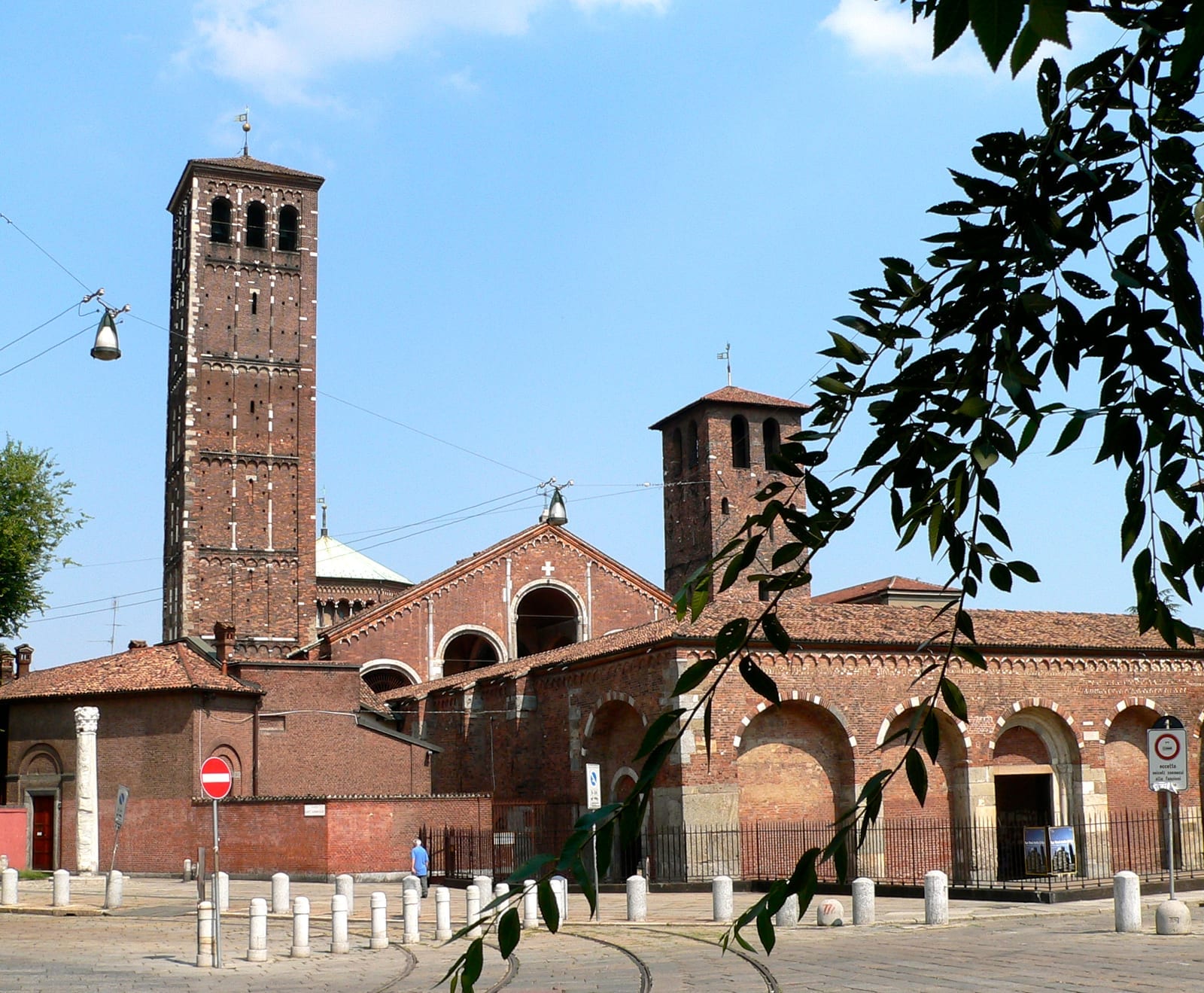
She moved to Milan in her last years to be near her brother Ambrose and to support his episcopal-administrative work. She died at Milan around 398 AD (a year after Ambrose's own death in 397) and was buried beside her brother in the Basilica of Sant'Ambrogio. The Ambrosian tradition continuously venerates her as a foundational saint of consecrated-virgin life and as the elder sister whose example shaped the great Doctor of the Church.