
MIRACULOUS MIRACLES™

Saint — Bl. Marguerite d'Oingt

Bl. Marguerite d'Oingt
c. 1240 AD, Oingt, Lyonnais (noble Franco-Provençal family — Barons of Oingt) — February 11, 1310 AD, Charterhouse of Poleteins, Lyonnais
Carthusian prioress; Franco-Provençal vernacular mystic-writer
Village of Oingt, Beaujolais, Rhône, France — her family village; the medieval fortified village survives (one of the 'Plus Beaux Villages de France') as the memorial to Marguerite's Franco-Provençal mystical tradition, France
Feast
February 11 (local Carthusian veneration)
Canonized
Beatified locally; venerated in the Carthusian tradition and in the Franco-Provençal Catholic-literary tradition
Life

Marguerite was born around 1240 to the noble family of the Barons of Oingt in the Lyonnais region of France — the medieval Franco-Provençal noble family whose fortified village of Oingt survives to the present day as one of the 'Plus Beaux Villages de France' ('Most Beautiful Villages of France').

She entered the Carthusian Charterhouse of Poleteins (Chartreuse de Poleteins) in the Lyonnais — the Carthusian women's-monastic community — becoming prioress around 1288 and serving in that office until her death in 1310.

Marguerite is most famous in the medieval Catholic-literary tradition as the author of a literary corpus that includes three principal works:

1. Pagina Meditationum (Page of Meditations, Latin) — Latin mystical meditation on the Passion of Christ, one of the principal late-13th-century Catholic Passion-meditation texts.

2. Speculum (Mirror, Franco-Provençal vernacular) — Franco-Provençal vernacular treatise on the contemplative life; one of the earliest documented Franco-Provençal vernacular literary texts, in institutional parallel with the Hadewijch Middle Dutch and Mechthilde of Magdeburg Middle Low German vernacular women's-mystical writings.

3. Vita of Bl. Beatrice of Ornacieux — Franco-Provençal vernacular hagiographical biography of Bl. Beatrice of Ornacieux (fellow Carthusian nun and mystic, cousin of Marguerite).

Marguerite's literary corpus is one of the principal medieval Franco-Provençal vernacular literary monuments and one of the earliest documented Catholic women's Franco-Provençal-vernacular mystical writings.

She died at Poleteins on February 11, 1310.

Miracles & Phenomena
  • The Franco-Provençal vernacular literary tradition

    Bl. Marguerite d'Oingt's Franco-Provençal vernacular literary corpus — the Speculum (Mirror) and the Vita of Bl. Beatrice of Ornacieux — institutionally established the Franco-Provençal vernacular Catholic-literary tradition. Her texts are in institutional parallel with the contemporary Middle Dutch writings of Bl. Hadewijch of Antwerp and the Middle Low German writings of Bl. Mechthilde of Magdeburg — producing the broader 13th–14th-century European vernacular women's-mystical literary movement.

Relics
  • Body
    Tomb of Bl. Marguerite d'Oingt
    Charterhouse of Poleteins, Lyonnais — destroyed in the French Revolution; memorial preserved at the Village of Oingt

    Her tomb at the Charterhouse of Poleteins was destroyed in the French Revolutionary dissolution; memorial veneration is maintained at her family village of Oingt in Beaujolais.

Iconography
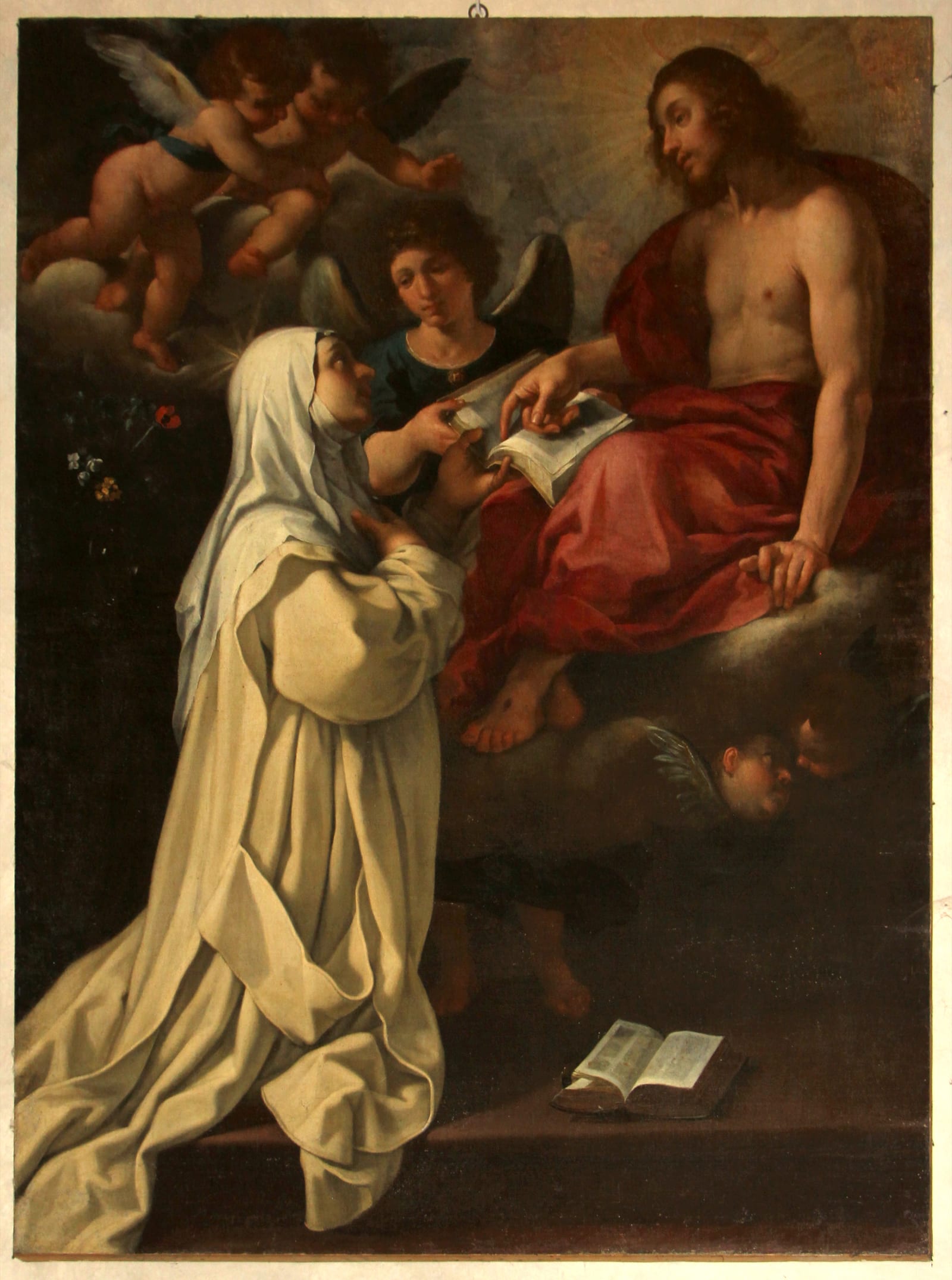
  • Marguerite d'Oingt composing the Speculum

    The late-13th-century Franco-Provençal Carthusian prioress in white Carthusian habit at the Charterhouse of Poleteins composing the Franco-Provençal Speculum on the parchment, the fortified village of Oingt visible in the distance — the iconography of Catholic Franco-Provençal vernacular women's-mystical tradition.

Patronages
Catholic Carthusian women's mystical tradition (with St. Roseline of Villeneuve)Catholic Franco-Provençal vernacular women's-mystical literature (one of the earliest documented Franco-Provençal vernacular literary texts)Catholic Beaujolais and the Lyonnais Catholic tradition