
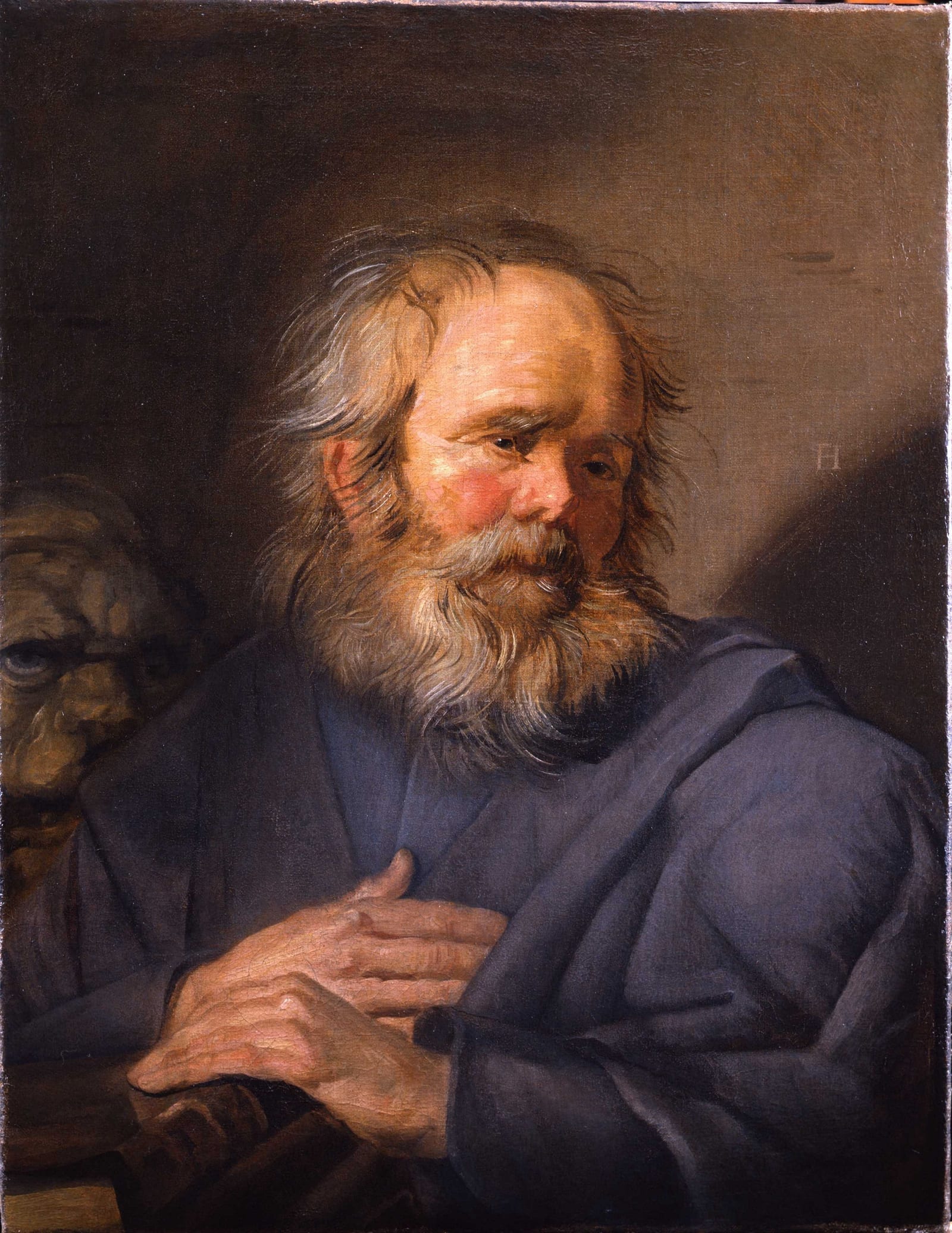
John Mark, son of Mary of Jerusalem (Acts 12:12) — at whose house the early Christian community met for prayer — was a cousin of Barnabas. He accompanied Paul and Barnabas on the first missionary journey but turned back at Perga (Acts 13:13), causing a sharp dispute between them. Paul later reconciled (2 Tim 4:11).
Above all he was 'the son' of Peter (1 Pet 5:13), the interpreter and disciple of the chief Apostle at Rome. Papias (c. 130), citing John the Presbyter, records: 'Mark, having become the interpreter of Peter, wrote down accurately everything he remembered.' His Gospel — the shortest, the most vivid, traditionally written in Rome under Peter's direction — is recognized by modern scholarship as the earliest.
He went to Alexandria after Peter's death and founded the Christian community there — the See of Alexandria, second in honor of the ancient sees after Rome. He was martyred there, dragged through the streets by a rope around his neck, c. AD 68. His relics were carried from Alexandria to Venice by Venetian merchants in 828; the Basilica of San Marco, completed 1071, was built to house them.