
MIRACULOUS MIRACLES™

Saint — Martin I

St. Martin I
before AD 600, Todi, Umbria — September 16, 655 (or 656), Cherson (Crimea)
Confessor — the last martyr pope
Cherson (modern Khersones), Crimea, Ukraine
♕ The 74th Bishop of RomeReign: July 5, 649 — June 17, 653 (deposed by emperor); died in exile
Feast
April 13
✠ MartyrDied of hunger and neglect in exile at Cherson, Crimea, 655 — the last pope venerated as a martyr → The Martyrs
Life

Martin was born at Todi in Umbria and served the Roman Church as a papal apocrisarius (diplomatic legate) at the imperial court in Constantinople before his election to the see of Peter in 649.

His pontificate immediately confronted the Monothelite heresy — the Byzantine imperial theology that Christ had only one will (a compromise meant to placate the Monophysites of Egypt and Syria). Within three months Martin convened the Lateran Council of 649, which condemned both Monothelitism and the imperial edict (the Typos) that had forbidden discussion of it.

The Emperor Constans II had Martin arrested in 653 — too ill to resist, he was taken in chains by sea to Constantinople, paraded in public, denied medical care, and sentenced to death (later commuted) for treason. Exiled to Cherson in the Crimea — a desolate outpost at the edge of the empire — he died there of hunger and neglect in 655, having written touching letters of forgiveness for his enemies and pleas for food that survive.

He is the last pope to be venerated as a martyr by the universal Church. His feast on April 13 is one of the oldest martyr-feasts in the calendar.

Miracles & Phenomena
  • Lateran Council of 649

    October 5–31, 649

    Within three months of his election Martin gathered 105 Western bishops in the Lateran for what became one of the great doctrinal synods of the early Church — defining the orthodox teaching of the two wills of Christ and condemning the imperial Typos. Martin's act was undertaken without imperial authorisation and was the immediate cause of his arrest.

  • Letters from Exile

    His letters from Constantinople and Cherson — describing prison conditions, asking for clothing and food, forgiving his enemies, even regretting that the Roman Church had elected a successor without waiting — survive as some of the most moving texts of the patristic age.

Relics
  • Body
    Some relics of St. Martin I
    San Martino ai Monti, Rome

    Some of his relics were eventually returned to Rome and rest in the basilica named for him on the Esquiline Hill.

Iconography
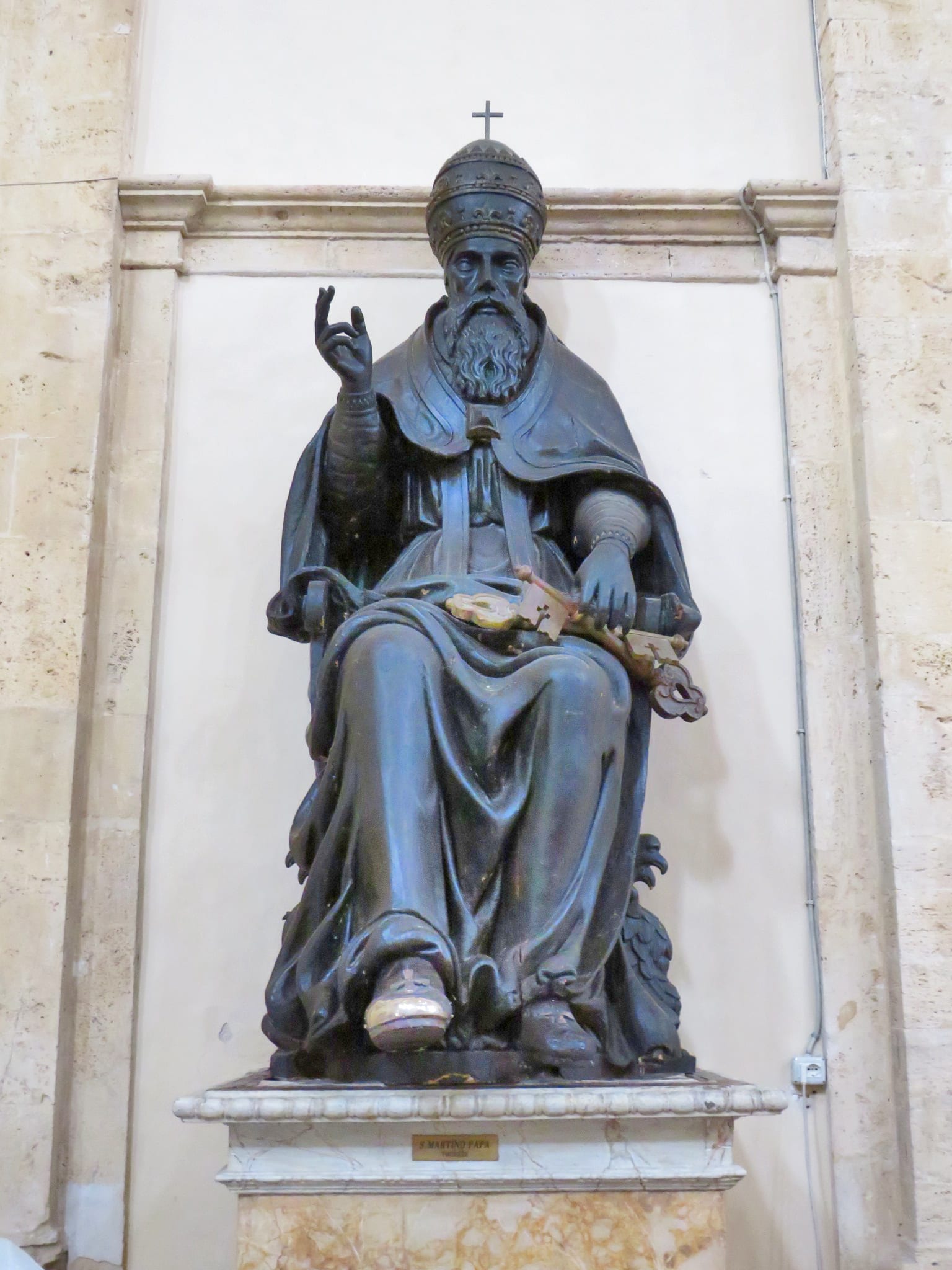
  • Martin in Chains

    Often depicted in papal vesture but with chains on his hands or feet — the iconography of the confessor pope.

Patronages
Confessors of the faithThose imprisoned for conscience
Sources & Further Reading