
MIRACULOUS MIRACLES™

Saint — Matthias the Apostle

St. Matthias the Apostle
early 1st century — 1st century
Chosen by lot to complete the Twelve
Abbey of St. Matthias, Trier, Germany
Feast
May 14 (Roman); August 9 (Byzantine)
Life

After the suicide of Judas Iscariot, the eleven apostles — having returned from the Mount of Olives — met with the early community in Jerusalem to choose a successor. Peter, citing the Psalms, set the requirement: the new apostle must have been with them 'all the time that the Lord Jesus went in and out among us, beginning from the baptism of John until the day when he was taken up' (Acts 1:21–22).

Two were proposed: Joseph called Barsabbas (also surnamed Justus), and Matthias. The community prayed, cast lots, and the lot fell on Matthias. He was numbered with the Twelve and went out at Pentecost with the rest. Acts then says nothing more of him.

Tradition diverges on his later life. Hippolytus says he preached and died in Jerusalem. Eusebius and the Greek tradition say he preached among the cannibals of Aethiopia (a region near the Black Sea, not modern Ethiopia), or in Cappadocia by the Caspian Sea. His relics were brought, according to the tradition of Trier, by St. Helena, mother of Constantine, partly to Padua and partly to Trier — making St. Matthias's Abbey in Trier the only apostolic burial north of the Alps.

Miracles & Phenomena
  • Chosen by Lot

    The casting of lots that fell on Matthias is itself read by the Church as a miracle of providence — the only canonical instance of the lot being used to discern God's will under the new covenant, and the moment that completed the apostolic college.

Relics
  • Body
    Tomb of St. Matthias
    Abbey of St. Matthias (Sankt Matthias), Trier, Germany

    Beneath the high altar of the abbey church. The only apostolic tomb north of the Alps, an important medieval pilgrimage destination. Tradition holds the relics were brought by St. Helena in the 4th century.

  • Bodily relic
    Partial relics
    Abbey of Santa Giustina, Padua, Italy
Iconography
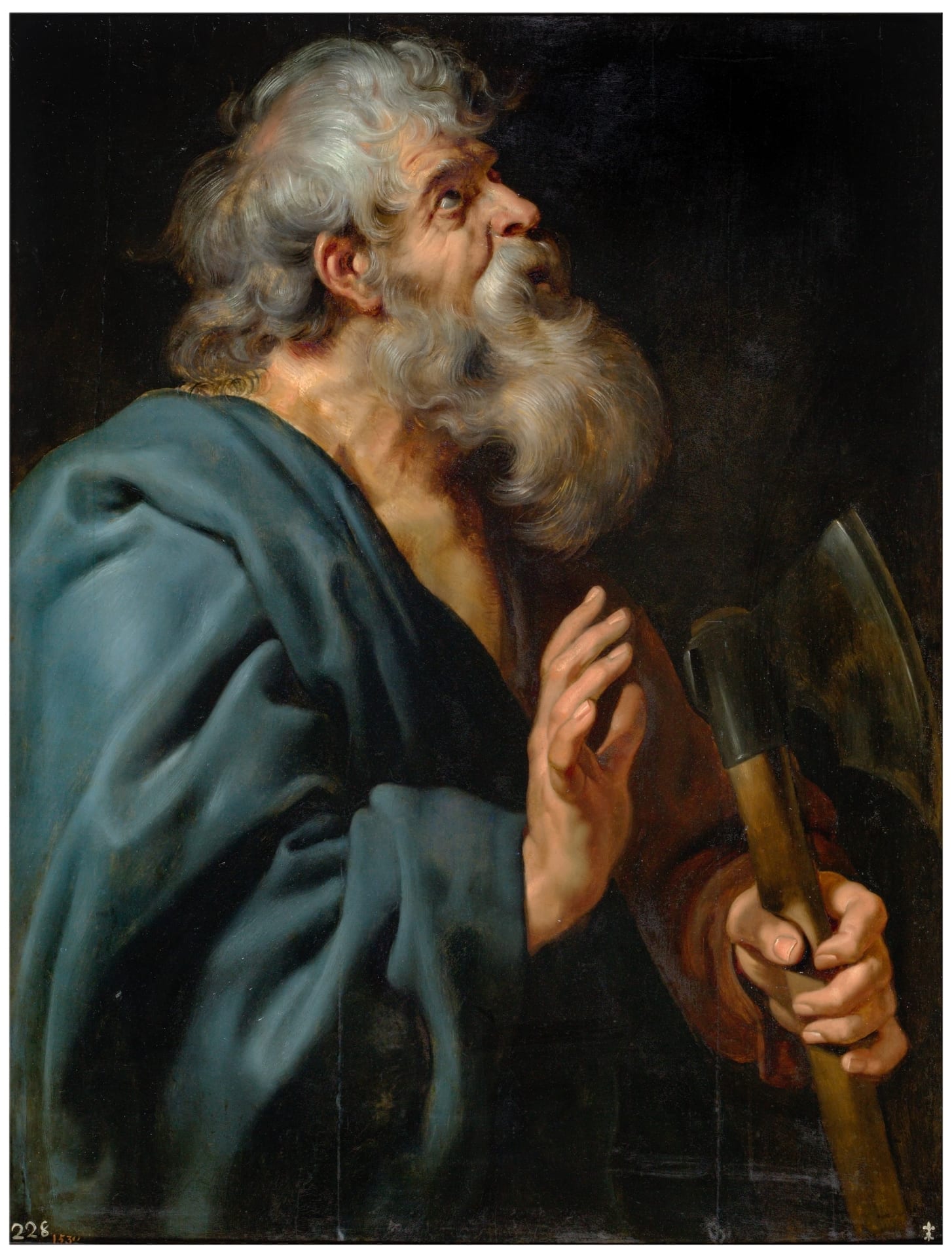
  • St. Matthias with the Axe

    His traditional attribute — an axe or halberd (the tradition of his beheading). Sometimes shown holding the casting lot, or a spear.

Patronages
Alcoholics in recoveryTailorsCarpentersSmallpox sufferersTrier, Germany
Sources & Further Reading